Blog

Your blog category

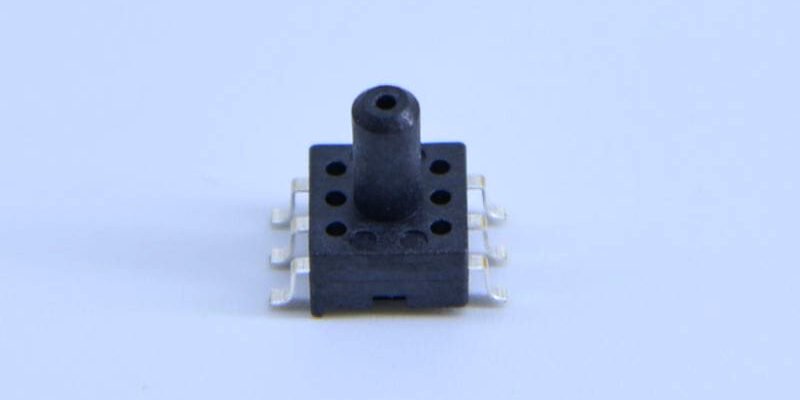
WF280A-2Bar Air pressure sensor

MEMS Sensor Design in Wearable Devices | Making Life Smarter

Through perfect combination of miniaturized packaging, ultra-low power design, and high-precision measurement capabilities, modern MEMS sensors provide powerful sensing capabilities for wearable devices. Resistive MEMS technology combined with intelligent temperature compensation algorithms ensures stable sensor performance under various environmental conditions.

MEMS Sensor Design in Wearable Devices | Making Life Smarter Read Post »

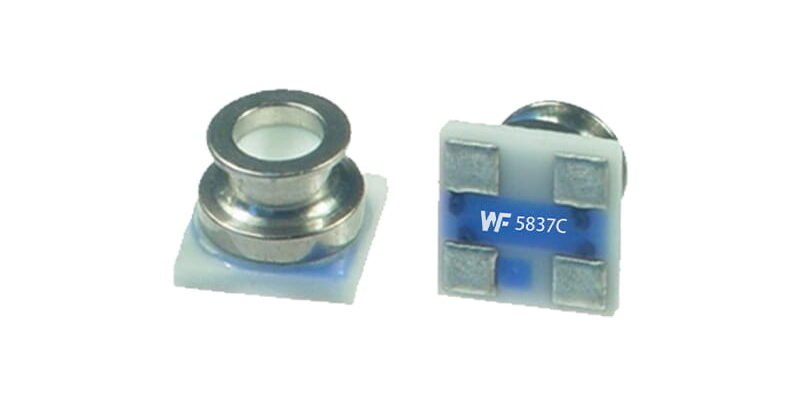
WF5837C Pressure Sensor

Reliable Standards for Ceramic Sensors in Fluid Pressure Monitoring

Resistive MEMS sensors feature miniaturized design, low noise characteristics, and built-in temperature compensation, capable of accurately sensing pressure applied by gases or liquids within a 7Bar measurement range. The chemical stability and thermal shock resistance of ceramic materials make them ideal alternatives to traditional silicon-based sensors, particularly suitable for medical-grade applications and pressure monitoring in harsh environments.

Reliable Standards for Ceramic Sensors in Fluid Pressure Monitoring Read Post »

WF5805F Absolute Pressure Sensor 5BAR

Absolute vs. Gauge Pressure Sensors for Water Depth Measurement Difference

Absolute pressure sensors achieve vacuum-referenced measurements through sealed high-vacuum chambers, enabling complete submersion for direct depth detection. Gauge pressure sensors use atmospheric pressure as reference, requiring indirect measurement through connecting tubes. The two sensor types exhibit significant differences in waterproof design, measurement accuracy, temperature compensation, and application adaptability.

Absolute vs. Gauge Pressure Sensors for Water Depth Measurement Difference Read Post »

WF5803F 3Bar depth measurement pressure sensors

Choosing Resistive vs Capacitive Sensors for Your Product Application

In specific projects, you need to balance resistive and capacitive MEMS sensors across multiple dimensions—measurement range, accuracy, temperature drift, response speed, package size, and cost. The final decision should combine application requirements, environmental conditions, and pre-production test results to ensure deep integration between the sensor and the system.

Choosing Resistive vs Capacitive Sensors for Your Product Application Read Post »

WF183DE 15BAR Pressure Sensor

Comprehensive Analysis of Automotive MEMS Sensor Applications

This article provides an overview of automotive sensor technology trends and classifications, focusing on the core applications and market prospects of MEMS sensors in powertrain control, body electronics, safety electronics, and advanced driver-assistance systems, to guide sensor solution selection for the intelligent, connected, and autonomous driving era.

Comprehensive Analysis of Automotive MEMS Sensor Applications Read Post »

WF200D Sensor 10kpa

How to Correctly Choose a Differential Pressure Sensor for Your Product

Offering professional, practical selection solutions across application requirements, pressure and temperature measurement, accuracy range, response speed, interface compatibility, protective installation, and pre–mass-production testing—empowering engineers and technical decision-makers to achieve efficient, reliable measurement solutions.

How to Correctly Choose a Differential Pressure Sensor for Your Product Read Post »

WF100DP 40kPa Pressure Sensor

Using MEMS Pressure Sensors in NPWT Systems for Faster Healing

Integrating the MEMS digital pressure sensor into NPWT systems ensures ±0.5 % FS accuracy, ≤1 ms response and digital I²C/SPI output. Factory temperature compensation limits drift to ±0.1 kPa over –10 °C to 60 °C. Combined with PID-controlled pumps, safety‐valve redundancy and rigorous ISO-compliant pre-production testing (FAI, Cp/Cpk ≥ 1.33), this turnkey solution supports faster granulation, efficient exudate removal and reduced infection risk for large or deep wounds.

Using MEMS Pressure Sensors in NPWT Systems for Faster Healing Read Post »

Scroll to Top

Contact us