
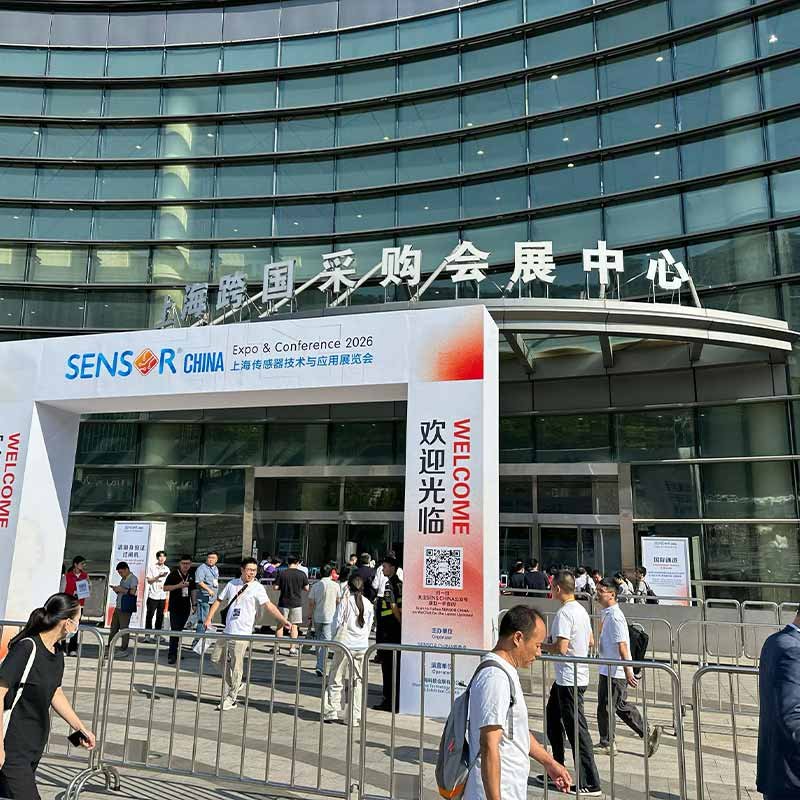
September 16–18, there's a sensor expo in Shanghai. We showed up, laid out a row of sensors, and came ready to talk for three days.
Here's how it started.
September 16–18, there's a sensor expo running in Shanghai, and we set up our booth. Pressure, barometric pressure, altimeters, drones, MEMS microphones, plus blood-pressure monitors, gas meters, wearables, vaporizers, and air pumps. Things we've been making for years, all on the table this time.

You might think sensors are far away from you. They're not. When you left the house today, the barometer in your phone was figuring out which floor you're on. The pressure sensor in your wristband was counting the stairs you climbed. The one inside your blood-pressure cuff was measuring your blood pressure. The one inside your car tire was watching your tire pressure. You use these things every day, and you've never once looked straight at them.
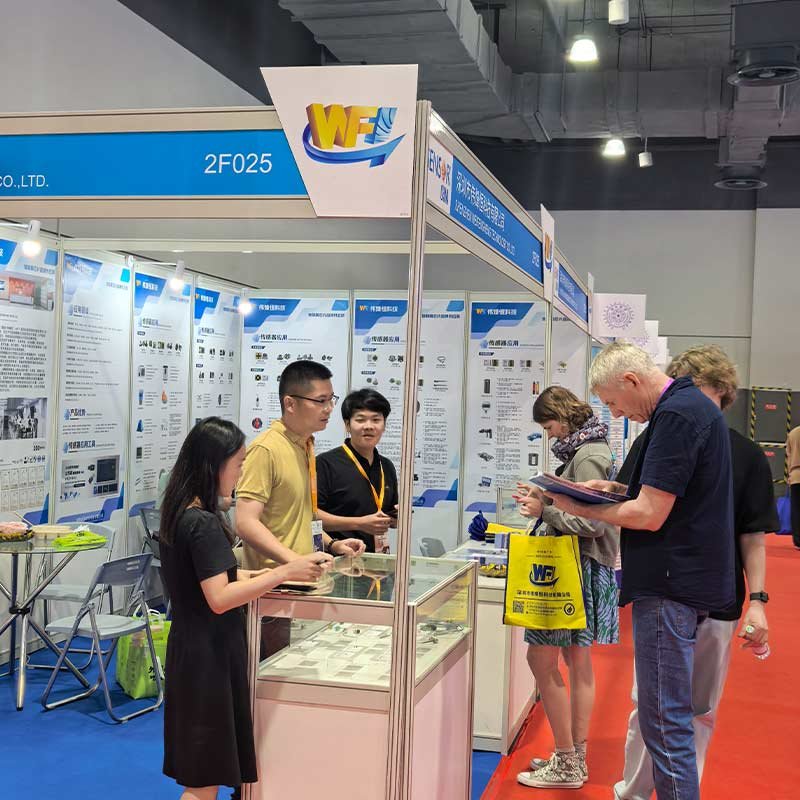
That's what WFsensors makes. Pressure sensors, barometric pressure sensors, altimeters, that kind of thing. You haven't heard the name, and we don't blame you. This industry hides behind the machines.
People ask what we actually sell. A part. A part that lets a machine sense accurately. A pressure sensor is only as good as a few things: how small it is, how little power it draws, how fast it responds, how well it handles its environment, and how reliably it holds up over time. Those words sound abstract until you put them inside a blood-pressure cuff. When you measure your blood pressure, that number is only as accurate as the sensor inside, staying stable through hundreds of inflation and deflation cycles. If it drifts, your reading is wrong, and you'd never know.
What we lean on is a handful of things. The sensing element, the chip design, the packaging process, signal conditioning, unit-to-unit consistency. Each word you recognize, but strung together they stop making sense. Fine. One sentence: sensors are made one at a time from a wafer, the same way chips are. So it eats experience. It eats fundamentals. It eats the kind of thing you can't rush.
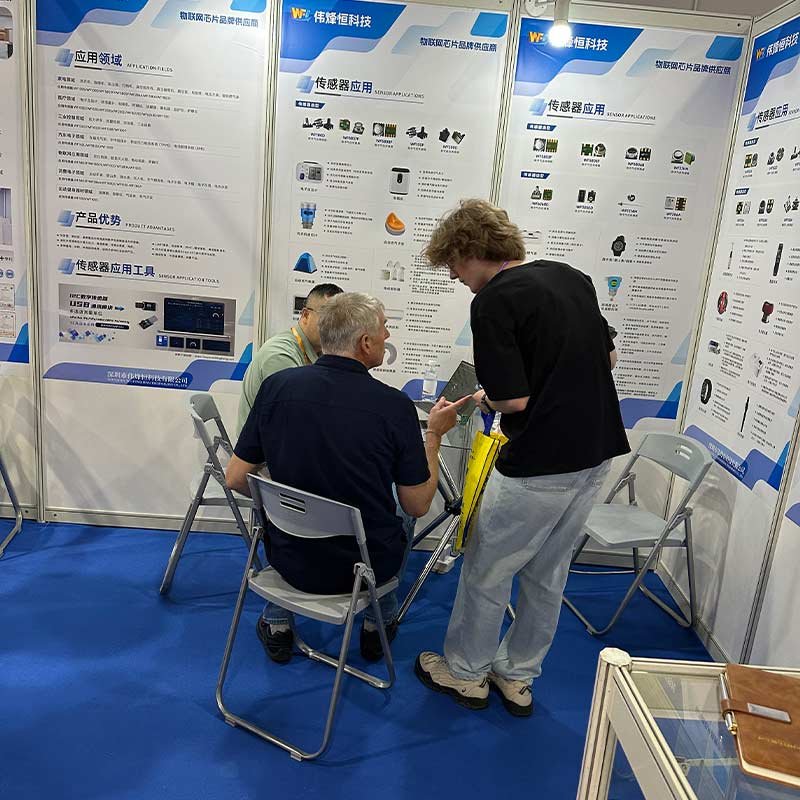
At this show, a peer asked why a small company thinks it can do this. A few of our team are EE85 alumni from Tsinghua's EE department, plus engineers who came out of Fortune 500 companies. Digital circuits, analog circuits, packaging and test, calibration. The most experience-hungry corners of this industry. It's genuinely not something you pull off with a brainstorm.
The factory floor is nothing like the office. Temperature swings up and down, machines vibrate all day, and there's electromagnetic interference right next door. For a sensor to hold a stable output in that environment, it comes down to packaging and signal-conditioning fundamentals. There's no shortcut in this trade. Every yuan you save comes back, eventually, on some customer's production line.
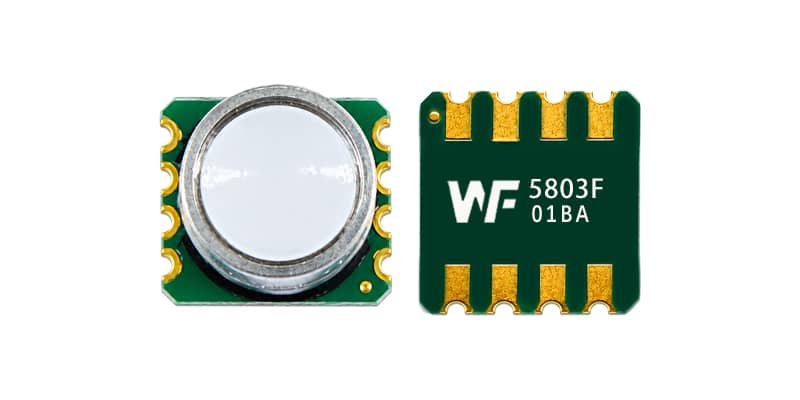
Of everything we brought, pressure is WFsensors' home turf. The WF5803F series, 1 to 50 bar, multiple ranges on a single die. WF100 for industrial, WF100E for low pressure. They all look roughly the same, a fingernail-sized thing. Think about what it takes to stay accurate after more than a million inflation and deflation cycles.
Where sensors go next: smaller, lower power, higher sensitivity, smarter. Four things the whole industry agrees on, and the road we're on. Things keep shrinking until they fit in a watch, in earbuds, in places you'd never guess.
At the end of the day, sensors are the senses of machines. Humans perceive the world through eyes, ears, and skin. Machines perceive it through sensors. Everyone's talking about AI these days, but think about it: for a machine to be intelligent, it first has to perceive, and perception runs on these small, unglamorous parts. Your phone knows whether you've raised your wrist. A drone hovers in midair. A gas meter catches a leak. All of it, held up by sensors underneath. The day they shrink until they vanish from your life and you don't feel them at all, that's when this industry finally grows up.
So next time you take your blood pressure, or watch a drone lift off, spare a thought. Behind these small, unglamorous parts there's a group of people setting up a booth in Shanghai, ready to talk for three days, just to make your number a little more accurate.
We're clear-eyed about this too. China hasn't been on the high-end sensor road for very long, and there's still a gap with the big international players. But a road is built one step at a time, and our parts have been running on production lines and circuit boards for a long while now. If you're building smart hardware, automotive electronics, biomedical devices, or IoT, and you're stuck on component selection, come talk to WFsensors. We put everything we've built over the years on that booth.