Blogue

Votre catégorie de blog

Capteur de pression positive WF100E 40kpa

Capteurs de pression négatifs MEMS à haute précision pour une capture de données précises

High-precision MEMS negative pressure sensors convert tiny diaphragm movements into electrical signals using capacitive or strain-gauge methods. With resolutions as low as 10 Pa and nonlinearity under 0.01% FS, they ensure stable, high-speed performance across a 0–50 kPa range. This article covers their structure, performance, installation, testing, and real-world use, offering engineers a reliable solution for accurate negative-pressure data capture.

Capteurs WF100E 40KPA

Capteur de pression ne fonctionne pas Guide de dépannage

Si votre transducteur de pression produit zéro, il peut y avoir un problème avec le transducteur.’s les connexions électriques, le transducteur’la tension d'alimentation ou le transducteur’s internal electronics. Check the wiring pinout diagram and supply voltage to make sure they are connected correctly and within the specified range.

Capteur de pression numérique WF282A

Capteur de pression pour le projet de ventilateur entraîné par moteur CC

This project presents a high‑precision, low‑cost airflow static pressure measurement setup using the WF280A pressure sensor in combination with a DC motor fan. By designing a sidewall static port and attaching a short tube, the WF280A sensor—combined with smart signal processing like 16× oversampling, IIR filtering, and moving average—delivers ±3 Pa accuracy in real-time pressure readings.

Capteur de pression différentielle WF4525

Solution de capteurs de pression pour contrôleur respiratoire | Guide suggéré

breathing controller sensor is a specialized transducer designed to monitor and regulate air pressure in respiratory support systems such as CPAP machines. These sensors operate within a pressure range of 0–5.8 psi (40 kPa) and are engineered to detect minute fluctuations in airway pressure, ensuring stable airflow delivery to patients.

Capteur de pression WF5805C

Quelle est la fonction du capteur de pression d'air ?

Le capteur de pression atmosphérique mesure la pression atmosphérique et la température. Ce capteur est utilisé pour la navigation intérieure, la détection de changement d'ascenseur/d'étage et la surveillance météorologique. Il peut stabiliser l’altitude d’un drone pour une navigation intérieure précise, améliorer la précision des calculs de calories dans les appareils portables, ainsi que mesurer et contrôler ces niveaux de pression importants.

Capteurs de température et de profondeur WF5808

Capteur compact sur la pression résistante à l'eau dans les environnements en eau profonde

The compact waterproof pressure sensor performs well in deep water environments with its exquisite design and excellent performance. Whether in applications such as ocean exploration, diving safety or industrial monitoring, it can provide high reliability and accurate data. Its low power consumption and high precision make the product have significant advantages in many fields and bring real technical support to users.

Capteur de pression WF5803C

Quels sont les avantages des capteurs de pression en céramique ?

Ceramic pressure sensors offer advantages such as high-temperature resistance, corrosion resistance, high stability, and long service life. Their working principle is based on the piezoelectric effect of ceramic materials; when external pressure is applied, the ceramic undergoes slight deformation, producing a weak electrical signal. This signal is then amplified and converted into precise numerical output. Their high accuracy and reliability ensure stable performance even under harsh conditions.

Capteurs de pression WF5837C 2BAR

Utilisation et fonction des capteurs de pression piézorésistifs MEMS | Guide complet

This article provides a comprehensive exploration of MEMS pressure sensors, with a special focus on piezoresistive sensors. It details the working principles, manufacturing processes, temperature compensation techniques, and practical applications across various sectors such as automotive, healthcare, consumer electronics, industrial automation, and outdoor activities. Additionally, the article clarifies the differences between piezoresistive and piezoelectric sensors and offers actionable advice on sensor selection, installation, calibration, and system integration, all backed by market trends and future insights for authoritative guidance.

Capteur de pression WF5837C

Capteurs de pression et de température MEMS pour les environnements corrosifs

Sensors play a crucial role across industries, automotive systems, and portable devices. This article provides a practical analysis of MEMS pressure and temperature sensors in corrosive environments. It reviews the sensor’s core structure, operating principles, protective packaging, and testing processes, offering engineers and decision-makers clear, actionable insights.

Capteur de pression WF6268D

L'importance de la stabilité du capteur de pression

This article details the importance of air pressure sensor stability and its application in industry. The article introduces how to ensure safe and efficient operation of sensors and analyzes the key factors that affect their stability, such as materials, design, sealing and temperature compensation. Through actual case comparison, the article provides practical methods for measuring and maintaining stability, such as regular calibration, use of data loggers and anti-electromagnetic interference measures, to help engineers improve system reliability.

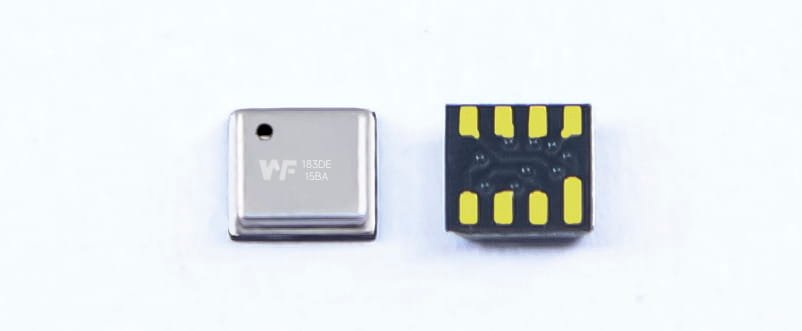
Capteur de pression WF183DE 15BAR

Comment les capteurs de pompe d'inflation améliorent la précision de l'inflation

An inflation pump sensor is a device used to monitor critical parameters such as pressure, flow, and temperature in real time. Once these data are quickly transmitted to the control system, it can adjust the inflation rate and duration accordingly to ensure each inflation process strictly adheres to preset standards.

Retour en haut

Contactez-nous