บล็อก

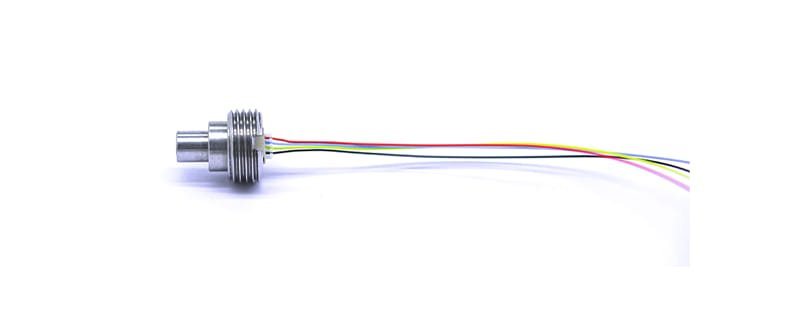
เซ็นเซอร์ความดัน WF5837C

เซ็นเซอร์ความดันไมโครชดเชยอุณหภูมิ — ให้ความแม่นยำและความเสถียรสูง

This piece looks at a temperature-self-compensating MEMS micro-pressure sensor based on an island-beam-membrane coupled design, and explains how the structure actively cancels output drift caused by thermal stress. Made with SOI and dual-DRIE precision processing, the device shows very low temperature drift across 0°C–50°C (zero-point drift 0.081%FS, full-range drift 0.090%FS, nonlinearity 0.307%FS), offering a high-accuracy, low-power micro-pressure detection option.

เซ็นเซอร์ความดัน WF5837C

The difference between of pressure sensor 5V Vs 10V analogue outputs?

5 V outputs (e.g. 0–5 V or 0.5–4.5 V) vs 10 V outputs (e.g. 0–10 V or 1–10 V) mainly differ in span (range) and power/compatibility. 0–10 V gives twice the span of 0–5 V but typically requires a higher supply (commonly 12 VDC). Ratiometric 0.5–4.5 V is usually powered from 5 VDC.

WF152d 40kpa เซ็นเซอร์ความดันแบบสัมบูรณ์แบบดิจิตอล

โซลูชันการตรวจสอบความดันแบบหลายขั้นตอนที่เหมาะสำหรับเครื่องช่วยหายใจทางการแพทย์

Multi-stage pressure monitoring for laparoscopic CO₂ insufflators: pick temperature-compensated, calibrated MEMS sensors (fast ~3 ms, ±0.25% FSL), monitor at source and cavity, estimate flow from a 30 mmHg point, add redundancy and real-time filtering.

WF5805F เซ็นเซอร์ความดันสัมบูรณ์ 5BAR

Depth Detection Sensors Driving Accuracy Control in Underwater Engineering

This article takes an engineering view, focusing on hardware traits, operating principles, sealing and packaging, data processing, and the way depth sensors directly improve control in underwater engineering. The aim is to explain in clear technical language how sensors underpin accurate underwater operations.

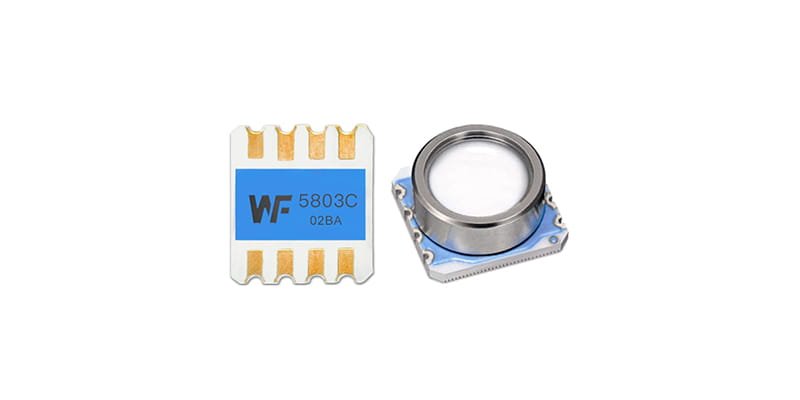
WF5803C-02BAR เซ็นเซอร์เซรามิกกันน้ำ

From Medium Compatibility to Linearity: 7 Key Pressure Sensor Specs

This article explains the key technical parameters you should understand when selecting a pressure sensor for a project. It walks through medium compatibility, rated/withstand/burst pressures, compensated temperature range, zero-point drift and linearity — showing how each affects reliability, accuracy and suitability for specific applications.

WF152d 40kpa เซ็นเซอร์ความดันแบบสัมบูรณ์แบบดิจิตอล

เซ็นเซอร์ความดันเพิ่มความปลอดภัยในเครื่องใช้ในบ้านอัจฉริยะ

Pressure sensors — whether for gas or liquid — are at the heart of safety and fine control in smart appliances. From device safety and energy management to fault diagnosis, user experience and system integration, this piece explains the sensor’s role across smart air conditioners, fridges, cooker hoods, water heaters, kettles and smart sanitary ware.

เซ็นเซอร์ WF100E 40kpa

เซ็นเซอร์ความดันบวกปรับปรุงการวัดท่อตัวกรองอากาศได้อย่างมีประสิทธิภาพ

The top-ported WF100 positive pressure sensor improves pipe measurements when matched to the range, ensuring a tight connection, and calibrated for zero, span, and temperature. Reliable pipe pressure measurements can be achieved by using short hoses, proper filtering, and verifying against the reference sensor datasheet.

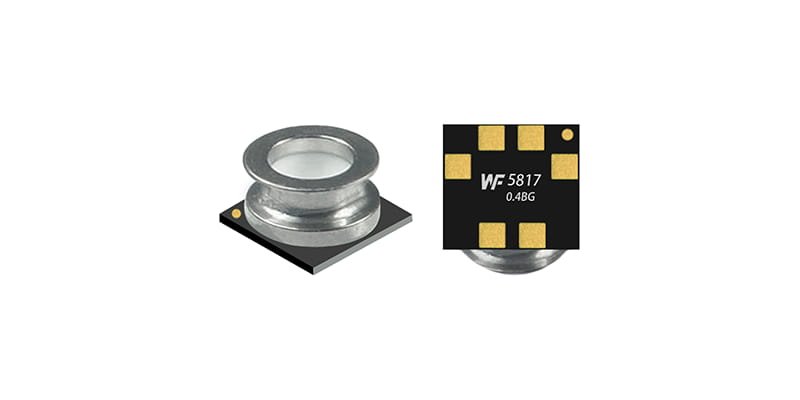
เซ็นเซอร์ความดัน WF5837C

Achieving height resolution within 10 cm with barometers

Ordinary barometers—piezoresistive, capacitive or MEMS silicon resonant—can’t reliably detect 10 cm (≈0.012 Pa) in real life: the pressure change is tiny vs draughts, switching, people and sensor noise/drift.

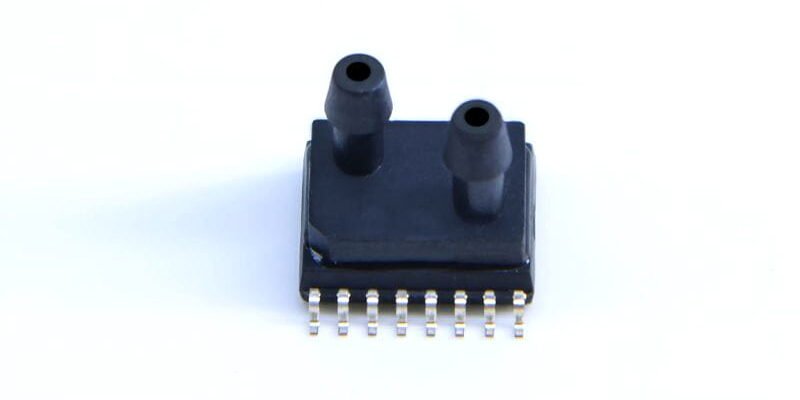
เซ็นเซอร์ WF200D 10kpa

เซ็นเซอร์ความดันที่แตกต่างช่วยเพิ่มประสบการณ์ที่ชาญฉลาดในการบำบัดบาดแผลความดันลบ

Negative Pressure Wound Therapy (NPWT) as a vital modern medical technology relies directly on precise pressure control for treatment effectiveness. Differential pressure sensors serve as core monitoring components, ensuring treatment safety and efficacy through real-time negative pressure monitoring. This article analyzes the critical role of MEMS differential pressure sensors in NPWT devices, explaining technical principles, application advantages, and significant improvements to patient treatment experience.

เลื่อนไปด้านบน

ติดต่อเรา