Blogue

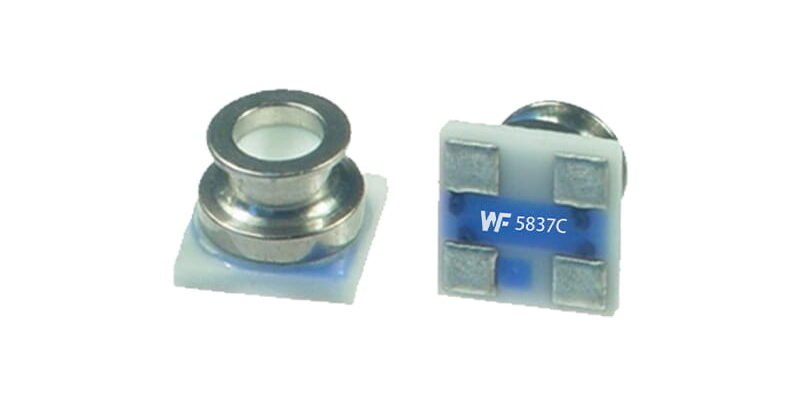
Capteur de pression absolue WF5805C

Puce de capteur avec une linéarité et une sensibilité exceptionnelles

Core design concepts and key technologies for achieving exceptional linearity and high sensitivity in MEMS pressure sensor chips, covering circuit optimization, microstructure tuning, on-chip calibration, temperature compensation, noise suppression, and automatic gain control to deliver precise, highly adaptable performance.

Capteurs de pression de mesure de la profondeur 3BAR WF5803F

Choisir des capteurs résistifs vs capacitifs pour votre application de produit

In specific projects, you need to balance resistive and capacitive MEMS sensors across multiple dimensions—measurement range, accuracy, temperature drift, response speed, package size, and cost. The final decision should combine application requirements, environmental conditions, and pre-production test results to ensure deep integration between the sensor and the system.

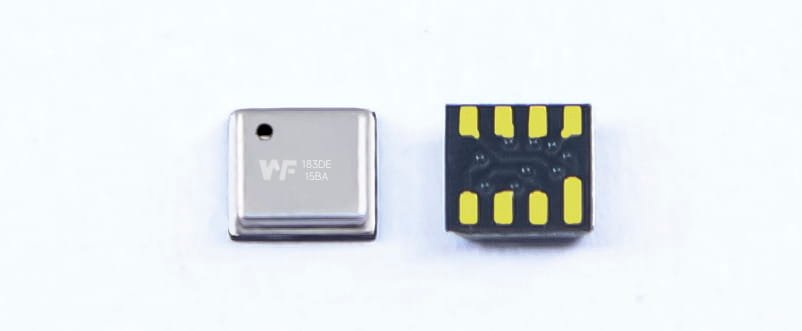
Capteur de pression WF183DE 15BAR

Analyse complète des applications de capteurs MEMS automobiles

This article provides an overview of automotive sensor technology trends and classifications, focusing on the core applications and market prospects of MEMS sensors in powertrain control, body electronics, safety electronics, and advanced driver-assistance systems, to guide sensor solution selection for the intelligent, connected, and autonomous driving era.

Capteur WF200D 10kpa

Comment choisir correctement un capteur de pression différentielle pour votre produit

Offering professional, practical selection solutions across application requirements, pressure and temperature measurement, accuracy range, response speed, interface compatibility, protective installation, and pre–mass-production testing—empowering engineers and technical decision-makers to achieve efficient, reliable measurement solutions.

Capteur de pression WF100DP 40KPA

En utilisant des capteurs de pression MEMS dans les systèmes NPWT pour une guérison plus rapide

Integrating the MEMS digital pressure sensor into NPWT systems ensures ±0.5 % FS accuracy, ≤1 ms response and digital I²C/SPI output. Factory temperature compensation limits drift to ±0.1 kPa over –10 °C to 60 °C. Combined with PID-controlled pumps, safety‐valve redundancy and rigorous ISO-compliant pre-production testing (FAI, Cp/Cpk ≥ 1.33), this turnkey solution supports faster granulation, efficient exudate removal and reduced infection risk for large or deep wounds.

Retour en haut

Contactez-nous