Blogue

Votre catégorie de blog

Les capteurs mini-invasifs permettent une collecte précise de données dans les chirurgies médicales

Minimally invasive sensors are transforming surgery by providing real-time, accurate data to improve surgical precision, monitor recovery, and enhance treatment outcomes. These sensors enable precise measurement of critical parameters like blood pressure and oxygen levels, ensuring safer surgeries with faster recovery times. With advancements in technology, minimally invasive sensors will continue to play a crucial role in improving patient care and healthcare efficiency.

capteur de pression invasif

Capteur de pression artérielle invasif : surveillance précise des mesures

The Model WF1620 Pressure Sensor is a companion sensor for use in disposable blood pressure monitoring medical instruments and is designed to meet AAMI requirements for blood pressure monitors. Its core part is a silicon piezoresistive pressure sensitive chip processed with MEMS technology mounted on a ceramic substrate, which is calibrated and compensated by a thick-film technology circuit for the sensors to produce a high-precision standard voltage output signal with the supply voltage as the reference. A cap affixed to the ceramic substrate not only protects the internal structure from damage, but also makes it easy for customers to install and use on their systems. The use of gel on the pressure sensitive chip ensures insulation from the outside.

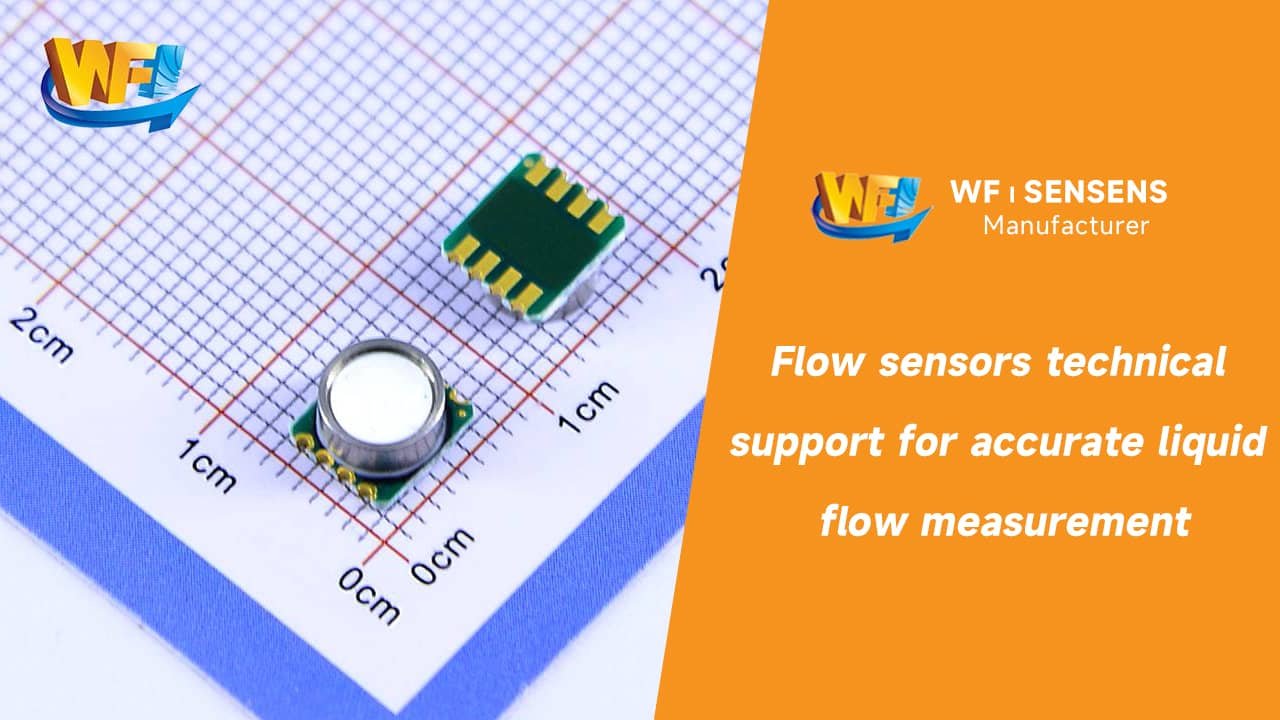
Capteurs d'écoulement Support technique pour une mesure précise du débit liquide

Capteurs d'écoulement Support technique pour une mesure précise du débit liquide

Select the right flow sensor requires consideration of several factors, including the type of liquid, flow range, accuracy, operating environment, installation requirements, budget and maintenance needs. Different types of sensors, such as vortex flow sensors, electromagnetic flow sensors and ultrasonic flow sensors, are suitable for different application scenarios. By taking these factors into consideration, you can ensure that the flow sensor best suited to the specific needs is selected, resulting in accurate and stable flow measurement.

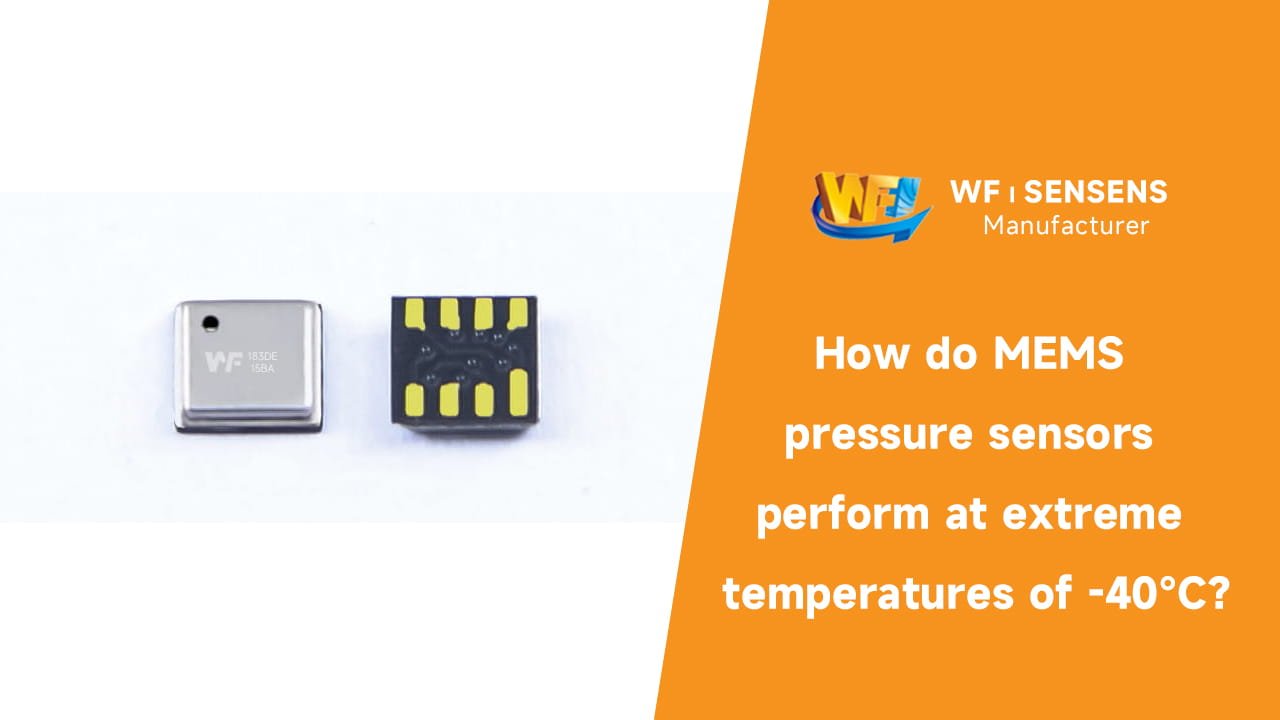
Comment les capteurs de pression MEMS fonctionnent-ils à des températures extrêmes de -40 ° C

Comment les capteurs de pression MEMS fonctionnent-ils à des températures extrêmes de -40°C ?

The operating principle of MEMS pressure sensors is based on the piezoresistive effect of silicon materials. When the temperature drops to -40°C, the physical properties of the silicon material change, which may lead to a decrease in the sensitivity and accuracy of the sensor. In addition, extreme low temperatures may cause thermal stress changes in the encapsulated material, affecting the stability of the sensor.

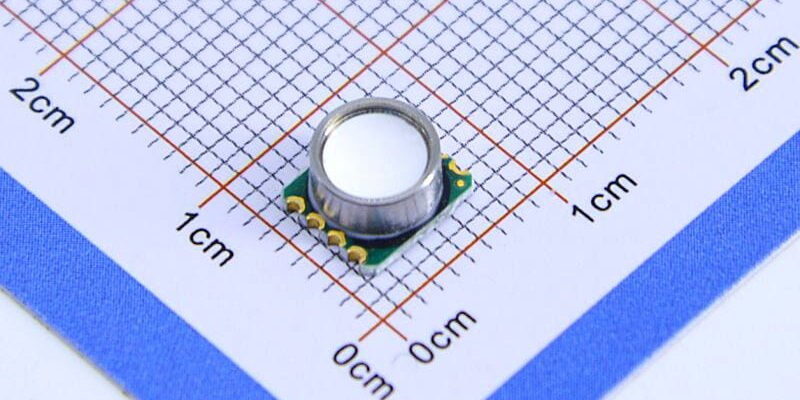
Capteur de pression absolue WF5803 7BAR

Les MEMS, la tendance à remplacer les capteurs traditionnels ?

Sensor technology, as a key link in information acquisition, is undergoing unprecedented changes. Among them, MEMS (microelectromechanical systems) sensors, as a representative of emerging technologies, are gradually replacing traditional sensors and becoming an important force in promoting scientific and technological progress and industrial upgrading. In this paper, we will discuss the reasons why MEMS sensors are replacing traditional sensors, and reveal the technological logic and market dynamics behind this trend.

Progrès en capteurs de pression MEMS à haute performance Fabrication et emballage de conception

Avancées dans les capteurs de pression MEMS hautes performances : conception, fabrication et conditionnement

Microelectromechanical systems (MEMS) pressure sensors are widely used in a variety of industries, including automotive, aerospace and medical, and have become important devices for modern engineering by virtue of their high accuracy and small size. In recent years, pressure sensors have made significant advances in design, manufacturing and packaging technologies, and their performance has been significantly improved. In this paper, we will discuss the latest trends in micro differential pressure sensors (MDPS), resonant pressure sensors (RPS), integrated sensing chips, and miniaturized pressure sensors.

Capteur de pression analogique 5kPa

Emplice d'alcool à respiration Assistant puissant - le capteur de pression

In breath alcohol detection, the pressure sensor it not only ensures the quality of gas collection in the detection process, but also provides solid data support for the accurate determination of alcohol concentration. This article will focus on the WF100SPZ pressure sensor, to explore its high accuracy, excellent stability, fast response and excellent reliability and other professional characteristics, as well as its application in alcohol detection equipment.

Capteurs de pression d'air dans le champ d'inspection L'importance

Capteurs de pression d'air dans le champ d'inspection L'importance

De nombreux aspects déterminent si un capteur de pression atmosphérique est adapté à une application particulière. Il s'agit notamment de la pression relative, absolue ou différentielle, du transducteur ou du transmetteur, de la plage de mesure, de la méthode/taille de montage et de la valeur nominale maximale absolue (par exemple, pression d'éclatement) qui sont les facteurs les plus importants.

Capteurs de pression en céramique

Capteurs de pression en céramique Les performances de détection et l'analyse de la vitesse de réponse

Ceramic pressure sensors are widely used in industrial control, automated testing, automotive and aerospace applications due to their excellent performance. Ceramic materials are characterized by high temperature resistance, corrosion resistance and electromagnetic interference resistance, which makes them perform well in complex environments. In this paper, the sensing performance and response speed of ceramic pressure sensors will be discussed in depth, the influencing factors will be analyzed, and optimization strategies will be proposed.

Guide de débogage : capteur de pression différentielle WF200DP dans les produits de ventilation

Guide de débogage : capteur de pression différentielle WF200DP dans les produits de ventilation

This article introduces the application and commissioning guide of WF200DP differential pressure sensor in ventilator products.With ±5000Pa range and ±0.1%FS accuracy, WF200DP supports I2C and digital output, and has been widely used in respiratory flow measurement. The article focuses on the working principle of the sensor, common problems and solutions during commissioning, including I2C communication, low-pass filter settings, temperature compensation and secondary calibration methods, to help engineers optimize design and improve accuracy.

Capteurs de pression pour les distributeurs de bière projetés

Capteurs de pression pour les distributeurs de bière projetés

The pressure sensor in a draft beer dispenser is a key component in ensuring that the flow rate, foam ratio and carbonation level of the beer are stable. This paper discusses the use of pressure sensors in draft beer dispensers, analyzes the advantages and disadvantages of analog and digital sensors, and highlights how to select the right sensor for specific needs. With precise pressure control, draft beer dispensers can optimize user experience, reduce maintenance costs, and improve equipment stability. Ultimately, optimizing sensor selection is critical to improving the overall performance of a draft beer dispenser.

Capteurs de pression pour les applications de nébuliseur Analyse technique

In the design of high-performance atomizers, precise control of gas flow and atomization pressure is the key to ensure uniform spraying and stable system operation. From the perspective of engineers and technicians, this paper analyzes the application of a pressure sensor based on SOP6 package in atomizers, and analyzes its core technology and practical advantages.

Capteur de pression pour l'application du capot de portée

Capteur de pression dans l'application du capot de portée

WFsensors range hood related pressure sensors are used in range hoods to accurately sense flue pressure changes. They have obvious performance advantages, can quickly respond to pressure fluctuations, automatically adjust suction, and efficiently exhaust smoke; they have high-precision measurements and accurately reflect flue conditions; they are highly stable, anti-interference, durable and reliable, and improve the use effect and life of range hoods.

Retour en haut

Contactez-nous