Blogi

Your blog category

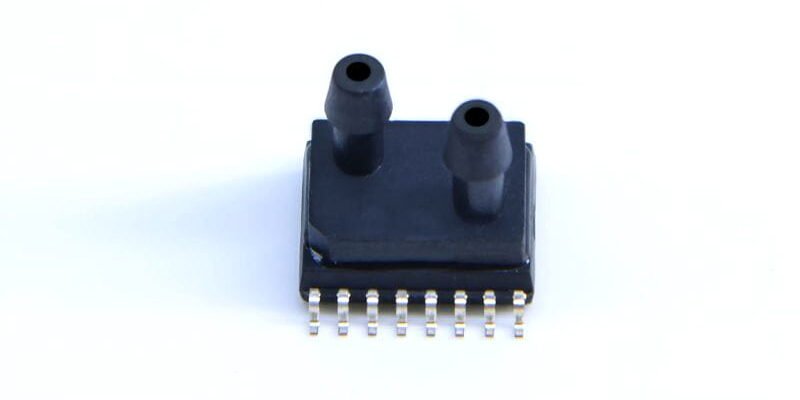
WF200DP digitaalinen paine-eroanturi

Tuulettimen ilmanpaineanturi, jota käytetään tarkkaan ilmanvaihdon ohjaukseen

Ventilator pressure sensors are the key components that enable precise ventilation control and patient safety. By providing millisecond-level pressure feedback and fusing that data with flow sensors, they support dynamic inspiratory/expiratory pressure adjustment, trigger synchronisation, alarm protection and ventilation effect assessment.

WF100E 40KPA -anturit

Mittaripaineanturit|pienten paineen muutosten herkkä taltiointi

Gauge-pressure sensors, thanks to excellent zero offset, linearity, hysteresis and temperature adaptability, can stably and sensitively pick up tiny pressure changes. From device traits, signal handling, range selection, system integration and validation, this piece gives an engineer-focused technical rundown to help you grasp the essentials and what matters for implementation.

WF183DE 1bar -anturi

Sähköinen imukuppipaine -anturit varmistavat luotettavan ydinyksikön toiminnan

Pressure sensors — covering electric suction cup pressure sensors, vacuum sensors, digital vacuum sensors and absolute-pressure sensors — are the core sensing elements in an electric suction cup. They turn vacuum physics into controllable digital signals. This piece looks at monitoring and verification, force adjustment, leak protection, energy management and safe release, and ties in sampling, packaging and signal conditioning to show how sensors keep suction cups reliable and efficient.

paine -lähettimen ydin

Vedenpinnan paineanturit saavuttavat tarkan hallinnan ja tehokkuuden maataloudessa

Water-level pressure sensors give steady, measurable information on liquid levels in irrigation and water management, directly supporting automation and decision-making. This piece looks at needs, sensor features, system integration, control implementation and reliability, and explains how putting sensors at the centre boosts precision and efficiency, highlighting key product specs and practical engineering points.

WF5837C -paineanturi

Lämpötilakompensaatio Mikropaine -anturi - saavuttaa korkea tarkkuus ja vakaus

This piece looks at a temperature-self-compensating MEMS micro-pressure sensor based on an island-beam-membrane coupled design, and explains how the structure actively cancels output drift caused by thermal stress. Made with SOI and dual-DRIE precision processing, the device shows very low temperature drift across 0°C–50°C (zero-point drift 0.081%FS, full-range drift 0.090%FS, nonlinearity 0.307%FS), offering a high-accuracy, low-power micro-pressure detection option.

WF5837C -paineanturi

Ero paineanturin 5V ja 10V analogisten lähtöjen välillä?

5 V outputs (e.g. 0–5 V or 0.5–4.5 V) vs 10 V outputs (e.g. 0–10 V or 1–10 V) mainly differ in span (range) and power/compatibility. 0–10 V gives twice the span of 0–5 V but typically requires a higher supply (commonly 12 VDC). Ratiometric 0.5–4.5 V is usually powered from 5 VDC.

Vieritä ylös

Ota yhteyttä