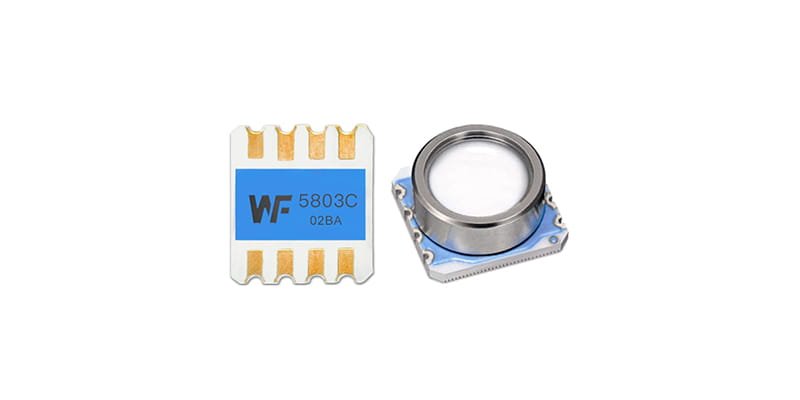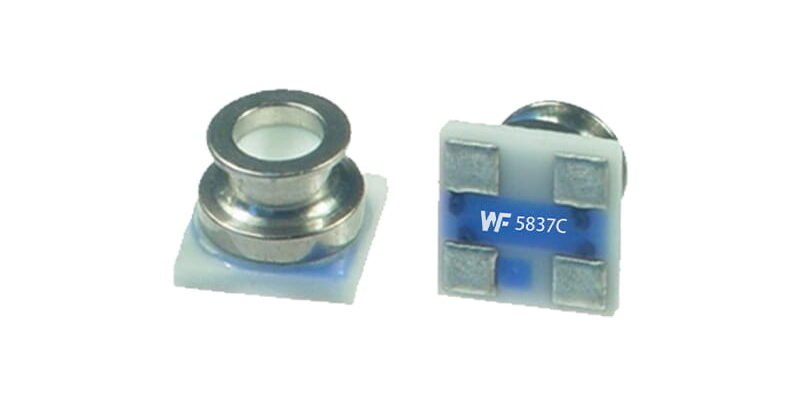
Ceramic pressure sensors have become essential in many industrial and everyday applications. Whether you are working in the medical field, automotive industry, or even aerospace, these sensors provide reliable, accurate measurements even in extreme environments. Their unique ceramic composition, along with various technological enhancements, gives them an edge over many other sensor types.
Katalog
Vorteile und Anwendungen von Keramikdrucksensoren in der modernen Branche
Ceramic pressure sensors have emerged as critical components across diverse industries due to their exceptional durability, precision, and adaptability. These sensors leverage the unique properties of advanced ceramics, such as alumina and zirconia, to deliver reliable performance in environments where traditional metal-based sensors falter. From aerospace to biomedical applications, ceramic pressure sensors offer advantages like high-temperature stability, chemical resistance, and long-term calibration retention. This report explores the working principles, technological innovations, and practical implementations of ceramic sensors, providing actionable insights for engineers and procurement specialists. By analyzing recent advancements in capacitive and piezoresistive ceramic sensor designs, this article equips readers with the knowledge to optimize sensor selection for harsh operational conditions while maintaining measurement accuracy.
Grundprinzipien des Keramikdrucksensorbetriebs
Piezoelektrische und kapazitive Erfassungsmechanismen
Ceramic pressure sensors operate primarily through two mechanisms: the piezoelektrischer Effekt Und Kapazitive Erfindung. In piezoelectric ceramics like lead zirconate titanate (PZT), applied pressure induces crystal lattice deformation, generating a proportional electrical charge1. This charge accumulates on electrode surfaces and gets converted into measurable voltage signals through integrated charge amplifiers. Capacitive designs, such as those using alumina substrates, measure changes in the gap between a deformed ceramic diaphragm and a fixed electrode, with capacitance variations reflecting pressure differentials.
The piezoelectric approach excels in dynamic pressure measurement scenarios, such as combustion chamber monitoring, where rapid pressure fluctuations require high-frequency response. Capacitive designs, conversely, provide superior stability for static pressure measurements in applications like hydraulic systems. Modern MEMS-based ceramic sensors combine both principles, embedding piezoresistive strain gauges on thin-film ceramic diaphragms to achieve ±0.1% full-scale accuracy
Materielle Vorteile von Keramiksubstraten
Thermische und chemische Stabilität
Alumina (Al₂O₃) ceramics dominate pressure sensor manufacturing due to their exceptional thermal properties. With a coefficient of thermal expansion (CTE) of 7.2 × 10⁻⁶/°C (20-1000°C range), alumina substrates maintain dimensional stability across industrial temperature ranges (-40°C to 300°C). This minimizes temperature-induced measurement drift compared to stainless steel (CTE: 17.3 × 10⁻⁶/°C).
Chemische Resistenz entsteht aus Keramik’ covalent atomic bonding structure. Alumina sensors withstand prolonged exposure to:
pH 0-14 solutions (excluding hydrofluoric acid)
Chlorierte Kohlenwasserstoffe bei 150 ° C
Schwefelhaltige Gasströme bis zu 400 ° C
This durability enables deployment in oil refinery catalytic crackers and pharmaceutical reactor vessels where metallic sensors would rapidly corrode.
Genauigkeitsleistung Metriken
Kalibrierung und langfristige Stabilität
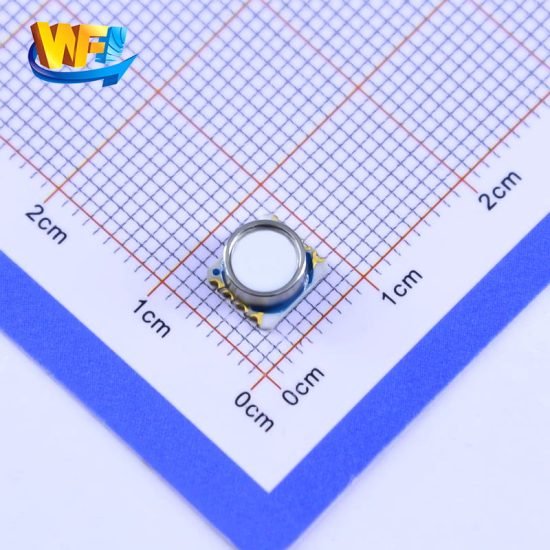
High-grade ceramic pressure sensors achieve ±0.25% FS (full scale) accuracy through laser-trimmed thick-film resistors and advanced signal conditioning ASICs. The Winsen WPah01 model demonstrates 0.1% nonlinearity across its 0-30 bar range, maintaining calibration stability within ±0.05% FS/year under continuous 150°C operation
Key factors influencing accuracy:
Zwerchfelldicke: 0.2mm alumina diaphragms provide optimal deflection sensitivity while resisting fracture (burst pressure >10× rated capacity)
Tischtechniken: Glass frit bonding creates hermetic seals with leak rates <1×10⁻⁹ mbar·L/s, preventing media ingress
Temperaturkompensation: On-chip Pt1000 RTDs enable real-time thermal error correction
Fallstudien für industrielle Anwendung
Öl- und Gas -Upstream -Überwachung
In subsea Christmas tree installations, Wika ceramic capacitive sensors (Model C-10) reliably measure wellhead pressures up to 15,000 psi at 175°C seawater temperatures. The alumina sensing elements resist hydrogen sulfide embrittlement and sand erosion, achieving MTBF >250,000 hours in BP North Sea deployments
Automobil -Turboladeroptimierung
MEMS-based piezoresistive ceramic sensors (e.g., WF5803C) monitor turbo boost pressure with 2ms response times. The yttria-stabilized zirconia diaphragms withstand 220°C exhaust gas temperatures while maintaining ±1kPa accuracy across 0-30 bar ranges.
Auswahlkriterien für eine optimale Leistung
Umweltkompatibilitätsmatrix
| Parameter | Eignung von Keramiksensor | Metallic Sensor -Vergleich |
|---|---|---|
| Temperaturbereich | -40°C to +400°C | -20°C to +150°C |
| Chemischer Widerstand | Excellent (pH 0-14) | Poor (requires coatings) |
| Schock/Schwingung | 1000g peak survivability | 500g peak |
| Medienkompatibilität | Alle Nicht-HF-Flüssigkeiten/Gase | Durch Zwerchfellmaterial begrenzt |
Data sources:
For high-accuracy applications, specify sensors with:
NIST-Abfindbare Kalibrierungszertifikate
Integrierte Temperaturkompensation
Medien-isolierte Designs für korrosive Flüssigkeiten
Wartungs- und Kalibrierungsprotokolle
Feldkalibrierungsverfahren
Nullpunkteinstellung: Apply vacuum reference and adjust offset via HART communicator
Kalibrierung spalte: Use deadweight tester to apply 90% FS pressure
Linearisierung: Program 5-point correction curve into sensor’s EEPROM
Hystereseprüfung: Cycle pressure from 0→100%→0→100%→0, verifying <0.05% deviation
Proper maintenance extends service intervals to 5+ years in non-fouling applications. Ultrasonic cleaning (40kHz, 30W/L) effectively removes particulate buildup without damaging ceramic surfaces
Aufkommende technologische Entwicklungen
Drahtlose MEMS -Sensornetzwerke
Recent prototypes from Honeywell combine 2.4GHz Zigbee transceivers with self-powered piezoelectric ceramic sensors. Energy harvesting from pressure fluctuations (≥0.2Hz) enables batteryless operation in pipeline monitoring grids.
Hochtemperaturs gesinterte Siliziumkarbid
SiC ceramic sensors now operate continuously at 600°C in GE’s H-Class gas turbines. The material’s 4.5W/m·K thermal conductivity prevents heat-induced signal drift during rapid load changes.
Abschluss
Ceramic pressure sensors solve critical measurement challenges across industries through their unique combination of material properties and advanced signal processing. By understanding the interplay between ceramic composition, sensing methodology, and application environment, engineers can specify sensors that outlast traditional technologies while maintaining precision. Ongoing developments in wireless connectivity and ultra-high-temperature materials promise to expand their applicability into next-generation energy systems and industrial IoT infrastructure.
Die obige Einführung kratzt nur an der Oberfläche der Anwendungen der Drucksensortechnologie. Wir werden weiterhin die verschiedenen Arten von Sensorelementen untersuchen, die in verschiedenen Produkten verwendet werden, wie sie funktionieren und welche Vor- und Nachteile sie haben. Wenn Sie detailliertere Informationen zu den hier besprochenen Themen wünschen, können Sie sich die entsprechenden Inhalte weiter unten in diesem Handbuch ansehen. Wenn Sie unter Zeitdruck stehen, können Sie auch hier klicken, um die Details dieser Leitfäden herunterzuladen PDF -Daten des Luftdrucksensorprodukts.
Weitere Informationen zu anderen Sensortechnologien finden Sie hier Besuchen Sie unsere Sensors -Seite.