Katalog
Hur man felsöker vanliga trycksensorproblem
Trycksensorer är en viktig komponent i många industriella och kommersiella tillämpningar, och tillhandahåller tryckmätningar i realtid som är avgörande för att styra och övervaka olika processer. Men som med alla mekaniska enheter kan trycksensorer ibland misslyckas. I den här artikeln ger vi en guide om hur man felsöker vanliga trycksensorproblem, inklusive hur man diagnostiserar och reparerar WF-trycksensorer såväl som andra sensorer.
Ingen utgång eller instabil utgång
Om din tryckgivare inte har någon utgång eller en oregelbunden utgång kan det vara problem med givarens elektriska anslutningar eller med själva givaren. Kontrollera stiften för att säkerställa att anslutningarna är korrekta och testa sensorns utspänning med en multimeter eller lufttryckssensormodul. Om spänningen ligger inom det angivna intervallet kan problemet bero på själva sensorn. Kontakta i så fall WFsensors tekniska support för hjälp.
Nollutgång
Om din tryckgivare ger noll, kan det vara problem med givarens elektriska anslutningar, givarens matningsspänning eller givarens interna elektronik. Kontrollera kopplingsschemat och matningsspänningen för att säkerställa att de är korrekt anslutna och inom det specificerade området. Om stiften är lödda och spänningen är korrekt kan problemet bero på sensorns interna elektronik. Kontakta i så fall fabrikssupport för hjälp.
Out of Range Output
Om din tryckgivares uppmätta effekt ligger utanför tryckintervallet kan det bero på för högt tryck, en felaktig givare eller ett problem med kalibreringen av givaren. Kontrollera trycket för att se till att det ligger inom sensorns nominella intervall. Om trycket ligger inom det angivna intervallet kan problemet bero på sensorn eller dess kalibrering. I detta fall kan fabriken kontaktas för en ny lufttrycksgivare.

Anmärkning: anslutningsdefinitionen är densamma för SOP- och DIP-paketprodukt
Långsamt eller försenat svar
Om din tryckgivare har ett långsamt eller fördröjt svar kan det bero på ett problem med givarens elektronik, ledningar eller kalibrering. Kontrollera ledningsanslutningarna för att säkerställa att de är korrekta och fria från korrosion. Kontrollera kalibreringen av sensorn för att säkerställa att den ligger inom specificerade gränser. Om de lödda stiftanslutningarna och kalibreringen är korrekta kan problemet bero på sensorns interna elektronik.
Temperaturdrift
Om din tryckgivare upplever temperaturdrift kan det bero på ett problem med givarens kompensationskrets eller kalibreringen av givaren. Kontrollera stiftledningarna för att säkerställa att anslutningarna är korrekta och fria från korrosion. Kontrollera kalibreringen av sensorn för att säkerställa att den ligger inom det specificerade området. Om kablarna och kalibreringen är korrekta kan problemet bero på sensorns kompensationskrets.
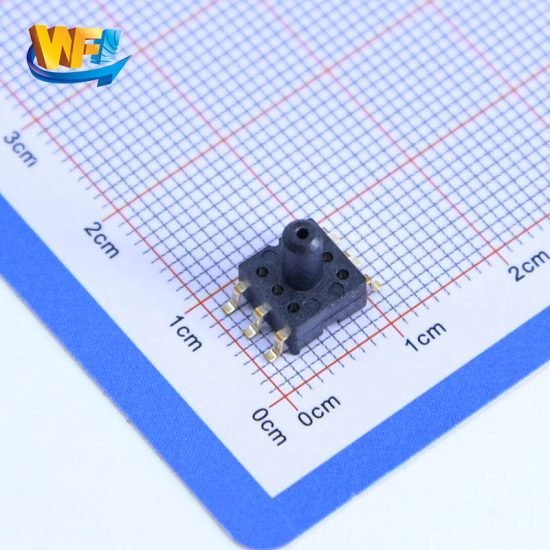
Varför misslyckas trycksensorer?
Miljöfaktorer
Tuffa miljöer kan avsevärt påverka sensorprestandan. Exponering för extrema temperaturer, fukt, frätande ämnen och vibrationer kan påskynda slitaget. Det är viktigt att skydda sensorn med lämpliga kapslingar och beläggningar.
Elektrisk överbelastning
Elektrisk överbelastning, såsom spänningsspikar eller elektrostatisk urladdning (ESD), kan skada sensorns interna elektronik. Korrekt jordning, överspänningsskydd och försiktig hantering kan förhindra dessa problem.
Förorening
Förekomsten av föroreningar, såsom damm, olja eller kemikalier, kan täppa igen sensorns tryckport eller korrodera dess inre delar. Regelbunden rengöring och användning av filter kan förhindra föroreningsrelaterade fel.
Hur man felsöker vanliga trycksensorproblem
Första kontroller
Visuell inspektion: Kontrollera om det finns synliga skador, såsom sprickor, korrosion eller lösa anslutningar.
Ledning: Se till att alla ledningsanslutningar är säkra och korrekt anslutna enligt sensorns datablad.
Strömförsörjning: Kontrollera att sensorn får rätt matningsspänning. Ofta är det otillräcklig spänning.
Tryckkontroller
Tillämpa känt tryck: Använd en kalibrerad tryckkälla för att applicera kända tryck på sensorn.
Jämför avläsningar: Jämför sensorns utsignal med de förväntade värdena. Varje betydande avvikelse indikerar ett problem.
Kontrollera om läckor: Se till att det inte finns några läckor i tryckledningen eller kopplingarna som kan påverka sensorns avläsningar.
- Signalkonditionering: Kontrollera signalkonditioneringskretsen för eventuella problem, till exempel felaktiga op-förstärkare eller motstånd.
Slutsats
Ovanstående introduktion repar bara ytan på tillämpningarna av trycksensorteknologi. Vi kommer att fortsätta att utforska de olika typerna av sensorelement som används i olika produkter, hur de fungerar och deras fördelar och nackdelar. Om du vill ha mer information om vad som diskuteras här kan du kolla in det relaterade innehållet längre fram i den här guiden. Om du är tidspressad kan du också klicka här för att ladda ner detaljerna i denna guide Lufttryckssensor Produkt PDF -data.
För mer information om andra sensorteknologier, vänligen Besök vår Sensors -sida.