Blog

Your blog category

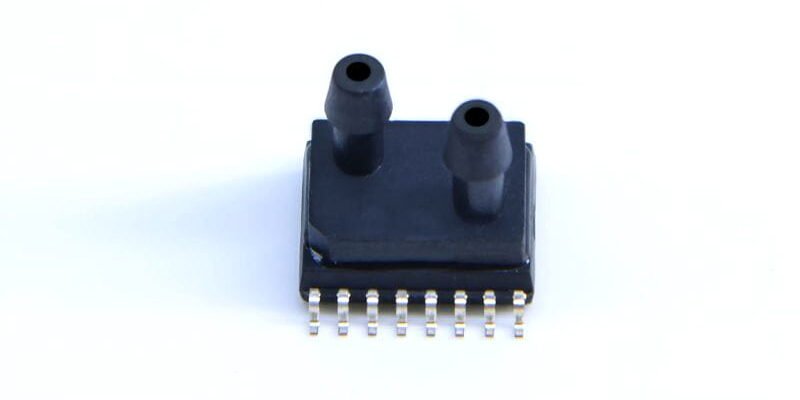
Sensor WF100E 40KPA

Sensor Tekanan Tolok | Penangkapan Sensitif Perubahan Tekanan Kecil

Gauge-pressure sensors, thanks to excellent zero offset, linearity, hysteresis and temperature adaptability, can stably and sensitively pick up tiny pressure changes. From device traits, signal handling, range selection, system integration and validation, this piece gives an engineer-focused technical rundown to help you grasp the essentials and what matters for implementation.

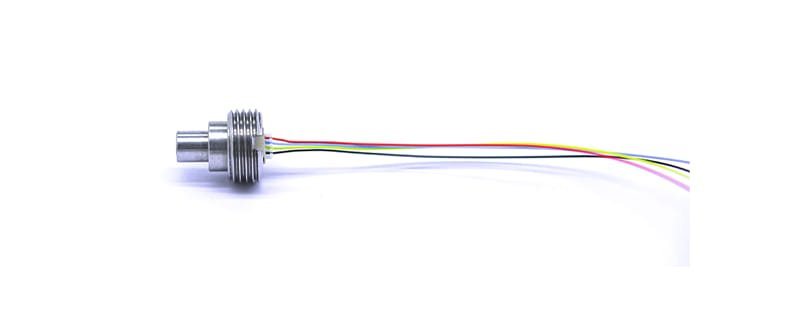
WF183DE 1BAR SENSOR

Penderia tekanan cawan sedutan elektrik memastikan operasi unit teras yang boleh dipercayai

Pressure sensors — covering electric suction cup pressure sensors, vacuum sensors, digital vacuum sensors and absolute-pressure sensors — are the core sensing elements in an electric suction cup. They turn vacuum physics into controllable digital signals. This piece looks at monitoring and verification, force adjustment, leak protection, energy management and safe release, and ties in sampling, packaging and signal conditioning to show how sensors keep suction cups reliable and efficient.

teras pemancar tekanan

Water level pressure sensors achieve precise control and efficiency in agriculture

Water-level pressure sensors give steady, measurable information on liquid levels in irrigation and water management, directly supporting automation and decision-making. This piece looks at needs, sensor features, system integration, control implementation and reliability, and explains how putting sensors at the centre boosts precision and efficiency, highlighting key product specs and practical engineering points.

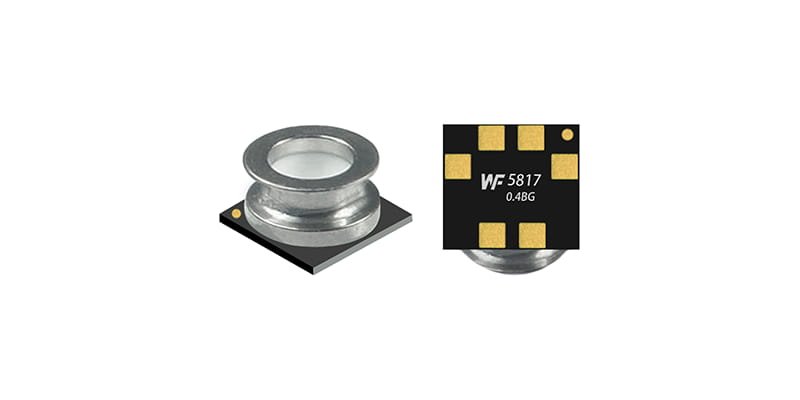
Sensor tekanan WF5837C

TEMP Pampasan Sensor Tekanan Mikro - Mencapai ketepatan dan kestabilan yang tinggi

This piece looks at a temperature-self-compensating MEMS micro-pressure sensor based on an island-beam-membrane coupled design, and explains how the structure actively cancels output drift caused by thermal stress. Made with SOI and dual-DRIE precision processing, the device shows very low temperature drift across 0°C–50°C (zero-point drift 0.081%FS, full-range drift 0.090%FS, nonlinearity 0.307%FS), offering a high-accuracy, low-power micro-pressure detection option.

Sensor tekanan WF5837C

The difference between of pressure sensor 5V Vs 10V analogue outputs?

5 V outputs (e.g. 0–5 V or 0.5–4.5 V) vs 10 V outputs (e.g. 0–10 V or 1–10 V) mainly differ in span (range) and power/compatibility. 0–10 V gives twice the span of 0–5 V but typically requires a higher supply (commonly 12 VDC). Ratiometric 0.5–4.5 V is usually powered from 5 VDC.

WF5803C-02BAR Penderia Seramik Kalis Air

From Medium Compatibility to Linearity: 7 Key Pressure Sensor Specs

This article explains the key technical parameters you should understand when selecting a pressure sensor for a project. It walks through medium compatibility, rated/withstand/burst pressures, compensated temperature range, zero-point drift and linearity — showing how each affects reliability, accuracy and suitability for specific applications.

Tatal ke Atas

Hubungi kami