Catalogue
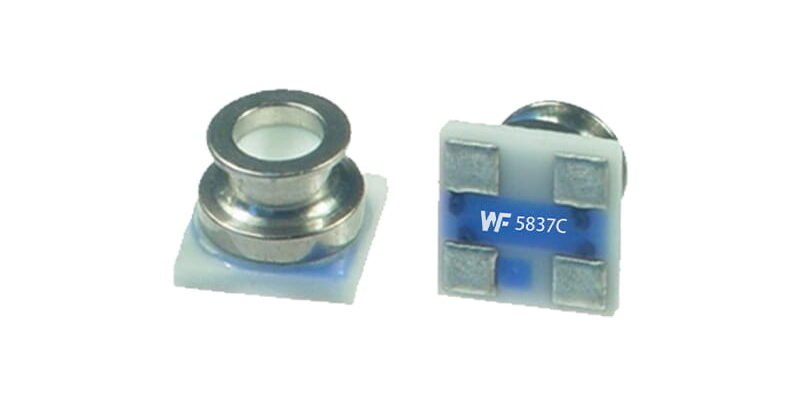
The WF183DE advanced MEMS digital pressure sensor is specifically designed for mountain bike tire pressure monitoring. This sensor integrates high-precision pressure detection, temperature compensation, and digital output capabilities in an LGA8 package format, featuring a wide pressure range of 3-10bar and excellent environmental adaptability. Through IIC digital interface for real-time data transmission, it provides riders with accurate and reliable tire pressure monitoring solutions.
1. Technical Specifications and Performance Features
Plage de pression et performances de précision
The WF183DE sensor offers a wide pressure measurement range of 3-10bar, fully covering the common pressure intervals for mountain bike tires. The sensor employs absolute pressure measurement principles, avoiding atmospheric pressure variations affecting measurement results. High-resolution 24-bit ADC ensures excellent measurement accuracy with resolution reaching 0.01bar, capable of detecting minute tire pressure changes. The sensor’s non-linearity error is less than 0.1%FS, with temperature coefficient controlled within ±0.02%FS/°C, ensuring measurement stability under different temperature conditions.
Taux d'échantillonnage et performances de réponse
The sensor features rapid response characteristics with typical response time less than 10ms, enabling real-time tracking of dynamic tire pressure changes. Programmable sampling rates support flexible settings from 1Hz to 100Hz, meeting data acquisition needs for different application scenarios. In continuous monitoring mode, the sensor can promptly capture critical information such as tire leakage and pressure fluctuations caused by temperature variations.
Adaptabilité et fiabilité de l'environnement
The WF183DE sensor operates within -40°C to +85°C temperature range, fully adapting to extreme temperature conditions during mountain riding. Built-in temperature compensation algorithms automatically correct temperature effects on pressure measurements, ensuring accuracy. IP65 protection rating enables the sensor to withstand harsh environmental factors like rain and mud, particularly suitable for outdoor sports applications.

2. Mountain Bike Application Compatibility
Analyse des exigences de surveillance de la pression des pneus
Mountain bike tire pressures typically range from 2-4bar, varying based on terrain, riding style, and tire type. The WF183DE sensor’s 3-10bar range completely meets these requirements while providing sufficient measurement margin for Plus and Fat tire specifications. The sensor can detect 0.1bar pressure changes, meeting precise tire pressure adjustment needs in mountain riding.
Solutions d'installation et d'intégration
The sensor features a compact 3.0×3.0×0.9mm LGA8 package, facilitating integration into tire valves or dedicated monitoring devices. Micro SMD surface-mount design simplifies circuit board layout, reducing overall system volume and weight. The sensor’s single pressure sensing port design, combined with sealing treatment, effectively prevents tire sealant corrosion and contamination.

Transmission et traitement des données
The IIC digital interface supports both 3.3V and 5V power supply, compatible with mainstream microcontroller systems. The sensor’s built-in DSP processor completes real-time calibration calculations for pressure and temperature, directly outputting processed digital data, simplifying host processing burden. Supports both interrupt and polling modes for data acquisition, meeting different power consumption requirements.
3. Interference Resistance and Stability Design
Protection des vibrations et de l'impact
During mountain riding, sensors must withstand intense impacts from road surface bumps and landing jumps. The WF183DE sensor employs robust silicon-based MEMS structure with excellent impact resistance, maintaining normal operation under 5000g impact conditions. The sensor’s mechanical structure design considers stress concentration avoidance, ensuring long-term stability under repeated mechanical stress.
Contrôle de la dérive de température
The sensor incorporates high-precision temperature sensors for real-time environmental temperature monitoring. Advanced temperature compensation algorithms automatically correct temperature effects on pressure measurements, controlling temperature drift within ±0.02%FS/°C range. This characteristic ensures accurate pressure readings in mountain environments with significant daily temperature variations.
Assurance de stabilité à long terme
The sensor undergoes rigorous aging tests and long-term stability verification, with annual drift rate less than 0.1%FS. Using high-quality silicon-based materials and advanced packaging processes ensures stable performance throughout long-term use. Built-in self-diagnostic functions can detect sensor operating status, identifying potential failure risks promptly.
4. Intelligent Functions and User Experience
Systèmes de surveillance et d'alerte en temps réel
The sensor supports continuous monitoring mode, real-time tracking of tire pressure changes. When pressure abnormalities are detected, it can promptly trigger warning signals, alerting riders for action. Programmable pressure threshold settings allow users to customize alert conditions based on personal riding habits and tire specifications, achieving personalized safety protection.
Enregistrement et analyse de données
The sensor supports historical data recording functionality, storing pressure change trends to help riders analyze tire performance and usage conditions. Through data analysis, users can understand tire airtightness performance and temperature effects on pressure, providing scientific basis for maintenance planning.
Modes de fonctionnement à faible puissance
The sensor provides multiple power consumption mode selections, including continuous monitoring, timed wake-up, and sleep modes. In low power mode, sensor current consumption is less than 10μA, combined with efficient power management for months of continuous operation. Intelligent power management algorithms automatically adjust operating modes based on usage patterns, balancing performance and power consumption.
5. Engineering Implementation and Integration Considerations
Exigences de conception de circuit
Le capteur’s IIC interface design simplifies peripheral circuit complexity, requiring only basic components like pull-up resistors and decoupling capacitors. Built-in voltage regulation circuits have low power quality requirements, operating stably within 2.7V-5.5V wide voltage range. PCB layout requires attention to signal integrity and electromagnetic compatibility, recommending appropriate shielding measures around the sensor.
Conception d'installation mécanique
Sensor installation must consider both sealing and maintainability. Threaded connections or snap-fit mounting methods are recommended to ensure reliable connection between sensor and tire valve. Installation requires attention to sensor orientation, ensuring pressure sensing port correctly aligns with air pressure channel. Adequate maintenance space should be reserved for future cleaning and replacement operations.
Solutions d'intégration du système
The sensor can seamlessly integrate with existing bicycle electronic systems, including GPS navigation, heart rate monitoring, and power meters. Through unified data bus, centralized processing and display of multi-sensor data is achieved. Supports wireless data transmission module expansion, enabling real-time pressure data transmission to smartphones or onboard display devices, enhancing user experience.
Conclusion
The WF183DE sensor provides an ideal solution for mountain bike tire pressure monitoring through its exceptional technical performance and reliability. The sensor’s wide pressure range, high-precision measurement, excellent environmental adaptability, and intelligent functions completely meet the demanding requirements of mountain riding. Through precise pressure monitoring, it not only enhances riding safety but also helps riders achieve better performance. The successful application of this sensor marks another important advancement of MEMS technology in outdoor sports equipment.
L’introduction ci-dessus ne fait qu’effleurer la surface des applications de la technologie des capteurs de pression. Nous continuerons à explorer les différents types d’éléments capteurs utilisés dans divers produits, leur fonctionnement ainsi que leurs avantages et inconvénients. Si tu’D Like plus de détails sur ce’Comme discuté ici, vous pouvez consulter le contenu associé plus loin dans ce guide. Si vous êtes pressé par le temps, vous pouvez également cliquer ici pour télécharger les détails de ce guide Données PDF du produit du capteur de pression d'air.
Pour plus d'informations sur d'autres technologies de capteurs, veuillez Visitez notre page de capteurs.