
Grip, measured.
A pressure sensor reads the vacuum inside the cup, millisecond by millisecond. That one signal decides whether the load stays up, when the pump runs, and when the seal is about to give.
A suction cup holds by vacuum, and vacuum is just pressure. Read that pressure, and you know everything the cup is doing — whether it grabbed, whether it's slipping, whether it's about to let go.
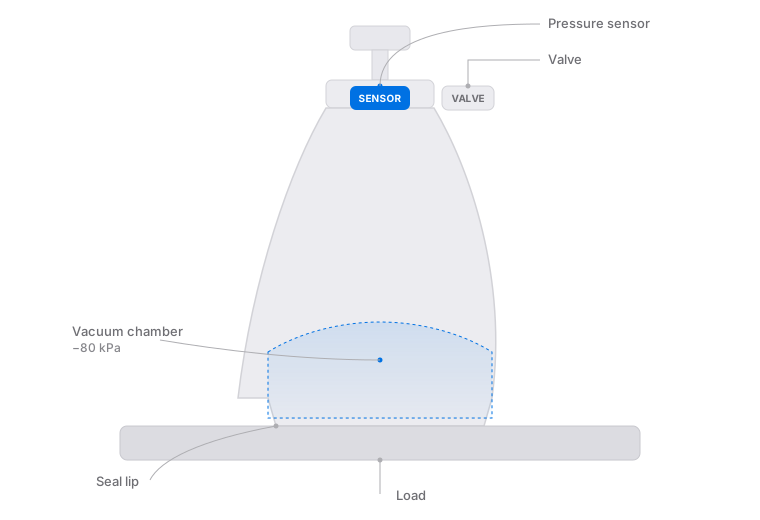
Confirm the grip
When internal pressure drops to −80 kPa, the sensor reports a solid grab. If the number climbs back toward zero, the seal is leaking — or the surface never sealed at all. The system tops up the vacuum, or raises the alarm, before the load knows anything is wrong.
Match the load
Glass and concrete grip differently. A light, smooth panel holds with little pump power. A rough, heavy slab leaks and needs more. The sensor tells the pump exactly how hard to work, in real time, so the cup holds on — without wasting a watt.
Catch the leak
A torn seal shows up as a sudden pressure spike. The sensor brakes the pump and locks the mechanism before the part drops. A slow leak — aging seals, tiny cracks — shows up as a trend, flagged for maintenance instead of discovered at failure.
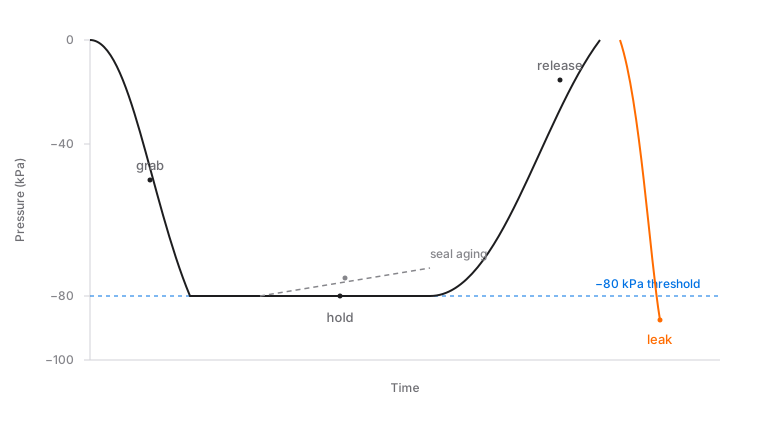
Run the pump only when it earns it
Once the cup is sealed, the pump can stop. The valve holds the vacuum, and the sensor decides when the pump gets to rest. On a multi-cup line moving a large panel, the same readings balance the grip across every cup — so no single cup quietly overloads.
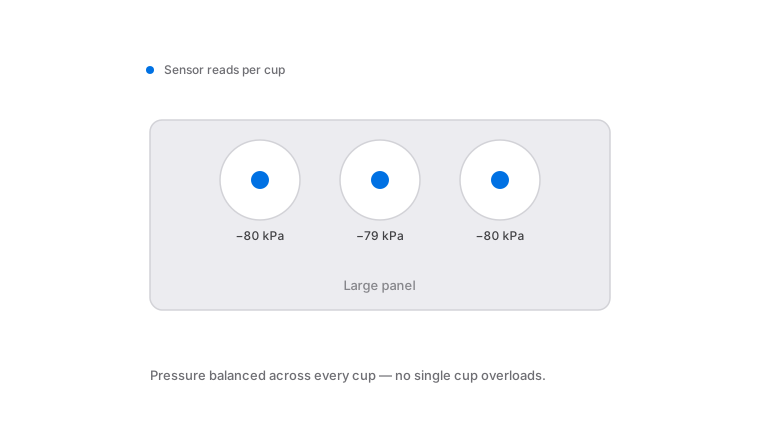
Let go, gently
Releasing a glass sheet is as critical as lifting it. The sensor watches pressure return at a controlled rate, so the cup lets go slowly instead of snapping. A short burst of reverse air clears dust from the seal — and the sensor confirms pressure is back before the next cycle.
Three things that make this hard
Millisecond response
Industrial lines move fast. The sensor samples at 1 kHz or faster, with signal processing to match.
Oil, dust, water
The cup lives in a dirty world. IP67 sealing — or an isolation membrane — keeps the media out.
Temperature drifts
Heat moves the reading. An on-board temperature sensor corrects it, continuously.
Where this goes next
Predictive, not reactive
Feed the pressure history to a model, and it learns when a seal will die before it does.
Smaller
El sensor, pump, and valve collapse into one module.
More senses
Add vibration and optical data, and the cup judges surface condition — not just pressure.
Pressure is the one signal a suction cup can't fake. Read it well, and the cup stops being a dumb rubber pad. It starts to feel.
Preguntas frecuentes
How does the cup know when to sound a low-vacuum alarm?
The sensor compares chamber pressure against a set threshold, continuously. It alerts before the vacuum drops far enough for the load to slip.


