Блог

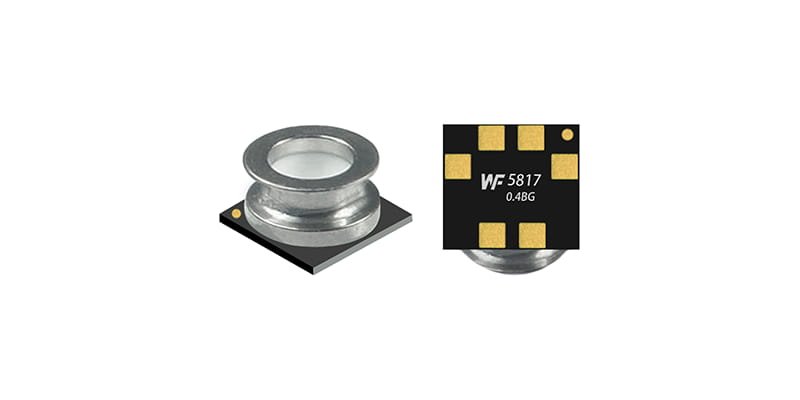
Датчик тиску WF5837C

Датчик мікро -тиску компенсації температури - досягти високої точності та стабільності

This piece looks at a temperature-self-compensating MEMS micro-pressure sensor based on an island-beam-membrane coupled design, and explains how the structure actively cancels output drift caused by thermal stress. Made with SOI and dual-DRIE precision processing, the device shows very low temperature drift across 0°C–50°C (zero-point drift 0.081%FS, full-range drift 0.090%FS, nonlinearity 0.307%FS), offering a high-accuracy, low-power micro-pressure detection option.

Датчик тиску WF5837C

The difference between of pressure sensor 5V Vs 10V analogue outputs?

5 V outputs (e.g. 0–5 V or 0.5–4.5 V) vs 10 V outputs (e.g. 0–10 V or 1–10 V) mainly differ in span (range) and power/compatibility. 0–10 V gives twice the span of 0–5 V but typically requires a higher supply (commonly 12 VDC). Ratiometric 0.5–4.5 V is usually powered from 5 VDC.

Водонепроникний керамічний датчик WF5803C-02BAR

Від середньої сумісності до лінійності: 7 характеристик датчика тиску клавіш

This article explains the key technical parameters you should understand when selecting a pressure sensor for a project. It walks through medium compatibility, rated/withstand/burst pressures, compensated temperature range, zero-point drift and linearity — showing how each affects reliability, accuracy and suitability for specific applications.

Датчик тиску WF5837C

Achieving height resolution within 10 cm with barometers

Ordinary barometers—piezoresistive, capacitive or MEMS silicon resonant—can’t reliably detect 10 cm (≈0.012 Pa) in real life: the pressure change is tiny vs draughts, switching, people and sensor noise/drift.

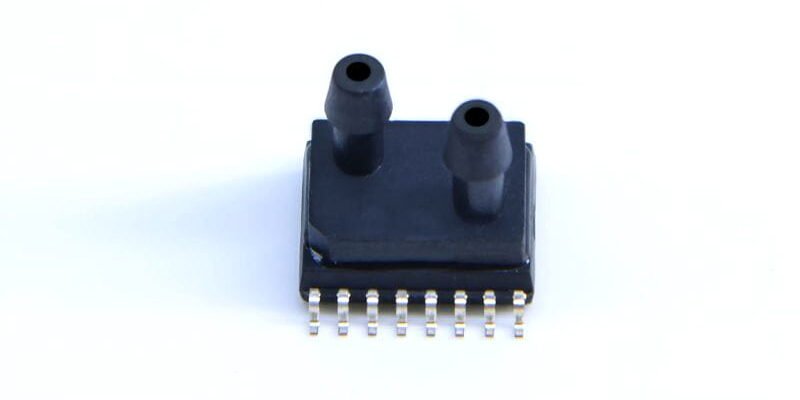
Датчик WF200D 10 кПа

Диференціальні датчики тиску посилюють розумний досвід у терапії рани негативним тиском

Negative Pressure Wound Therapy (NPWT) as a vital modern medical technology relies directly on precise pressure control for treatment effectiveness. Differential pressure sensors serve as core monitoring components, ensuring treatment safety and efficacy through real-time negative pressure monitoring. This article analyzes the critical role of MEMS differential pressure sensors in NPWT devices, explaining technical principles, application advantages, and significant improvements to patient treatment experience.

Перейдіть до верхньої частини

Зв'яжіться з нами