Basınç sensörü: Arıza Mekanizmaları ve Koruma Stratejileri Araştırması
Silicon piezoresistive pressure sensors can fail when contaminated fluids and cyclical loads damage the isolation diaphragm, squeezing bond wires and cutting signals.
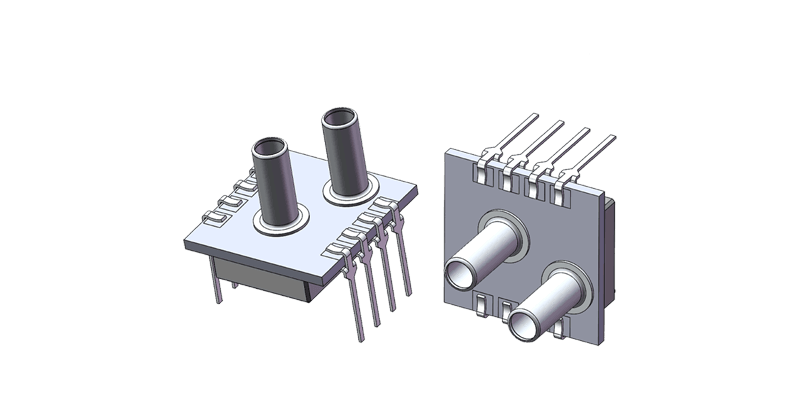
Differential feedback sensor uses two fully mirrored detection channels to sharpen measurement robustness. From an engineering standpoint, this piece focuses on how differential architecture and mixed-sensor topologies achieve high-fidelity data sampling under high dynamic loads.
Pressure sensors upgrade water-pressure switches from blunt mechanical limits to measurable electronic protection. Combined with temperature sensors and a 1Bar reference, systems avoid dry-run, reduce false trips and offer clear digital diagnostics.
High sensor power use drags system efficiency by shortening battery life, adding heat, causing signal drift, and forcing power reallocation. solve this by low-voltage design, protocol optimization, smart PMICs and lightweight edge processing to restore stable, long-term operation.
ASIC pressure sensors deliver higher accuracy, lower noise, and better power efficiency by integrating low-noise front ends, 24-bit ADCs, on-chip temperature compensation and calibration. Ideal for TPMS, wearables and industrial use.
MEMS pressure sensors enable 3D navigation by monitoring atmospheric pressure changes, converting planar GPS guidance into spatial positioning. These sensors measure barometric variations to calculate altitude, filling GPS vertical blind spots in urban canyons and tunnels where satellite signals fail.
Based on practical MEMS technology experience, this article systematically explains how digital pressure sensors achieve 1cm water depth resolution through 24-bit ΔΣ ADC, simplify system integration via I2C and SPI protocols, and withstand harsh outdoor environments through waterproof structural design. These technical features make digital pressure sensors the preferred measurement component for dive computers, underwater robots, weather stations, and similar equipment.
For long runs and industrial sites, favour 4–20 mA transmitters. For remote, low-power digital nodes, favour ratio-voltage or I²C transducers. For the highest sensitivity and flexible post-processing, choose mV-output sensors and pair them with precision amplifiers and ADC.
High-precision barometric sensors for meteorological observation: an engineering guide from extreme-condition tests to selection tips, covering error sources, temperature compensation and site maintenance to help weather station ensure reliable data.
Pressure sensors — especially absolute and digital MEMS types — are the anchors for smart window cleaners. Real-time vacuum feedback adjusts pump power, spots leaks and saves energy. Fast response (<10 ms), ±0.5%FS accuracy, IP67 protection and redundant sensors improve suction stability, path coordination and safety at height.
Digital display gauges convert mV or 5V analogue signals from MEMS pressure sensors into real-time numeric readings, pairing low-level sensing with precise signal handling for stable monitoring and reliable logs.
Smart devices rely on sensors to continuously sense the environment; when sensor outputs show abnormal fluctuations, system measurement accuracy and response stability suffer.
Fark basınç ölçümü, gaz boru hatlarındaki filtre direncindeki değişiklikleri izlemek için kullanılır.
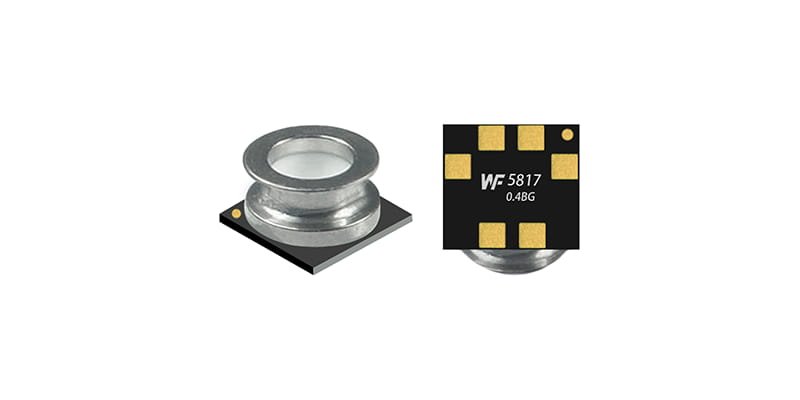
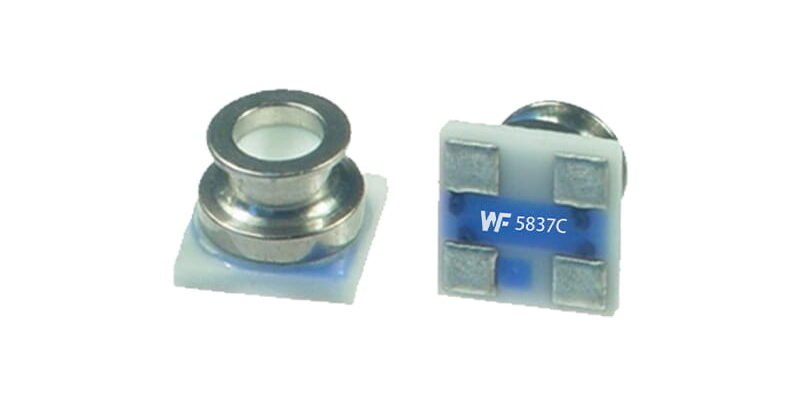
Düşük stresli MEMS paketlemenin önemli noktaları: MEMS basınç sensörlerini, düşük güçlü sensörleri ve su geçirmez yüzey basıncı sensörlerini stabilize etmek için malzemeler, süreçler ve yapılar yoluyla termo-mekanik uyumsuzluğu azaltın.
Pressure sensors in smart washing machines handle precise water-level detection and overflow protection. They’re key to matching water amounts to load size and saving energy. This piece explains sensor types, performance, signal processing, calibration and temperature compensation, and why factory-calibrated and amplified calibrated units simplify integration.