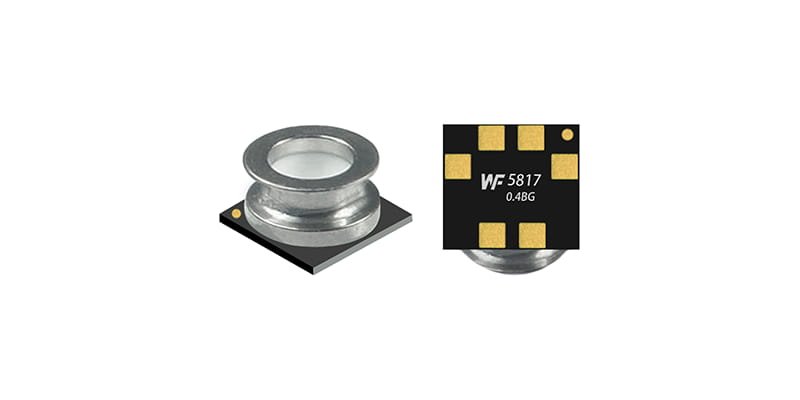
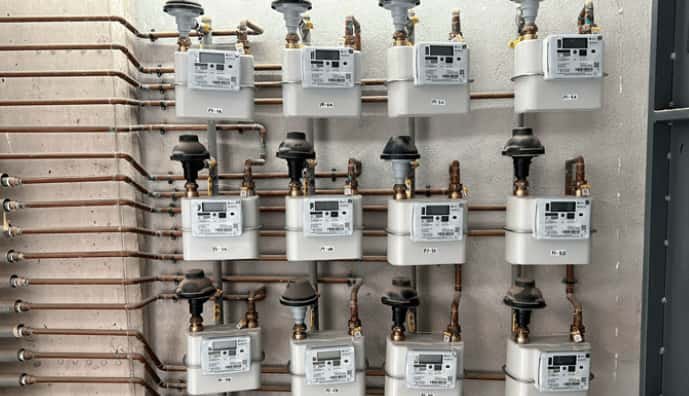
1. Safety Monitoring and Leak Detection
Real-time pressure monitoring: the sensor continuously detects pressure changes inside the gas pipeline. If pressure drops sharply (possibly due to a leak) or rises abnormally (possibly due to a blockage), the sensor triggers an alarm and works with the valve to automatically cut off the gas supply, preventing a safety hazard.
Micro-leak identification: a high-precision sensor can catch the tiny pressure fluctuations caused by a slow leak, improving early-warning capability.
2. Flow Metering and Temperature-Pressure Compensation
Correcting gas volume: gas volume is significantly affected by temperature and pressure (the ideal gas law). The pressure sensor works together with a temperature sensor to convert the flow measured under actual conditions into a volume under standard conditions (such as standard atmospheric pressure and 20°C), ensuring fair and accurate metering.
Improving billing accuracy: this avoids billing errors caused by fluctuations in ambient pressure — an effect that is especially noticeable at high altitude or in regions with variable atmospheric pressure.
3. Differential-Pressure Flow Calculation (Certain Designs)
Pressure-differential measurement: in gas meters based on an orifice plate, turbine, or similar principle, the pressure sensor detects the pressure difference across the throttling device and, combined with fluid-mechanics formulas, calculates flow velocity and cumulative flow.
4. System Fault Diagnosis and Maintenance
Abnormal-pressure logging: continuous pressure-data logging helps diagnose pipeline blockages, equipment aging, and similar issues, providing a basis for remote operations and maintenance.
Automatic-calibration support: over long-term use, sensor data can help the system determine whether calibration or part replacement is needed, extending equipment lifespan.
5. Smart Feature Expansion
Remote monitoring and data transmission: in a smart gas meter, pressure data can be uploaded to a management platform for remote real-time monitoring, usage-pattern analysis, and abnormality alerts.
User-facing alerts: the meter can notify users of abnormal pressure via an app or on-device display, improving safety transparency.
結論
The pressure sensor is one of the core components enabling accurate metering, safety assurance, and intelligence in a gas meter. It matters not only for fair billing, but as a key line of defense in preventing gas accidents — particularly indispensable in a modern smart gas meter. As IoT technology advances, the value of its data is expected to extend further into energy management and user-experience optimization.
Editor's note: the differential-pressure flow path described above is worth flagging separately from the safety-monitoring path — they're often handled by sensors with different response-time and range requirements, and treating them as one undifferentiated 'pressure sensor' spec in a BOM is a common source of underperformance in field deployments.
Frequently Asked
How does a gas pressure sensor improve metering accuracy versus a basic mechanical meter?
By continuously correcting measured volume for real-world pressure and temperature rather than assuming fixed standard conditions.