- Door WF-sensoren
A digital pressure gauge used in the field or as a handheld tool has clear needs for sensor stability, accuracy, output format and resistance to harsh environments. In many industrial cases, sensors are made from diffused silicon, ceramic or strain-based diaphragms; the pricier, cutting-edge option is sapphire for high-temperature work. The following sections go step-by-step through selection, types, output handling, packaging and recommended setups, with the aim of giving you practical criteria and hands-on advice when choosing.
Catalogus
1. Selection principles: key points for weighing accuracy and reliability
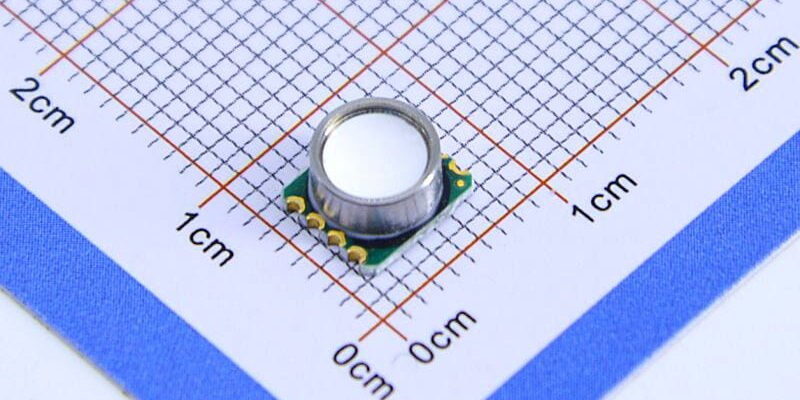
When choosing a sensor for a digital pressure gauge, the first thing is to match the measurement range and accuracy. Typical digital gauges expect errors of ≤1% or better, and power supply and low-power needs also affect the choice. Another key point is output format: some sensors give a raw millivolt bridge output that needs amplification and conditioning; others provide a digital output ready to talk to a microcontroller. The sensor in the image — a metal top-port package with LGA pads — is a common form factor made for easy mounting and sealing, suitable for handheld or panel digital gauges. When choosing, also consider range, long-term zero drift and temperature compensation capability; these determine whether the digital gauge will reproduce consistent, trustworthy results on site.
output signal compatibility
Make sure the sensor matches your display or data acquisition input: if the gauge expects 0–5V / 0–10V or raw mV to an ADC, you’ll need the appropriate amplifier and calibration circuit; if the gauge supports I²C, SPI or other digital buses, then sensors with digital outputs are handy. Not all digital sensors behave the same in low-power modes — watch out for start-up and sampling timing and standby current.

2. Common sensor types explained (range selection guide)
Common industrial sensors, by sensing element, include ceramic piezoresistive, diffused silicon (silicon-based piezoresistive), strain-gauge types and sapphire-hybrid structures. Diffused silicon pressure sensors offer excellent cost-to-performance in low-to-mid ranges and reasonable accuracy, but they need a stable excitation voltage and typically output microvolt or millivolt signals. Ceramic devices shine for corrosion resistance and impact toughness — they’re good where the medium is dirty or contains particulates. For very high temperature or extremely corrosive media, consider sapphire-based structures, though they’re significantly more expensive. Choose the gauge range to suit the measured condition: a smaller range gives better resolution, but beware of over-range hazards.
Materials and medium compatibility
The wetted materials depend on the medium: for normal air, water or oil, stainless steel or coated diaphragms are usually fine; for strong acids, alkalis or organic solvents, you’ll need special alloys or isolation diaphragms. Sealing design and the pressure port arrangement affect long-term reliability, and the mounting surface mustn’t transfer mechanical stress to the sensing diaphragm.
3. Output and signal conditioning in practice (response time and sampling rate)
Diffused silicon and similar sensors output very small voltages and need a bridge, constant current/voltage excitation and differential amplification; then temperature compensation and linearity correction turn that into a standard 0–5V, 4–20mA or digital bus output. If your digital gauge samples slowly (say 1 sps), you can use an off-the-shelf pressure chip with digital output to simplify the electronics. For dynamic measurements or fast responses, check sensor response and the gauge’s filtering so the system bandwidth and sampling frequency match — avoid under-sampling or over-filtering.
Analogue vs digital: when to pick which (sampling rate and response)
If you need flexible gain, calibration room and higher resolution, pick an analogue bridge sensor and handle amplification yourself. If you want fast integration and less software work, choose a sensor with digital output. Bear in mind how the digital sensor does its internal calibration and how often you’ll need an external recalibration.
4. Size, packaging and installation considerations
Portable digital gauges often use small metal top-port or side-port packages that protect the sensor mechanically while allowing a pressure interface. The pictured sensor shows a top-port with LGA pads, ideal for board-level mounting and automated assembly. During installation avoid solder-reflow temperatures that cause drift; where needed, use low-temperature reflow or secure the sensor with adhesive. Enclosure material affects corrosion resistance and EMC: proper shielding and grounding reduce noise on low-level signals.
Long-term stability in industrial settings (temperature and drift)
Long-term stability ties to compensation schemes and material ageing. For high-precision work, watch sensitivity drift, offset drift and hysteresis — periodic calibration helps maintain performance. Picking a component with built-in temperature compensation or a calibrated temperature curve reduces on-site maintenance.
5. Recommended configurations and selection examples
For a typical industrial digital pressure gauge (mid/low range, low sampling rate) diffused silicon pressure sensors are usually the best choice: they balance accuracy, stability and cost. The WF162L-style package shown in the image is a common board-level part that supports mass assembly and can come in either analogue or digital variants. If the medium is corrosive or contains debris, opt for ceramic diaphragms or isolation designs. For high temperatures or extreme conditions, look at more exotic material packages despite the higher cost. In the end you must weigh range, accuracy class, output interface, environmental resistance and budget to pick the right configuration.
Cost-performance balance
Higher precision brings higher component and calibration costs. At scale you can standardise parts, buy in bulk and simplify calibration procedures to lower unit cost. Design for serviceability: modular sensors make replacement and repair quicker and cheaper.
Conclusie
When choosing a sensor for a digital pressure gauge, prioritise matching the measurement range and accuracy, the output interface and signal conditioning needs, the medium compatibility, and the package/installation approach. Diffused silicon pressure sensors are the go-to for most mid/low-range digital gauges thanks to their cost-performance; ceramic and specialised materials have distinct advantages in harsh environments; and high-accuracy or special-condition applications will require higher-cost options. By clarifying your needs, matching interfaces and implementing proper signal conditioning and temperature compensation, you’ll ensure the digital gauge gives stable, accurate readings out in the field.
De bovenstaande introductie schetst slechts het oppervlak van de toepassingen van druksensortechnologie. We zullen doorgaan met het verkennen van de verschillende soorten sensorelementen die in verschillende producten worden gebruikt, hoe ze werken en hun voor- en nadelen. Als u meer informatie wilt over wat hier wordt besproken, kunt u de gerelateerde inhoud verderop in deze handleiding bekijken. Als u weinig tijd heeft, kunt u ook hier klikken om de details van deze handleidingen te downloaden Luchtdruksensorproduct PDF -gegevens.
Voor meer informatie over andere sensortechnologieën kunt u terecht Bezoek onze sensorenpagina.