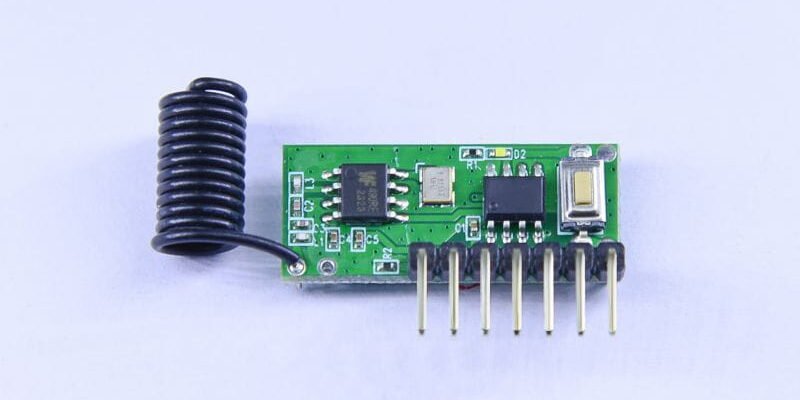
Espresso lives in a narrow pressure band. Around twelve bar at the brew head, give or take one, is what separates a sweet shot with thick crema from a sour watery one. Slip under it and water races through the grounds without pulling out much. Push over it and the extraction turns harsh. The pressure sensor is the part that owns this problem. It reads water and steam pressure in real time, adjusts the pump the moment the reading drifts, and flags trouble before a seal or a heating element pays for it.
Holding twelve bar through the shot
Espresso wants 12±1 bar of pressure at the brew head. The sensor watches that number while the shot runs and keeps it there. When pressure climbs it eases the pump, when pressure sags it pushes harder, and water ends up moving through the coffee puck evenly. Even flow is what pulls the oils and flavor compounds out of the grounds instead of letting water channel through one weak spot.
Most good shots start before full pressure. Pre-infusion wets the grounds at 2 to 3 bar first so the puck settles and seals, then the pump opens up. The sensor holds that low band steady. The result is a more uniform extraction, and uniformity is what keeps the sour under-extracted taste out of the cup.
Steam runs on its own numbers
The steam wand works a different range, typically 1 to 1.5 bar in the boiler. The sensor holds it there so the steam stays dry and consistent. Below that the foam comes out coarse and bubbly. Above it the milk proteins scald and a flat burnt taste follows.
Demand moves around too. Two cappuccinos back to back and the boiler has to catch up. Pressure data is what triggers the heating element early enough that the second froth is no worse than the first.
What the sensor stops before it happens
Two failure modes are worth walking through.
The first is overpressure. If temperature control fails and water flashes into steam, boiler pressure climbs fast. The sensor reads the spike and works with a pressure relief valve to vent it before a pipe bursts or a seal gives out.
The second is running dry. Sustained pressure below a set value usually means an empty tank or a pump fault, and the machine stops and asks the user to check the water source. Heating elements do not survive dry running. This is the cheap insurance against it.
Smarter features from the same data
Higher-end models make pressure curves programmable. A profile might start at twelve bar and ease down to six across the shot, which softens the finish and suits dark roasts. The sensor is what turns that setting on a screen into a real pressure change at the group head.
Long-term drift matters as well. Scale buildup inside the passages shows up as growing pressure fluctuation, at times as a 10% drop in extraction pressure. The machine reads the trend and prompts for descaling. A user who never thinks about limescale still gets the reminder at the right time.
What makes this hard to engineer
Heat is the first constraint. The area around the brew head runs above 90°C, so the sensor needs ceramic packaging or a metal isolation diaphragm to keep thermal expansion from bending the readings. The operating range of a typical part runs from -20°C to 125°C.
Pumps make noise. Rotary and vibration pumps both produce pressure pulsation, and the raw signal is unusable without filtering. A moving average or similar smoothing pulls out the real pressure trend and keeps the controller from chasing every ripple.
Dual-boiler machines raise the stakes. The brew boiler runs around 12 bar at 93°C while the steam boiler sits near 1.2 bar at 128°C. Two zones with two different jobs, and the machine has to keep both independent and accurate at the same time.
What the drinker gets
Consistency, mostly. Grind size wanders from morning to morning and beans age as the bag empties. The sensor absorbs the pressure variation so crema thickness and flavor stay closer from one shot to the next.
There is a learning-curve benefit too. Beginners watching pressure on an LED ring or a small LCD see what the machine is doing, which is the fastest way to learn what a good shot looks like. Machines that warn about pressure anomalies early also spend less time in the shop. The figure floating around the industry puts average annual maintenance costs roughly 30% lower on machines with this kind of monitoring. Treat it as a directional number. It is not lab-verified for any specific model.
Will coffee's mildly acidic pH corrode the sensor?
Short term, no. Espresso is mildly acidic, but a few seconds of contact with that acidity is nothing the sensor cannot take. The WF5803F carries a white adhesive gel coating over the sensing element, and that film absorbs a fair amount of weak corrosive exposure on its own.
Long term, corrosion is not what kills it. Coffee is full of fine micro-particles, and over thousands of shots they stick to the wetted surfaces and build up. Eventually they clog the pressure port, and the reading drifts or lags. The sensor does not die; it slowly goes deaf.
How much this matters depends on the service life the machine is designed for. A home espresso machine meant to last five years of morning shots and a café workhorse pulling two hundred drinks a day call for different margins. Match the protection and the cleaning interval to the lifespan the product actually promises.
Where this is going
Taste feedback is the next step. Pair pressure curves with user ratings and a model can recommend a profile per bean. A declining curve for dark roasts holds bitterness down, for example.
Cloud diagnostics are closer than they sound. An aging seal shows up as a gradual pressure drop in the data long before the drinker notices anything in the cup, which lets a manufacturer offer service first.
Pressure feedback also trims energy use. Heating power can drop during low-demand stretches, and that matters as appliance makers take carbon targets seriously.
A shot of espresso is a small thing to get right. It needs a narrow band of pressure, held steady through a process that wants to drift. The sensor is why a modern machine does that on a Tuesday morning without anyone standing over it. The rest of the machine makes coffee possible. This part makes it repeatable.
Why does espresso extraction need such precise pressure control?
Extraction is fussy about pressure. Too little and the shot runs sour and thin. Too much and it turns bitter and dry. The narrow band in between is where balanced flavor lives, and holding it is the whole job.
What happens when the pressure sensor fails?
Most machines treat bad pressure data as a stop condition. They pause and ask for service before heating continues. Running blind on pressure is how heating elements and seals die early.
Why do dual-boiler machines need more than one pressure reading?
The two boilers run at different pressures and different temperatures. Brew sits near 12 bar and 93°C, steam sits near 1.2 bar at 128°C. One reading cannot hold both zones accurately.