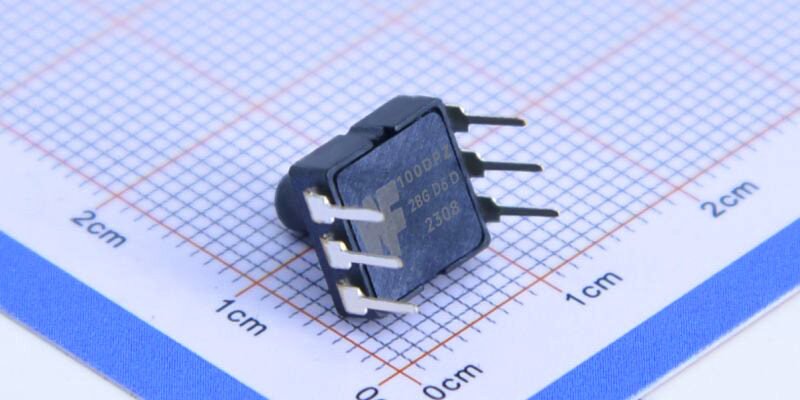
- Di Sensori WF
Putting pressure sensors into the water-pressure switch loop boosts safety in a very real way: you move from a crude mechanical yes/no decision to measurable, calibratable electronic data. That means wall-mounted boilers and heating systems detect low-water or no-water conditions much more reliably, stopping dry-run events and giving clearer diagnostic info.
Catalogare
1. The role of pressure sensors in water-pressure safety systems
One of the biggest risks for wall-mounted boilers is running with too little water — dry running is nasty, and it can ruin heat exchangers or worse. Traditional protection relies on a pressure switch with a mechanical contact to say “yes” or “no” to safe pressure. Bring a pressure sensor into that loop and you suddenly have continuous pressure readings instead of a single binary flag. That lets the controller apply layered safety logic. Combine pressure readings with a temperature sensor and the controller can tell the difference between a momentary pressure blip and a real loss of water — so you avoid unnecessary shutdowns and, more importantly, you don’t miss real faults.
Using a 1Bar pressure sensor as the reference makes sense: it’s a practical trigger point for start/recovery thresholds. Electronic sensors let you program debounce, filtering and thresholds so brief pressure pulses from pump starts or system turbulence won’t falsely trip the system. For an engineer, that translates to fewer false alarms, easier maintenance and much clearer fault data — which you’ll appreciate when you’re troubleshooting at 2 a.m.
1.1 Diaphragm-spring action explained
A mechanical water-pressure switch works by balancing the force of system water on a diaphragm against a spring preload; that balance flips a contact. There are two set points — an “open” value and a “closed” value. An electronic pressure sensor, by contrast, measures strain or capacitance on a sensing element and outputs a linear electrical signal, avoiding wear-out from microswitch contacts. With an electronic sensor, the controller can implement smarter logic: for instance, if pressure flutters around 0.2Bar, look at the temperature trend and pump speed before deciding to alarm or wait. The result? Safer operation and fewer unnecessary interventions.
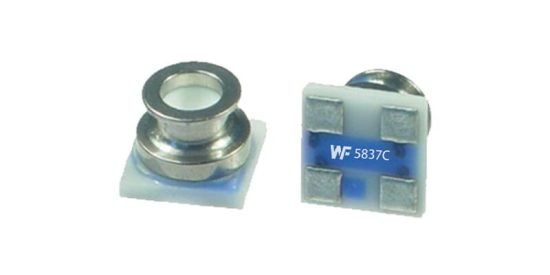
2. Electronic detection replacing mechanical contacts
Replacing a mechanical switch with an electronic pressure sensor means the controller can read actual values and analyse trends over time. A digital water pressure gauge sensor gives high-resolution samples and a pressure trace — crucial for spotting slow leaks, blocked pipes, or expansion-related overpressure. Electronic units can also report status to remote monitoring systems, which is brilliant for centralised maintenance.
Plus, modern sensors support self-check and diagnostics to detect if they’ve been compromised by heat or contaminants. Paired with a temperature sensor, the control system can use combined criteria to reduce false alarms: if pressure is low but the supply/return temperature difference is normal, it’s probably simple low pressure; if the temperature differential is off, you might have flow issues or pump faults — and the system should react differently.
2.1 Digital interfaces and signal stability
Digital outputs commonly use SPI, I²C, or analogue standards like 0–5V or 4–20mA. When designing the electronics, pay attention to EMC immunity, grounding and supply filtering. Robust sampling routines — think moving median or weighted filters — keep responsiveness while cutting pulsation noise. A pragmatic approach is to keep the mechanical pressure switch as a redundant safety device while making the electronic reading the primary source for diagnostics and user display — double protection with much better insight.
3. Design considerations: accuracy, temperature and contamination resistance
Heating systems expose sensors to elevated temperatures, particulates and chemical contaminants. Pick sensors with low long-term drift, suitable operating temperature ranges, and anti-fouling compatibility. A heating-system pressure sensor must use materials that won’t corrode or scale, otherwise you’ll see creeping errors over months. For systems that use 1Bar as a recovery threshold, choose components with the right nominal accuracy, offset stability and repeatability — this reduces false trips and service calls dramatically.
From a control perspective, combining pressure readings with a temperature sensor gives smarter refill prompts: if pressure is low and the supply/return temperature spread is normal, prompt the user to top up. If pressure is low and the temperature spread is odd, run diagnostics or lock out to avoid making things worse by indiscriminate refilling.
3.1 1Bar operating point and reliability matching
1Bar is a commonly used recovery point, but real systems vary with volume, head and pump curve. The sensor resolution must clearly resolve changes between roughly 0.2Bar and 1Bar, and sensors should support factory or field calibration with calibration records kept in the controller for traceability. Implement online offset detection and cross-checks (for example, compare readings with an independent digital water pressure gauge sensor) so you can detect degradation early and schedule maintenance before you get unexpected failures.
4. Sensor-to-controller interaction strategies
A robust interaction strategy is not just a single threshold — it’s sensor fusion. Combine pressure, temperature, pump current and flow info as a set of diagnostic inputs. When pressure looks wrong, run layered checks to avoid tripping on transient noise. For critical kit, use graded alarms: advisory warning, user prompt, restricted operation, and hard shutdown. Feeding both a pressure sensor and a mechanical water-pressure switch into the controller gives two independent inputs so a single failure won’t bring the whole safety chain down.
On the software side, storing pressure trends and emitting specific fault codes turns a vague “low water” alert into actionable guidance like “slow continuous drop — likely leak” or “instant plunge — possible pump failure”. That kind of clarity shortens downtime and cuts repair cost.
4.1 Redundancy and fail-safe design
In the field, keep a mechanical switch or dual electronic channels in the safety path to meet certification and tolerance needs. If the electronic path self-checks bad, fall back to mechanical judgement or enter a safe shutdown. Installation matters too: place sensors where they’re accessible for inspection and not prone to trapped air, which can bias readings.
5. Field use and maintenance advice
Older dynamic (or differential) pressure switches used a diaphragm, pushrod and microswitch to detect flow at pump start. They were fine for certain jump-start checks but had more moving parts and wear points. Static pressure sensing is simpler and more robust for long-term assurance that the system has sufficient static pressure to operate safely. Choose based on the trade-off: dynamic gives faster response for pump-start confirmation; static gives better reliability and lower maintenance.
Retrofitting digital water pressure gauge sensors brings much better remote monitoring and fault diagnosis. For maintenance, check seals, clear sampling ports and compare sensor readings to a reference. In high-temperature systems, opt for pressure sensors rated for elevated temps to avoid premature failure.
5.1 Selection tips
When selecting, confirm the working pressure range, fluid compatibility, output type and enclosure protection level so the sensor matches the controller’s electrical interface and the system’s thermal demands.
Conclusione
Adding a pressure sensor into the water-pressure switch safety chain isn’t just replacing a part — it’s turning a crude mechanical check into a measurable, traceable and diagnosable safety layer. When you marry pressure readings with temperature sensors, pump current and flow data, and use 1Bar as a sensible calibration point with proper filtering and calibration regimes, you get a system that’s safer, less prone to false alarms and far easier to maintain. Choose a heating-system pressure sensor or digital water pressure gauge sensor that matches the system and keep redundancy in critical paths — you’ll significantly boost overall reliability and serviceability.
L'introduzione di cui sopra scalfisce solo la superficie delle applicazioni della tecnologia dei sensori di pressione. Continueremo a esplorare i diversi tipi di elementi sensore utilizzati nei vari prodotti, come funzionano e i loro vantaggi e svantaggi. Se desideri maggiori dettagli su ciò che viene discusso qui, puoi consultare il contenuto correlato più avanti in questa guida. Se hai poco tempo, puoi anche fare clic qui per scaricare i dettagli di queste guide Dati PDF del sensore del sensore di pressione dell'aria.
Per ulteriori informazioni su altre tecnologie di sensori, per favore Visita la nostra pagina dei sensori.