- โดย WFเซนเซอร์
In an Industry 4.0 setting, real-time, reliable pressure measurement shifts maintenance from reactive fixes to proactive prediction. Industrial pressure sensors act as critical nodes, directly reporting fluid and gas conditions so that operations teams can intervene before issues escalate — cutting downtime and extending asset life.
แคตตาล็อก
1. Differential Pressure Monitoring & Real-time
Advanced manufacturing increasingly relies on connected data to keep lines running smoothly. Pressure signals are often among the earliest indicators of trouble — they can point to clogged filters, leaks, pump wear or stuck valves. Deploying industrial pressure sensors provides continuous, quantitative pressure traces; combined with edge collection and cloud analytics, maintenance teams can plan actions driven by data rather than waiting for failures. Picking the right sensor yields low-noise, dependable readings on site, making the inputs to predictive models much more trustworthy.
Why real-time pressure data matters
Real-time pressure data forms the basic health signal for many systems. Stable trends help spot slow degradation (for example, seal fatigue); abrupt shifts or recurring oscillations signal imminent risk (like leaks or blockages). These cues are often detectable with simple statistical checks at an early stage, which can then trigger deeper diagnostics or a site inspection.

2. Core Hardware & Signal Chain
On site, a pressure sensor is not a lone component — it sits inside a working chain with signal conditioning, data acquisition modules and comms. For indoor air handling and environmental measurements, ceramic pressure sensors offer advantages in contamination resistance, shock tolerance and long-term stability; their package and pad layouts (as seen on modules marked WF5803C) make them suitable for surface mounting or bolted mechanical attachment. Low-power sensor designs allow battery-powered or wireless nodes to run longer, lowering maintenance overhead. High-resolution pressure sensors capture fine trends in cleanroom or precision process contexts, enabling tighter control strategies.
From sensor to decision
The sensor converts mechanical pressure to an electrical signal, which is then amplified and filtered before entering an ADC and being pre-processed at the edge. Correct sampling rates and filter choices preserve essential information while reducing communication load, giving back-end predictive models cleaner inputs. Mechanical layout on site also affects measurement fidelity — sensors should sit close to the measurement point and avoid unnecessary piping loops.
3. Key Use Cases
In hydraulic and pneumatic installations, pressure deviations are direct indicators of performance loss. Industrial pressure sensors can continuously monitor pump outlets, valve ports or cylinder inlets. By analysing long-term trends and short-term pulsations, systems can distinguish normal operational variability from true faults. For example, rising back-pressure often signals a blocked filter; intermittent large swings may indicate hose failure or loose fittings. When pressure data is correlated with operational state and past work orders, maintenance tasks can be scheduled more accurately, cutting unnecessary downtime and repairs.
Determining when to replace parts on site
Implement multi-tier thresholds based on pressure: warning, serious, and critical. A warning schedules non-urgent maintenance; a serious level prompts an on-site check; a critical level advises immediate stoppage or load reduction. Thresholds should take the sensor’s own accuracy and drift behaviour into account (noting ceramic packages’ stability under thermal cycling), and be matched to process tolerances.
4. Data Strategy & Algorithms
If the collected data aren’t used effectively, the sensors are just hardware. A solid data strategy covers governance, cleansing, feature extraction and model validation. Simple statistical thresholds catch obvious faults, but long-term degradation requires trend-based models. High-resolution pressure sensors supply richer information, which helps separate periodic noise from genuine drift. Predictive models trained on historical run data should be periodically re-calibrated with fresh data to maintain accuracy across operating points. Integrating alarms with the work-order system turns predictions into actionable tasks, creating an operational closed loop.
Model deployment & edge inference
In bandwidth-constrained or privacy-sensitive settings, push some inference to the edge. Lightweight rules, spectral analysis or compact machine-learning models can deliver fast responses on site, while heavier models run in the cloud for periodic retraining. For critical assets like boilers, keep redundant on-site logic so safety is maintained even during network outages.
5. Device Selection & Deployment
Choose sensors by balancing accuracy, immunity to interference and cost. Low-power sensors suit battery-powered or remote nodes; ceramic pressure sensors perform well in corrosive or high-humidity environments; high-resolution pressure sensors are best where you need to spot very small trends (early filter blockage detection, for example). Consider connector types, seals and mechanical stress during installation. Design for easy replacement and maintain data continuity so you can track historical trends even after component swaps.
Verification and performance monitoring after deployment
After installation, run a short baseline test to verify zero offset and span response, and record that initial state as a reference. During operation, monitor drift and noise characteristics and tweak filters or sampling if necessary. Dashboards should highlight key health indicators so maintenance staff can triage quickly and avoid alarm fatigue from false positives.
บทสรุป
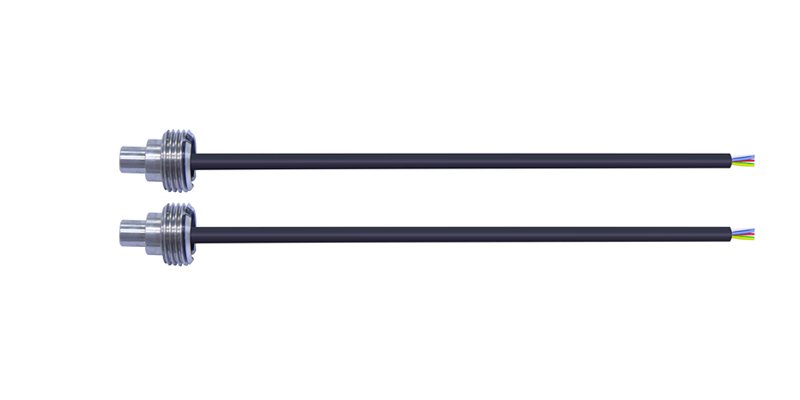
Treating pressure sensors as the backbone of Industry 4.0 predictive maintenance is practical and yields clear returns. By choosing the right mix of industrial pressure sensors, ceramic pressure sensors, low-power sensors and high-resolution pressure sensors, and building an end-to-end chain from field acquisition to model decisioning, you can intervene before faults escalate and reduce downtime and repair costs. The WF5803C-style module in the image is a good example of modern packaging that balances field mountability and long-term stability, making it suitable for inclusion in digital maintenance strategies. The keys are sound engineering across selection, signal-chain design, robust data practice and an executable maintenance loop.
บทนำข้างต้นเป็นเพียงรอยขีดข่วนบนพื้นผิวของการประยุกต์ใช้เทคโนโลยีเซ็นเซอร์ความดันเท่านั้น เราจะสำรวจองค์ประกอบเซ็นเซอร์ประเภทต่างๆ ที่ใช้ในผลิตภัณฑ์ต่างๆ ต่อไป วิธีทำงาน ตลอดจนข้อดีและข้อเสีย หากคุณต้องการรายละเอียดเพิ่มเติมเกี่ยวกับสิ่งที่กล่าวถึงที่นี่ คุณสามารถดูเนื้อหาที่เกี่ยวข้องได้ในภายหลังในคู่มือนี้ หากคุณมีเวลาจำกัด คุณสามารถคลิกที่นี่เพื่อดาวน์โหลดรายละเอียดของคู่มือนี้ได้ ข้อมูลผลิตภัณฑ์เซ็นเซอร์ความดันอากาศ.
หากต้องการข้อมูลเพิ่มเติมเกี่ยวกับเทคโนโลยีเซ็นเซอร์อื่นๆ โปรด เยี่ยมชมหน้าเซ็นเซอร์ของเรา.