- โดย WFเซนเซอร์
Barometric sensor converts ambient pressure readings into height data. It’s straightforward: pressure falls with altitude, the sensor measures the local pressure and then converts that value into a relative or absolute altitude. Digital pressure sensors dominate modern systems — they offer high sensitivity, digital outputs and easy integration into altitude or elevation-sensing systems. The engineering challenge is picking the right sensor, dealing with environmental interference (temperature and weather), and fusing the barometer with other positioning systems (like GNSS) to improve usable accuracy.
แคตตาล็อก
1. How does a barometer monitor altitude?
Principle and the air-pressure relationship
A barometer measures altitude based on the physical relationship between pressure and height: at higher elevations the air column above you is shorter, so pressure is lower. In engineering practice a handy rule of thumb near sea level is that pressure drops by roughly 1 hPa for every 8–9 metres gained in height. The sensor reads the current pressure and uses a conversion formula to produce a height value; to get absolute altitude you need a reference baseline (for example, a local sea-level pressure value). Note: instantaneous readings are great for showing short-term relative changes in altitude, but for accurate long-term absolute altitude you need an external reference or periodic re-calibration.
Pressure–altitude relation and sea-level pressure reference
A pressure reading on its own isn’t the same as altitude — it depends on a reference pressure. Devices usually store a reference value or obtain one from the network/GNSS, then apply the pressure-to-height relation to compute altitude. In firmware engineers commonly implement two conversions: a fast one for relative height (quick response, high sensitivity), and a reference-based one for absolute altitude (which uses a baseline and calibration routine).

2. Key components
MEMS and digital pressure sensors
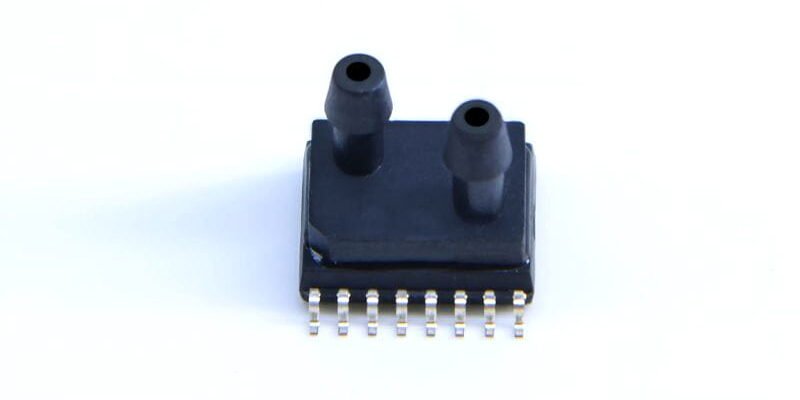
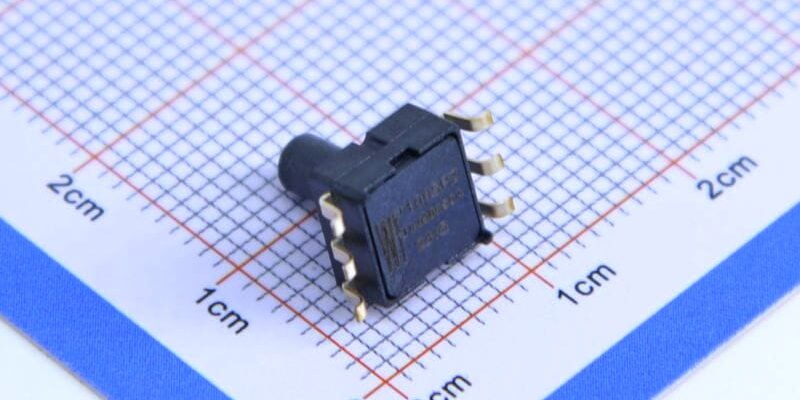
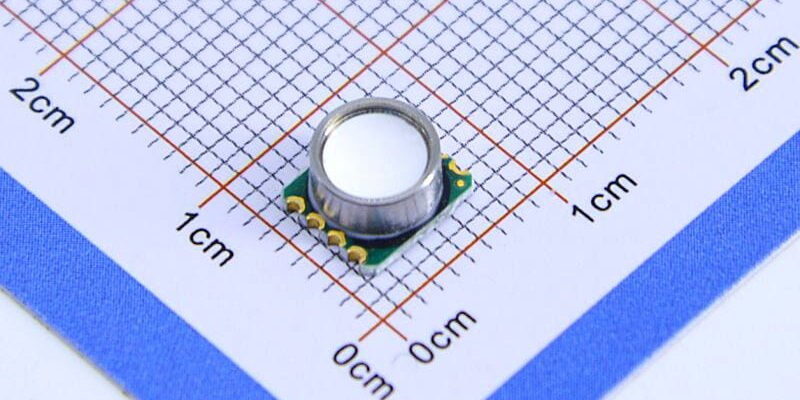
Modern altitude measurement typically relies on MEMS barometric sensors. MEMS chips are tiny, low-power and manufacturable at scale. A digital barometer converts the analogue pressure signal with an on-chip ADC and correction circuitry, outputting ready-to-use digital data (I²C/SPI), which makes it easy for an MCU to read and run filters or fusion algorithms. Important specs include resolution (the smallest height change you can detect), accuracy and linearity, long-term drift and response time. High-sensitivity sensors can pick up tiny altitude changes in milliseconds, ideal for drones or floor-level detection.
Package, resolution and sample rate (calibration & sensitivity)
Package style (LGA with exposed port or top-window types) affects where the pressure port sits and how the sensor is protected; resolution is usually expressed in Pa or hPa and corresponds to a height delta. Sample rate determines how well the sensor tracks dynamic changes: higher rates plus appropriate filtering let you capture motion without losing stability. Engineers must balance sensitivity, noise and power consumption, and implement periodic baseline resets in the system to counter drift.
3. From reading to altitude: calculation methods and models
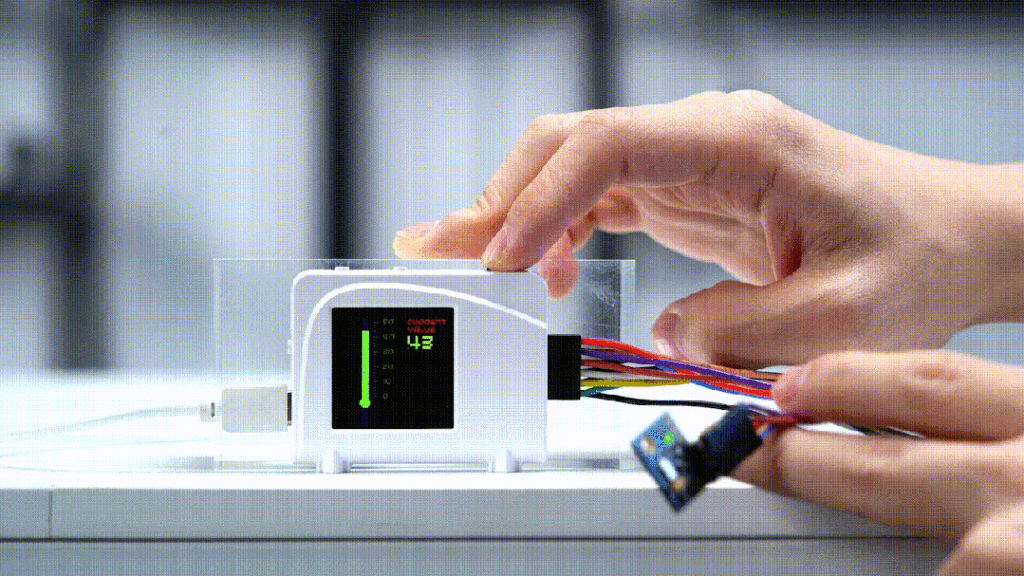
Converting pressure to altitude uses two common approaches: simplified empirical formulas and the International Standard Atmosphere (ISA) model. Simplified formulas are cheap and computationally light, good for real-time embedded use and relative altitude changes; the standard atmosphere model is more accurate and better where absolute precision matters. Engineering practice first linearises and temperature-corrects the sensor output, then plugs the digital pressure into a conversion routine to produce altitude. For true absolute altitude, systems periodically fetch or set a reference pressure to correct offsets.
Simplified formulas, standard atmosphere model and altitude conversion
Simplified formulas typically assume near-constant temperature and use empirical constants — perfect for short-term or relative use. The standard model accounts for temperature profiles, gas constants and gravity variations, suited to precision measurements. Engineers pick the method to match the application and often make the algorithm switchable in firmware to trade off between low power and high accuracy.
4. Real-world error sources and strategies to improve accuracy
Barometric altitude is vulnerable to weather-driven pressure changes, which skew absolute altitude readings. Temperature also affects sensor sensitivity and zero-offset. To reduce error, engineers commonly fuse multiple sensors (use GNSS or IMU for baseline), apply temperature compensation in firmware, and schedule frequent baseline resets or calibrations. Filtering strategies (Kalman or complementary filters) separate short-term noise from long-term drift, improving stability.
Weather effects, temperature impact and multi-sensor fusion
Short-term weather changes shift local pressure and can bias absolute altitude, but barometers are excellent at detecting relative altitude shifts due to their sensitivity — that’s why they’re valuable for vertical speed or floor changes. Combining a barometer with GNSS gives an absolute reference from GNSS and high-resolution relative changes from the barometer; the two complement each other and handle both absolute error and time resolution.
5. Application scenarios
Barometric sensors are widely used in drone altitude control, outdoor and hiking devices, and indoor floor-level positioning. Each application has different engineering priorities: drones need low latency, low weight and vibration tolerance; watches and handhelds prioritise low power and stability; indoor positioning must deal with small inter-floor pressure differences and use building baseline data. In design, watch out for port placement and sealing, and whether the system holds reliable output under temperature and weather shifts.
Drone altitude hold, hiking elevation tracking and indoor floor measurement
Drones typically use the barometer within a short-term control loop, combined with an IMU for smooth control; hiking devices track continuous relative elevation changes; indoor systems require careful baseline capture and algorithms to resolve tiny pressure deltas between floors.
บทสรุป
To monitor altitude effectively with a barometer, you need the physics of pressure vs height, the right digital barometric sensor, and system-level handling of environmental interference. Practical tips: choose a high-sensitivity sensor to catch small changes, prefer digital outputs for simpler processing, implement temperature compensation and periodic baseline updates in firmware, and fuse data with GNSS/IMU. These steps strike a practical balance between cost, responsiveness and usable accuracy.
บทนำข้างต้นเป็นเพียงรอยขีดข่วนบนพื้นผิวของการประยุกต์ใช้เทคโนโลยีเซ็นเซอร์ความดันเท่านั้น เราจะสำรวจองค์ประกอบเซ็นเซอร์ประเภทต่างๆ ที่ใช้ในผลิตภัณฑ์ต่างๆ ต่อไป วิธีทำงาน ตลอดจนข้อดีและข้อเสีย หากคุณต้องการรายละเอียดเพิ่มเติมเกี่ยวกับสิ่งที่กล่าวถึงที่นี่ คุณสามารถดูเนื้อหาที่เกี่ยวข้องได้ในภายหลังในคู่มือนี้ หากคุณมีเวลาจำกัด คุณสามารถคลิกที่นี่เพื่อดาวน์โหลดรายละเอียดของคู่มือนี้ได้ ข้อมูลผลิตภัณฑ์เซ็นเซอร์ความดันอากาศ.
หากต้องการข้อมูลเพิ่มเติมเกี่ยวกับเทคโนโลยีเซ็นเซอร์อื่นๆ โปรด เยี่ยมชมหน้าเซ็นเซอร์ของเรา.