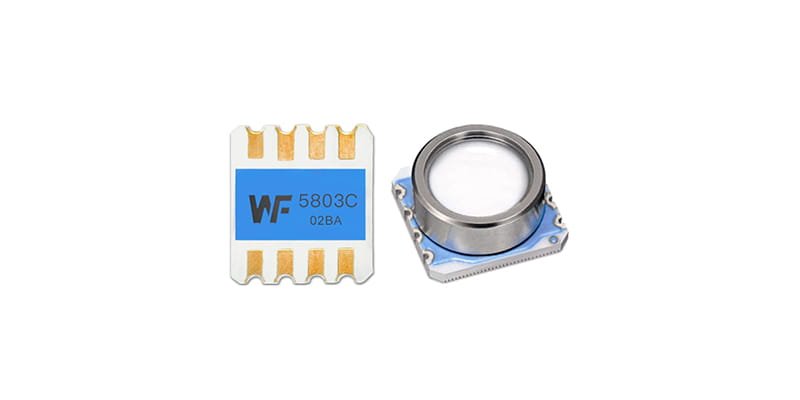
Modern vacuum pumps are no longer confined to merely generating suction—they are evolving toward smart, precise control. By integrating high-accuracy pressure sensors, vacuum pump systems can monitor negative pressure in real time and dynamically adjust output, ensuring stable operation and accurate measurement while minimizing equipment risks. This article delves into how vacuum pump pressure sensors, such as those in the WF100E -serie, harness advanced technology to achieve high-accuracy negative pressure measurement, revolutionizing applications in industrial, medical, and IoT environments.
Katalog
Hur trycksensorn fungerar
The core of a vacuum pump is its ability to generate and maintain stable negative pressure, a task that demands precise pressure measurement. The WF100E series sensors employ cutting-edge MEMS technology coupled with CMOS mixed-signal processing to ensure that every measurement meets high accuracy standards. Key aspects of their operation include:
Realtidstryckövervakning
The sensor converts physical pressure into an electrical voltage signal, with a standard output range of 0.2–4.7V. Using the formula

Det beräknar exakt det negativa trycket.
Temperaturkompensation och långsiktig stabilitet
Operating over a wide temperature range from -40°C to 125°C, the sensor maintains high linearity (≤0.5% FS error) and low zero drift (±0.03 FS/°C), ensuring reliable performance under varying environmental conditions.
Signalkonditionering och dataöverföring
An integrated signal conditioning ASIC amplifies and corrects the raw signal, transmitting the data via standard interfaces (such as I2C or SPI) to the control system for dynamic negative pressure regulation.
Betydelsen av intelligent negativt tryckkontroll
In many applications, negative pressure measurement affects not only the efficiency of a system but also its safety and user comfort:
Precisionskontroll
With real-time data feedback, the vacuum pump can automatically adjust suction to maintain negative pressure within an optimal range, avoiding issues caused by excessive or insufficient suction.
Förbättrad systemeffektivitet
Dynamic suction adjustment leads to more responsive operations, shorter working cycles, reduced energy consumption, and longer equipment lifespan.
Smart datahantering
When combined with IoT technology, sensors can transmit real-time data to cloud platforms, enabling users or technicians to analyze and optimize operating parameters for smarter manufacturing and remote monitoring.
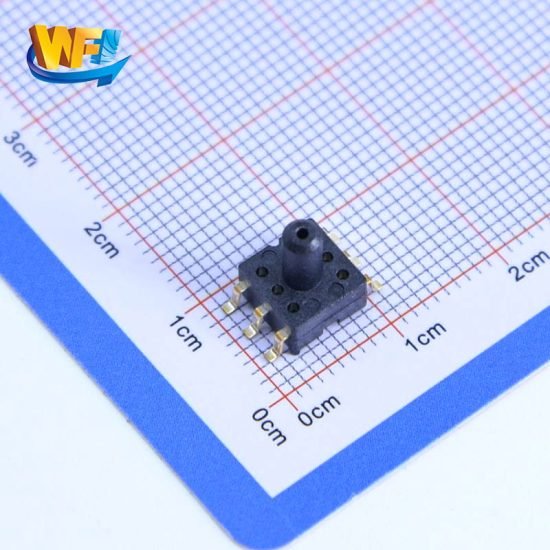
Trycksensors roll i vakuumpumpsystem
Pressure sensors play a critical role in vacuum pump systems, with key benefits including:
Realtidsövervakning av förändringar av negativt tryck
Accurately measuring every pressure fluctuation provides a reliable data foundation for the system.
Automatisk sugjustering
Based on real-time data, the system can quickly modulate suction to keep negative pressure within a preset range, enhancing overall stability.
Datavoggning och fjärrhantering
With visualization platforms, users can track historical data, analyze system performance, and proactively address potential issues.
Optimerad teknik och underhåll
High integration reduces circuit complexity, simplifying system design and streamlining maintenance efforts.
Detailed Operating Parameters of Vacuum Sensors (Supplementary)
Building on the overall system role, vacuum sensors must also meet a series of strict engineering requirements to ensure that vacuum pumps operate reliably and efficiently under various conditions. Specifically, the sensors are designed with the following features:
Pressure Measurement Range:
Vanligtvis utformat för att arbeta inom en rad -100kPa to 0kPa, ensuring coverage for most vacuum pump applications.
Accuracy:
Sensorn har ett fullskaligt fel inom ± 1% span, coupled with low zero drift (± 0,03 fs/℃) to deliver long-term high accuracy measurements.
Resolution:
By leveraging the standard output range of 0.2–4.7V and the conversion formula, each incremental voltage change corresponds to subtle pressure variations, allowing the sensor to effectively detect even minor fluctuations (0.001kPa Resolution).
Response Rate:
Utilizing advanced MEMS technology and integrated signal conditioning, the sensor offers rapid 1ms response capabilities to capture real-time pressure changes, meeting dynamic load requirements and enabling swift suction adjustments.
Operating Temperature Compensation:
With a robust operating range from -40°C to 125°C, the sensor’s built-in temperature compensation mechanism minimizes the impact of temperature fluctuations on measurement accuracy, ensuring high linearity and precision in diverse environments.
Slutsats
The integration of pressure sensors in vacuum pump systems is driving a shift from conventional suction control to smart, precision management. Represented by the WF100E series, high-precision sensors excel in real-time measurement, automatic adjustment, and temperature compensation, offering safe, efficient, and intelligent solutions across various industries. As technology advances, we can expect these smart systems to play an even greater role in industrial automation, healthcare, and IoT applications—setting new benchmarks for innovation and reliability.
Ovanstående introduktion repar bara ytan på tillämpningarna av trycksensorteknologi. Vi kommer att fortsätta att utforska de olika typerna av sensorelement som används i olika produkter, hur de fungerar och deras fördelar och nackdelar. Om du vill ha mer information om vad som diskuteras här kan du kolla in det relaterade innehållet längre fram i den här guiden. Om du är tidspressad kan du också klicka här för att ladda ner detaljerna i denna guide Lufttryckssensor Produkt PDF -data.
För mer information om andra sensorteknologier, vänligen Besök vår Sensors -sida.