- Би ВФсенсорс
Measuring tank level with pressure sensors is a well-established, industrially proven method. The basic idea is simple: measure the hydrostatic pressure produced by the liquid column and convert that to a height. For tanks open to the atmosphere you measure bottom pressure directly; for pressurised tanks you measure the pressure difference to remove the gas-phase effect. Choosing the right sensor, handling zero and density compensation, and doing proper site calibration are all essential to reliable readings. This write-up combines practical engineering experience with sensor technical details to show how to detect tank level with pressure sensors in different tank types, plus the key installation and calibration steps and how modern digital sensors can boost system performance.
Каталог
1 Principle and fundamentals
Hydrostatic pressure at depth is proportional to liquid column height and density. The basic relation between pressure P (gauge or differential) and level h is h = P / (ρ × g). That rule is straightforward, but to get usable level readings you must decide reference method, understand sensor characteristics and the fluid’s properties. Different sensors vary in accuracy, long-term drift and temperature sensitivity: the piezoresistive silicon pressure sensor offers small size, good linearity and cost benefits; while a 24-bit DSADC digital-output pressure sensor gives high resolution directly, easing downstream signal work. Practically, you must decide whether you measure local gauge pressure or the net liquid-column сензор диференцијалног притиска reading — the latter removes top-vapour pressure changes and yields more stable level estimates.
hydrostatic maths from pressure to level
On site, sensors are typically placed close to the tank bottom to maximise measurement range. If the sensor reads gauge pressure you divide by density and gravity to get level. But note: when tank top pressure is not atmospheric, a gauge reading contains the gas-phase pressure as well and needs correction. Temperature and composition change density, so using a single fixed density can introduce error. In practice, add temperature compensation or do two-point calibration so the mathematical relation accounts for site non-idealities and becomes an actionable calibration routine.
2 Measurement practice for open tanks
For tanks open to the atmosphere the measure is straightforward. Common approaches are to mount a sensor near the bottom to read static pressure, or use an immersion sensor with the sensing element placed in the liquid. The side-mounted option eases maintenance and replacement; immersion can give better dynamic response in some fluids or structures. On site, consider wetted-material compatibility and corrosion protection. Gauge pressure sensor types typically work well here; when choosing, focus on long-term stability, anti-fouling features and whether the sensor supports on-site zeroing and range setup.
immersion versus side-mount installation notes
Immersion avoids impulse line blockages but demands higher sealing and material compatibility. Side-mounting with an impulse line makes maintenance simpler but the impulse line can fill, foul or crystallise, so it needs cleaning or anti-block solutions. Whichever method you pick, ensure measurement point and reference zero are consistent — during commissioning include any geometric offsets in the zero-point adjustment.
3 Differential schemes for pressurised tanks
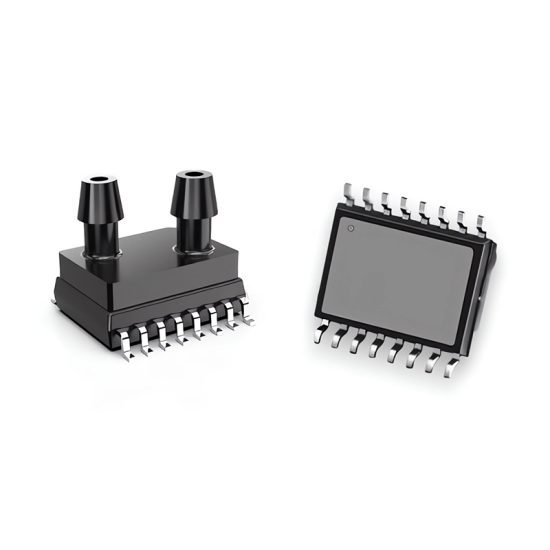
In industry, many tanks have gas or vapour over the liquid. In that case a single gauge reading includes the vapour pressure and the level reading moves with top-pressure changes. The standard fix is a сензор диференцијалног притиска arrangement: high side to the tank bottom, low side to the tank top (or a reference chamber). The output equals the liquid-column hydrostatic pressure only, cancelling the gas-phase term. That makes сензор диференцијалног притиска devices crucial in pressurised-tank level measurement. In practice, keep impulse lines short and pitched to avoid blockage or trapped air.
piping the differential and managing error sources
When you route differential tubing, watch for seal integrity and drainage. Any trapped liquid, air pocket or thermal expansion in the high- or low-side lines will skew readings. For long-term reliability pick sensors with metal isolation diaphragms or corrosion-resistant packaging, and add condensation control or sloping tube runs to shed liquids. Also check sensor linearity, hysteresis and thermal drift during procurement; these specs matter for sustained accuracy.
4 On-site calibration, compensation and error control
Good measurement needs more than a good sensor. First, handle zero offset: mechanical mounting height differences between the sensor and your defined zero (tank bottom) must be compensated in the instrument so empty-tank output is the agreed zero (for instance 4 mA or 0%). Next, do density compensation: if density varies with temperature or composition, add a temperature sensor and correct level in real time from a density-vs-temperature table. Finally, perform span calibration (empty/full) during commissioning to ensure linearity and traceability across the range.
practical temperature and density correction
Adding a temperature sensor enables live density correction from an established table — essential for oils and many chemicals. For complex mixtures or changing composition you may need multi-sensor fusion or periodic sampling to update the density model. At commissioning, calibrate across representative temperatures and level points and log the calibration into your asset records so later maintenance and drift checks are straightforward.
5 Sensor selection, interfaces and system integration
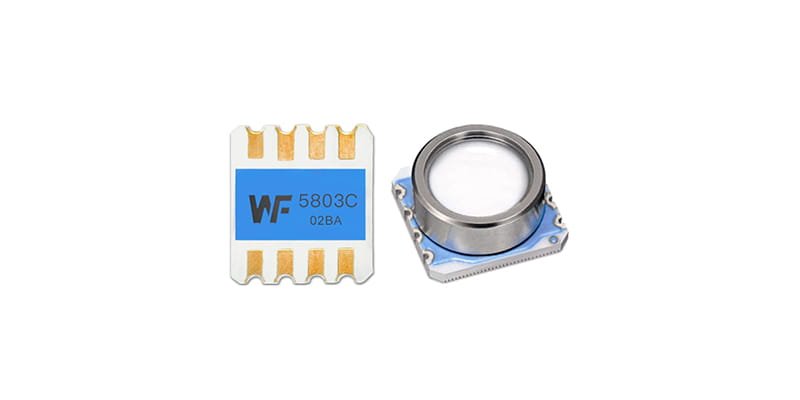
For sensor choice, the piezoresistive silicon pressure sensor family is widely used in level tasks because the manufacturing is mature, devices are compact and response is quick. If you need high resolution and direct digital output, go for a 24-bit DSADC digital-output pressure sensor with I²C or similar bus — these reduce analog noise and AD conversion error at the controller. For corrosive or fouling fluids pick sensors with metal isolation diaphragms or compatible wetted materials; where direct liquid contact is acceptable, ensure the package material is compatible.
suitability of the WF200DPZ model
This family has a sealed construction compatible with many fluids, making it suitable for oil-tank level and corrosive liquid measurement. Its low power (1.8–3.6 V supply, very low peak current) fits portable or remote systems; built-in temperature compensation and the 24-bit DSADC digital-output pressure sensor feature give high resolution and reduce backend processing. Combining such a sensor with a proper differential connection yields stable, high-accuracy level monitoring in pressurised tanks.
Закључак
Using pressure to measure level is a robust engineering approach. For open tanks, measure bottom static pressure; for pressurised tanks, use a сензор диференцијалног притиска and add temperature/density compensation to get reliable results in most industrial settings. For sensor selection favour corrosion-resistant packaging, metal isolation diaphragms and a 24-bit DSADC digital-output pressure sensor or equivalent with built-in temperature correction to cut system error and maintenance. During installation, keep impulse lines clear and pitched correctly, perform full empty/full calibration and enable temperature correction. That approach yields accurate levels and makes later maintenance and troubleshooting much easier.
Горњи увод само загреба површину примене технологије сензора притиска. Наставићемо да истражујемо различите типове сензорских елемената који се користе у различитим производима, како функционишу и њихове предности и недостатке. Ако желите више детаља о томе о чему се овде расправља, можете погледати сродни садржај касније у овом водичу. Ако сте у стисци са временом, такође можете кликнути овде да преузмете детаље овог водича Подаци о сензору притиска ваздуха ПДФ.
За више информација о другим сензорским технологијама, молимо Посетите нашу страницу сензора.