- Por Sensores WF
Simply put, back pressure refers to the resistance or pressure acting against the direction of fluid flow at the downstream side or outlet of a system.
Back pressure measurement is the real-time monitoring and quantification of this opposing pressure or resistance.
To make this easier to understand, consider a simple everyday analogy.
A Simple Analogy
Imagine drinking a very thick milkshake through a straw.
You suck hard (apply negative pressure) — this is the driving pressure.
Because the milkshake is highly viscous, it flows slowly through the straw and pushes back against you, making it difficult to drink. That opposing force is back pressure.
If you were drinking water instead, the back pressure would be minimal and the liquid would rise easily.
This same principle applies to industrial fluid systems.
Why Back Pressure Matters in Precision Fluid Control
Em precision fluid-control applications such as dispensing, spraying, and medical infusion, back pressure measurement is a critical control parameter.
In dispensing systems, back pressure specifically refers to the fluid pressure at the dispensing needle tip or adhesive outlet.
It represents the combined effect of all resistances along the entire fluid path.
Sources of Back Pressure (Root Causes)
1. Fluid Viscosity
This is the dominant factor.
Higher viscosity → greater friction → higher back pressure.
2. Fluid Path Geometry
Internal diameter of pipes or needles
Smaller diameters significantly increase back pressure.Flow path length
Longer paths generate higher resistance.Bends, valves, and restrictions
These create turbulence and local losses, increasing back pressure.
3. Needle Dimensions
The needle is usually the narrowest section of the system and therefore the primary source of back pressure.
Thinner and longer needles generate higher back pressure.
4. Adhesive Properties
Adhesives containing fillers — such as conductive silver pastes or thermal interface materials — are more prone to sedimentation or clogging, which can dynamically alter back pressure during operation.
Why Measuring Back Pressure Is So Important
Measuring back pressure is not about knowing a number, but about achieving precise control and consistent quality.
1. Ensuring Dispensing Consistency and Stability
Dispensed volume is determined by the pressure differential between driving pressure and back pressure.
If back pressure fluctuates, dispense volume will vary, even when driving pressure remains constant.
Real-time back pressure monitoring allows feedback to the controller, enabling dynamic adjustment of driving pressure.
This maintains a constant pressure differential and ensures stable dispense volume.
👉 This is the foundation of high-precision closed-loop dispensing control.
2. Process Monitoring and Fault Diagnosis
Back pressure behaviour acts as a health indicator for the dispensing system.
Gradual increase in back pressure
Possible causes:
Needle beginning to clog (most common)
Adhesive curing
Filter blockage
Viscosity increase due to temperature changes
Consequences: reduced dispense volume or complete flow interruption.
Sudden drop in back pressure or pressure reading near zero
Possible causes:
Empty adhesive reservoir
Leaking or disconnected supply line
Broken or detached needle
Consequences: dispensing stops, leading to defective products.
Large or unstable pressure fluctuations
Possible causes:
Air bubbles in the adhesive
Intermittent or inconsistent material feed
3. Optimising Process Parameters
By measuring back pressure under different conditions — needle sizes, adhesive types, and temperatures — manufacturers can:
Define more accurate and safer pressure settings
Avoid excessive driving pressure
Prevent issues such as splatter, stringing, or needle detachment
The Role of Pressure Sensors in Pneumatic Dispensing Systems
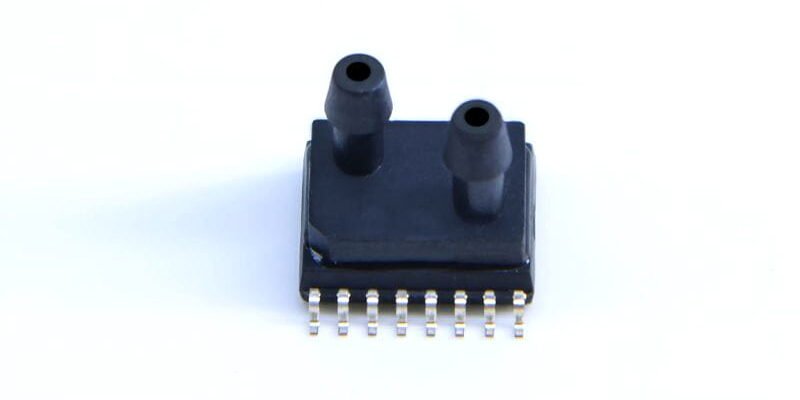
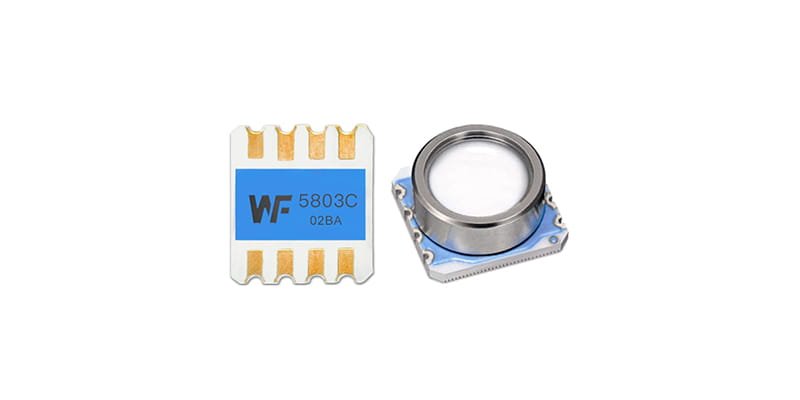
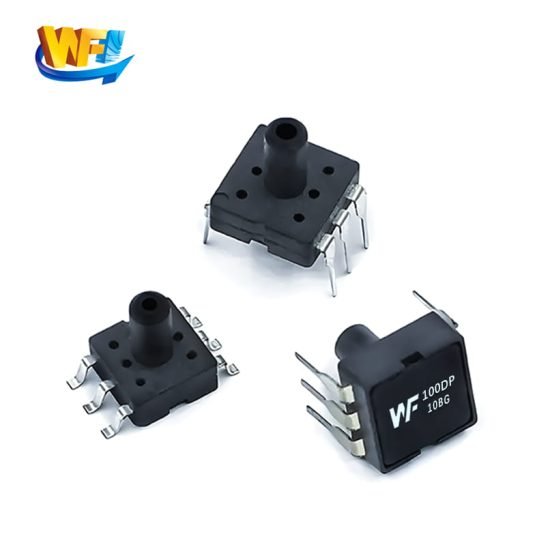
In multifunction pneumatic dispensing systems, pressure sensors are essential components for ensuring accuracy, stability, and controllability.
They are typically used to monitor and control pressure in air lines or adhesive lines, enabling high-precision dispensing performance.
Common Pressure-Sensor Applications and Types
Air Pressure Sensor (Driving / Supply Pressure Monitoring)
Purpose:
To monitor the compressed air pressure driving the dispensing valve.
Air pressure instability directly affects dispensing flow rate and consistency.
Typical range:
0 ~ 1.0 MPa (≈ 0 ~ 150 psi)
Most common: 0 ~ 0.7 MPa (0 ~ 100 psi)
Installation location:
At the air supply inlet or downstream of the pressure regulator.
Adhesive-Line Pressure Sensor (Back Pressure Monitoring)
Purpose:
To monitor adhesive pressure near the dispensing valve or needle tip.
This is especially critical for high-viscosity materials and precision dispensing, helping to prevent inconsistent flow, stringing, or drooling.
Typical range:
−0.1 ~ 1.0 MPa
For very viscous adhesives or high-flow systems: 0 ~ 3.5 MPa
Installation location:
Close to the valve outlet or near the dispensing needle.
Vacuum Pressure Sensor (Pick-Up or Anti-Drip Control)
Purpose:
In dispensing valves with vacuum pick-up or retraction functions, vacuum pressure monitoring ensures reliable pick-up and effective anti-drip performance.
Installation location:
Within the vacuum generator or vacuum line.
Recommended sensor types:
Absolute or differential pressure sensors with small ranges (e.g. 0 to −100 kPa)
Conclusão
Back pressure is not merely a passive result of fluid flow; it is a critical control variable in high-precision dispensing systems. Changes in viscosity, needle geometry or flow-path conditions are all directly reflected in back pressure behaviour. Without proper back pressure measurement, even a stable driving pressure cannot guarantee consistent dispensing results.
By integrating appropriate pressure sensors close to the valve or needle, manufacturers can achieve real-time feedback, enable closed-loop control and detect process anomalies at an early stage. In applications involving high-viscosity adhesives or tight process tolerances, back pressure monitoring becomes essential rather than optional. Ultimately, accurate back pressure measurement improves dispensing consistency, reduces defects and provides a more robust and controllable production process.