
Catálogo
In breast pump systems, multi-stage suction adjustment based on MEMS pressure/flow/force sensors can simultaneously improve comfort and milk expression efficiency. This article analyzes five dimensions—need, sensor roles, implementation methods, component selection, and system integration—and provides engineering-actionable design points and verification suggestions to help decision makers quickly grasp technical paths and risk points.
1. The necessity of suction adjustment and usage scenarios
Provide controllable suction for different lactation stages and individual differences
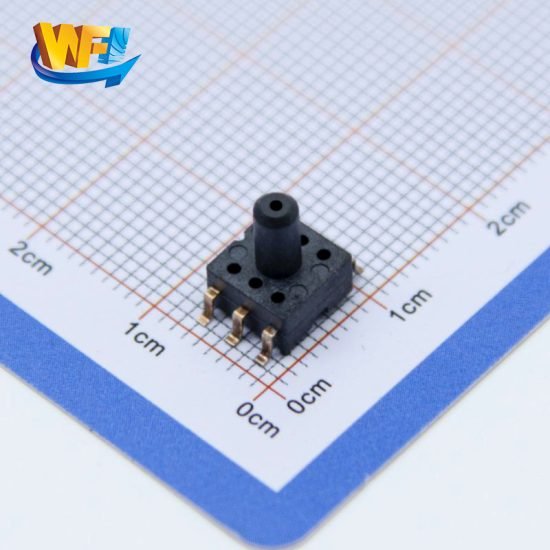
A breast pump must balance gentle stimulation in the early postpartum stage with steady traction during peak lactation. Different mothers have different nipple sensitivity and milk flow characteristics. Multi-stage suction lets the device switch between stimulation, transition, and stable phases, adapting in real time to milk volume and tissue response, reducing pain risk and improving expression efficiency. WF100-type sensors in the image can precisely convert chamber pressure into digital signals to support closed-loop control for this staged strategy.
2. Key sensors and their roles in adjustment
Pressure, flow, temperature, and mechanical sensing work together for precise control
Pressure sensors directly measure chamber vacuum and feed back suction levels; flow sensors detect milk throughput to trigger mode changes; temperature sensors safeguard comfort at contact points; force sensors monitor nipple load to prevent excessive pulling. Combining these high-sensitivity sensors into a data stream, the main controller algorithm can judge and adjust suction in real time, achieving a dynamic response that approaches a baby’s natural suckling.
3. Control strategies for multi-stage suction and closed-loop
Hybrid algorithms and closed-loop control ensure stable, human-centric suction steps
Control modes include manual stepped, automatic intelligent, and hybrid. In automatic mode, sensor data triggers a sequence from stimulation to traction: start with low-frequency gentle stimulation, detect rising milk flow, switch to steady extraction, and then gradually reduce suction as flow declines until the session ends. In the closed loop, sensors continuously correct motor output to avoid overpressure or under-suction fluctuations, improving consistency and safety of use.
4. Sensor selection, packaging, and electrical interface considerations
Choose small-port MEMS pressure devices and account for moisture resistance, biocompatibility, and response rate
Chamber pressure sampling should use low-drift, high-sensitivity, fast-response MEMS piezoresistive or capacitive pressure sensors; prefer small-port or hose-interface packages for sealed chamber designs. Devices must exhibit stable behavior near body temperature, tolerate brief exposure to liquid vapors, and provide calibratable digital outputs (I²C/SPI or analog plus ADC). Packaging and filtering should prevent breast milk ingress into the sensor cavity, extending lifespan and preserving measurement accuracy.
5. System integration, validation, and safety assurance
Layered validation and safety thresholds ensure reliability and user comfort
Treat sensors, drivers, and control algorithms as integrated modules for combined hardware-software verification: static pressure calibration, dynamic flow response testing, continuous operation thermal rise, and mechanical stress tests. The system must define clear safety thresholds and fail-safe fallback logic (e.g., overpressure limit, sensor failure switching to low-power mode) and log key events to support troubleshooting and performance improvement, ensuring user experience and product compliance.
Conclusão
Multi-stage suction is not merely stacking more setpoints; it relies on high-frequency, low-latency sensor inputs and robust closed-loop control strategies. For breast pumps, prioritize low-drift, fast-response small-port MEMS pressure devices and integrate them with flow and mechanical sensing. Use hybrid control algorithms and layered validation processes to increase expression efficiency while significantly improving comfort and device reliability. Design must place mother comfort and safety thresholds first, ensuring implementations are repeatable, measurable, and traceable.
A introdução acima apenas arranha a superfície das aplicações da tecnologia de sensores de pressão. Continuaremos a explorar os diferentes tipos de elementos sensores usados em vários produtos, como funcionam e suas vantagens e desvantagens. Se desejar mais detalhes sobre o que é discutido aqui, você pode verificar o conteúdo relacionado posteriormente neste guia. Se você está sem tempo, também pode clicar aqui para baixar os detalhes deste guia Dados PDF do produto do sensor de pressão de pressão de ar.
Para obter mais informações sobre outras tecnologias de sensores, por favor Visite nossa página de sensores.


