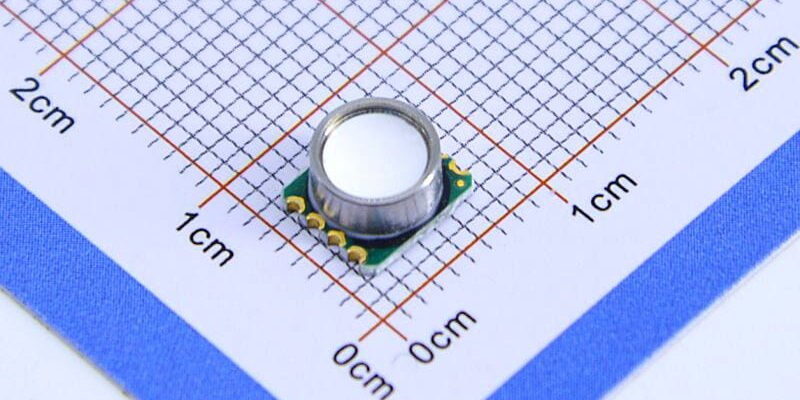
- Ved WFsensorer
Trykkforskjell i HVAC-systemer påvirker direkte luftstrømbalansering, overvåking av filterhelse og generell energieffektivitet. En pålitelig, interferensbestandig differensialtrykkmåling kan oppdage problemer tidlig, redusere driftskostnadene og forlenge utstyrets levetid. Moderne digitale differensialsensorer samler sensorelementet, signalbehandlingen og digital utgang i en kompakt enhet, og gir deg høypresisjon, sporbare data som er enkle å integrere og overvåke eksternt.
Katalog
1. Rollen til differensialtrykksensorer i HVAC-kontroll
Differensialtrykksensorer overvåker kontinuerlig trykkforskjeller over kanaler, filtre og returluftstrømmer, og de gir kjernediagnosesignalet HVAC-kontrollere er avhengige av. I store bygninger eller presisjonsmiljøer fører trykkubalanser til ujevn lufttilførsel, feilaktige varme-/kjølebelastninger og ærlig talt dårlig komfort og bortkastet energi. I praksis må sensorer levere stabile avlesninger selv under dynamiske belastninger og støyende forhold, og produsere data som er finkornet nok til kontrollalgoritmer – tenk på VAV-justeringer og varsler om tette filter. Når du velger en sensor, ikke stopp ved rekkevidde og oppløsning: langsiktig nulldrift, temperaturrelaterte feil og kommunikasjonsrobusthet avgjør om en avlesning kan brukes for kontrollsystemer.
Hvorfor presis trykk-differensialmåling er viktig for systemet
HVAC-systemer er avhengige av kontinuerlig, nøyaktig trykktilbakemelding for å holde seg balansert. Når differensielle avlesninger vandrer, kan kontrollere holde viftene i gang hardere enn nødvendig eller utløse meningsløse vedlikeholdsanrop. Nøyaktige sensorer lar kontrollere bruke mindre dødbånd og raskere respons for å justere viftehastigheter eller ventilposisjoner, noe som sparer energi og forbedrer komforten. Og her er problemet: gode data støtter trendanalyse, slik at du kan oppdage tilstoppede filtre eller kanallekkasjer tidlig og unngå overraskelsesfeil.
2. Nøkkelpunkter i digital sensordesign
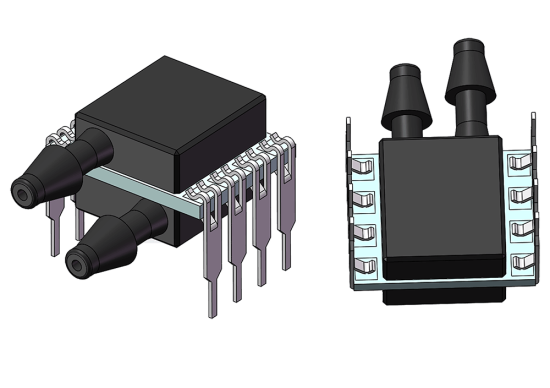
Moderne differensialsensorer kombinerer sensorelementet og en signalkondisjoneringsbrikke for å utføre digital kompensasjon for ikke-linearitet, følsomhetsforskyvninger og offset. SOP8-emballasje er et vanlig industrielt valg; anti-pull mothaken lar deg feste slangen sikkert, og forhindrer utilsiktet frakobling. Innebygde kondisjoneringskretser forsterker og lineariserer sensorutgangen på mikrovoltnivå og konverterer den til en digital strøm, som merkbart øker immuniteten mot elektrisk støy og forbedrer repeterbarheten. Fra et teknisk synspunkt reduserer integrert digital design behovet for eksterne forsterkere og filtre, noe som øker hastigheten på integrering og trimming av systemets kompleksitet.
SOP8-emballasje og mothaketilpasning — tekniske hensyn
SOP8 monteres pent på et PCB, og den innvendige mothakebeslaget kobles til slanger uten ekstra armaturer - en stor praktisk gevinst under installasjonen på stedet. Mothakens anti-trekkprofil hjelper i vibrasjonstunge miljøer og reduserer feilfrekvensen i felten. For bygningsautomasjonsprosjekter sparer enkel utskifting og enkel tavlemontering tid og innkjøpshodepine. Når det er sagt, vurder termiske effekter: emballasje påvirker varmestrøm og temperaturensartethet, så du må sørge for at temperatursensoren ombord gjenspeiler reelle driftsforhold for nøyaktig kompensasjon.
3. Veier for å oppnå nøyaktighet og stabilitet
Høy nøyaktighet handler ikke bare om et flott sanseelement; det handler om hele kjeden – spesielt en 24-bits ADC pluss en innebygd temperatursensor og en robust digital kalibreringsrutine. En 24-bits ADC gir høy oppløsning over et bredt dynamisk område; sammen med digitale kompensasjonsalgoritmer for ikke-linearitet og temperaturdrift, gir den høysikkerhetsdata som du kan mate rett inn i kontrollsløyfer. Disse sensorene er fabrikkkalibrert slik at de leverer stabile trykk- og temperaturavlesninger rett ut av esken – avgjørende for applikasjoner som krever langsiktig stabilitet som VAV-kontroll, strømningsmåling og energianalyse.
24-bits ADC og innebygd temperatursensor
En innebygd temperatursensor lar enheten korrigere for termisk drift i sanntid, ved å bruke oppslagstabeller eller polynomtilpasninger innebygd i brikken. Fabrikkkalibrering fanger opp sensorens respons ved flere temperaturer og trykk, og lagrer korreksjonsparametere i minnet på brikken. Det betyr at du bare leser den korrigerte digitale utgangen i felten – ingen ekstra matematikk på kontrolleren. Når du vurderer langtidsstabilitet, fokuser på drift etter temperatursyklus, nullpunktsstabilitet over måneder eller år, og konsekvent respons under pulserende luftstrøm.
4. Systemintegrasjon og kommunikasjonsordninger
Solide digitale grensesnitt som I²C er nøkkelen for moderne HVAC-integrasjon. Digital utgang reduserer følsomheten for analog støy, utvider effektive ledningslengder og kobles rett inn i mikrokontrollere og bygningsstyringssystemer. I²Cs bussnatur gjør flerpunkts trykkovervåking kostnadseffektiv. Sensorenes forsyningsområde (2,5–5,5 V) og laveffektdesign betyr at de er enkle å slippe inn i batteristøttede eller lavenergikontrollnoder.
Tips for lav effekt og feltpålitelighet
I praksis balanserer du samplingshastighet, filtrering og strømbruk. Høyere samplingsfrekvenser gir raskere respons, men øker støy og energiforbruk; hendelsesdrevet sampling eller programvarefiltrering hjelper til med å finne en mellomting. Feltpålitelighet knytter seg også tilbake til forholdene: disse sensorene er for ikke-korrosive gasser, og lavtrykkssiden tåler opptil 500 kPa overtrykk - nyttig å vite når du designer for robusthet. Legg til overtrykksbeskyttelse, mekanisk buffering og forsiktig plassering for å unngå termisk eller væskeeksponering som kan skjeve avlesningene eller skade enheten.
5. Typiske applikasjonsscenarier og spesifikasjonsmatching
Differensialsensorer i HVAC brukes til å estimere luftstrøm, overvåke filtertilstopping, mate trykkkontrollerte ventiler og lukke sløyfen i VAV-systemer. Velg en sensor hvis rekkevidde passer til jobben – for eksempel 0,5 kPa-områder for små kanaldifferensialer, større områder for vifteinntak/-uttak. Digitale differensialsensorer reduserer installasjons- og kalibreringstiden og gir deg levende, kompenserte data for energioptimalisering. Typiske måleområder spenner fra -100 kPa opp til 200 kPa, og lavtrykkssidens 500 kPa overtrykkskapasitet utvider anvendeligheten på tvers av forhold.
Fra diagnostikk til vedlikehold – hvordan sensordata styrer HVAC-beslutninger
Høypresisjonssensordata kan modelleres over tid for å støtte prediktivt vedlikehold. Ved å se trykktrender kan du oppdage filterslitasje, kanallekkasje eller fallende vifteeffektivitet og handle før problemet forverres. Det sparer penger ved å kutte unødvendig vedlikehold og forbedrer oppetiden. Ingeniører bør inkludere datalogging og fjernavlesning i systemdesign for å gjøre drift og vedlikehold enkelt.
Konklusjon
Differensialtrykksensorer er en grunnleggende komponent for å forbedre HVAC-effektiviteten og påliteligheten. Digital design – med 24-bits ADC, innebygd temperaturføling og I²C-utganger – og de praktiske fordelene med SOP8-emballasje gjør disse sensorene enkle å integrere mens de opprettholder presisjon under virkelige forhold. Riktig valg avhenger av rekkevidde, oppløsning, temperaturdrift og overtrykktoleranse (merk 500 kPa-tallet for den lave siden). Når du knytter sensorutganger til kontroll- og vedlikeholdssløyfer, får bygningsoperatører bedre energikontroll og lavere operasjonell risiko. Under utplassering, sjekk forsyningsrekkevidde, tetning og langtidsstabilitet etter temperatursvingninger.
Introduksjonen ovenfor skraper bare overflaten av applikasjonene til trykksensorteknologi. Vi vil fortsette å utforske de ulike typene sensorelementer som brukes i ulike produkter, hvordan de fungerer, og deres fordeler og ulemper. Hvis du vil ha mer detaljer om hva som er diskutert her, kan du sjekke det relaterte innholdet senere i denne veiledningen. Hvis du er presset på tid, kan du også klikke her for å laste ned detaljene i denne veiledningen Lufttrykkssensorprodukt PDF -data.
For mer informasjon om andre sensorteknologier, vennligst Besøk Sensors -siden vår.