목록
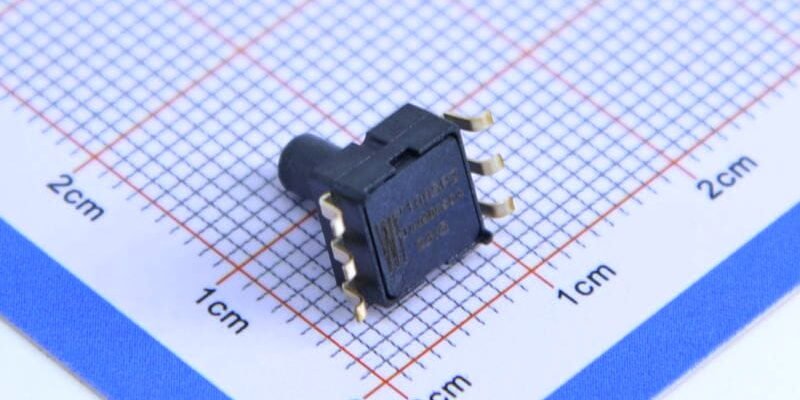
MEMS (Micro-Electro-Mechanical Systems) pressure sensors play a crucial role in automotive tire pressure monitoring. Modern TPMS sensors can not only measure tire internal pressure but also feature temperature compensation algorithms and emergency stop protection functions, ensuring accurate and reliable data under various operating conditions. The integrated application of these technologies directly relates to driving safety and fuel economy.
1. Core Technical Characteristics of MEMS Pressure Sensors
고정밀 압력 감지 메커니즘
MEMS pressure sensors utilize silicon diaphragm structures. When tire pressure changes, the diaphragm undergoes minute deformations, converting to electrical signals through piezoresistive effects. Sensors typically feature 0-1500kPa pressure ranges with 0.1kPa resolution and sub 3-5ms response times. This rapid response ensures timely detection of pressure anomalies, providing accurate trigger signals for protection mechanisms. Silicon-based MEMS processes guarantee long-term stability and excellent linearity, with temperature drift coefficients controlled within ±0.02%FS/℃.

2. Emergency Stop Protection Function Implementation
실시간 압력 임계 값 모니터링
Emergency stop protection relies on multi-level pressure threshold monitoring. Systems preset three critical values: normal operating pressure (2.2-2.5bar), low-pressure warning (1.8bar), and dangerous pressure (1.5bar). When rapid pressure drops to dangerous thresholds are detected, sensors immediately transmit emergency signals to vehicle systems. This tiered warning mechanism prevents false alarms while ensuring timely response during genuine emergencies.
3. Precision Temperature Compensation Technology
온도 계수 교정 및 보정
MEMS pressure sensor outputs are significantly temperature-affected. For precise compensation, sensors undergo multi-point temperature calibration during production. Calibration ranges typically span -40℃ to +125℃, covering automotive application temperature ranges. Calibration data is stored in sensor-integrated non-volatile memory for real-time compensation calculations. Compensation algorithms employ cubic polynomial fitting, achieving ±0.5%FS temperature compensation accuracy.
4. System Integration and Safety Assurance
차량 네트워크 통신 프로토콜
TPMS sensors connect with vehicle receivers via dedicated RF communication, employing encrypted data transmission to prevent signal interference and malicious attacks. Communication protocols include sensor ID recognition, data verification, and error detection functions. Systems support various automotive network standards like CAN and LIN buses, facilitating integration with other vehicle safety systems.
5. Technical Development and Application Prospects
지능형 알고리즘 업그레이드
Next-generation TPMS sensors will integrate advanced AI algorithms capable of learning driving habits and tire wear patterns, providing personalized safety warnings. Machine learning algorithms will further improve anomaly detection accuracy while reducing false alarm rates. Sensors will also support tire pressure prediction functions based on historical data trends.
결론
Emergency stop protection and temperature compensation functions in tire pressure monitoring sensors represent important MEMS technology applications in automotive safety. Through precise pressure detection, intelligent temperature compensation, and reliable emergency protection mechanisms, these sensors provide comprehensive tire safety monitoring for modern vehicles. For engineers and technical decision-makers, understanding these core technical characteristics will facilitate more informed decisions in product selection and system design.
위의 소개는 압력 센서 기술 적용의 표면적인 부분에 불과합니다. 우리는 다양한 제품에 사용되는 다양한 유형의 센서 요소, 작동 방식, 장점과 단점을 계속해서 탐구할 것입니다. 여기에서 논의된 내용에 대해 더 자세히 알아보려면 이 가이드 뒷부분의 관련 콘텐츠를 확인하세요. 시간이 촉박한 경우 여기를 클릭하여 이 가이드의 세부정보를 다운로드할 수도 있습니다. 공기 압력 센서 제품 PDF 데이터.
다른 센서 기술에 대한 자세한 내용은 다음을 참조하십시오. 센서 페이지를 방문하십시오.