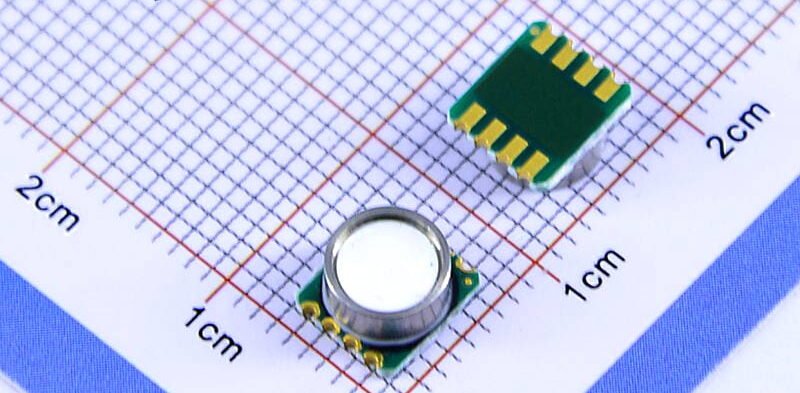
In wrist-worn blood pressure monitoring, barometric pressure sensors act as environmental input modules. By continuously tracking atmospheric pressure, they provide compensation for PPG (photoplethysmography) signals, minimizing disturbances from altitude, cabin pressure, or posture changes. This improves the stability and reliability of blood pressure estimation. From an engineering perspective, barometric data work together with accelerometer, temperature, and heart rate signals to strengthen algorithm performance. The WF3050D is a strong example of how these sensors can be practically integrated into wearable devices.
1. Ambient Pressure Compensation and Measurement Calibration
A barometric sensor does not directly replace a cuff-based blood pressure monitor, but it significantly reduces the impact of external pressure on PPG waveform analysis. By capturing real-time ambient pressure and feeding it into the processing pipeline, algorithms can remove baseline shifts caused by altitude or rapid environmental changes. This adjustment ensures PPG waveform amplitude and phase are correctly interpreted, lowering errors in systolic/diastolic estimation. Compensation is particularly valuable in high-altitude, climbing, or flight environments where pressure changes are unavoidable.
2. Motion and Posture Recognition Support
In wristwatches, barometric sensors detect small changes in wrist height. When combined with accelerometer data, they improve recognition of posture changes such as raised versus lowered arms, and help identify sudden motion. With this environmental and motion context, the device can switch to high anti-noise modes or delay measurements to reduce motion artifacts. From an engineering view, short-time window analysis of barometric micro-variations helps software correct or flag questionable blood pressure readings in real time.
3. Multi-Sensor Fusion and Algorithm Design
Integrating barometric pressure with temperature, heart rate, and accelerometer data greatly improves robustness in blood pressure estimation. Pressure serves as both an input feature for regression models and a condition for anomaly detection—flagging results when ambient noise is too high. In engineering practice, synchronizing sensor timing, applying filtering and normalization, and leveraging online learning models allow systems to enhance personalization while keeping power consumption low.
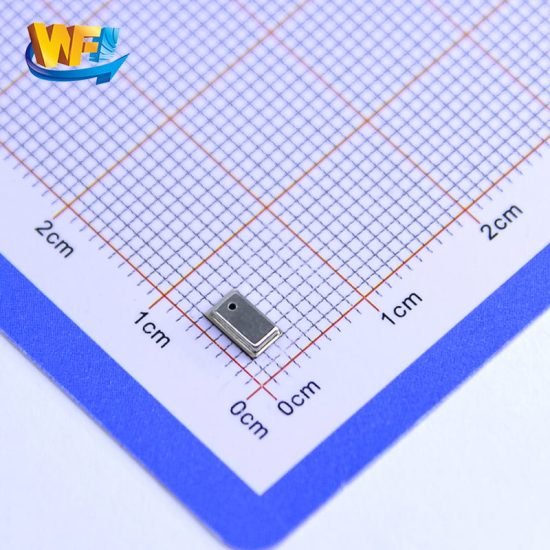
4. Implementation Details (WF3050D Example)
Wearable MEMS barometric sensors must deliver small size, low power, high resolution, and stable output. The WF3050D series is a representative digital MEMS device built for wearables. It supports I²C communication, integrates a 24-bit Σ-Δ ADC, operates in the 1.8–3.6 V range, and covers the typical pressure range for wrist-worn devices (0–40 kPa). Its low-noise and temperature-tolerant design makes it ideal for direct integration with watch MCUs and algorithm modules, providing real-time ambient compensation input.
| 매개변수 | Specification | Engineering Relevance |
|---|---|---|
| 압력 범위 | 0–40 kPa | Suitable for wrist-worn BP monitoring environments |
| Resolution / Accuracy | ±0.5 hPa typical | Ensures reliable ambient compensation for PPG signals |
| ADC | 24-bit Σ-Δ (integrated) | High resolution signal conversion for precision |
| 공급 전압 | 1.8–3.6 V | Compatible with low-power wearable designs |
| 전력 소비 | Ultra-low (µA-level in operation) | Extends battery life in smartwatches |
| Communication Interface | I²C (standard, up to 400 kHz) | Simple integration with wearable microcontrollers |
| Temperature Stability | Built-in compensation | Maintains accuracy in varying environmental conditions |
| Package Size | Ultra-compact MEMS package | Optimized for space-limited wearable PCB layouts |
5. Limitations and Engineering Strategies
Wrist-based monitoring is inherently affected by wear position and skin contact. While barometric compensation reduces environmental errors, it cannot fully eliminate issues caused by morphology or inconsistent contact. Engineering strategies must include quality control measures: evaluating pressure stability before and after measurement, using multiple readings and confidence scoring to filter anomalies, and aligning wristwatch output with professional cuff monitors for periodic calibration. These measures improve the clinical reference value of wearable blood pressure monitoring.
Key Summary Points
The barometric sensor in wrist-worn blood pressure monitoring functions as a critical environmental compensator and quality control input. It does not measure blood pressure directly, but by offsetting altitude and posture influences, supporting motion detection, and feeding into multi-sensor algorithms, it improves both stability and credibility of PPG-based blood pressure results. Selecting MEMS devices that meet form factor, power, and accuracy requirements (such as WF3050D), combined with software-level calibration and confidence management, defines the core engineering pathway for reliable wearable blood pressure estimation.
결론
Integrating barometric sensors as environmental modules in wrist-worn blood pressure devices minimizes misinterpretation caused by pressure changes and improves consistency across scenarios. Correct sensor selection, low-noise circuit design, and effective data-fusion algorithms are essential to making wearable blood pressure measurement more stable and trustworthy.
위의 소개는 압력 센서 기술 적용의 표면적인 부분에 불과합니다. 우리는 다양한 제품에 사용되는 다양한 유형의 센서 요소, 작동 방식, 장점과 단점을 계속해서 탐구할 것입니다. 여기에서 논의된 내용에 대해 더 자세히 알아보려면 이 가이드 뒷부분의 관련 콘텐츠를 확인하세요. 시간이 촉박한 경우 여기를 클릭하여 이 가이드의 세부정보를 다운로드할 수도 있습니다. 공기 압력 센서 제품 PDF 데이터.
다른 센서 기술에 대한 자세한 내용은 다음을 참조하십시오. 센서 페이지를 방문하십시오.