
목록
Water-meter hydraulics demand sensors that keep stable readings under liquid media, flow pulsation, and temperature shifts. A media-isolated design—metal diaphragm (stainless steel, titanium, or nickel alloy) + oil-filled cavity + silicon strain gauge—provides robust isolation. Choosing the right material, process connection, and output protocol, together with compensation and signal conditioning, improves reading consistency and eases system integration.
1. Key design decisions and material impact
Material choice sets long-term reliability in water meters. Stainless steel, titanium or nickel alloys give corrosion resistance and strength. Diaphragm size and connection control sensitivity and sealing.
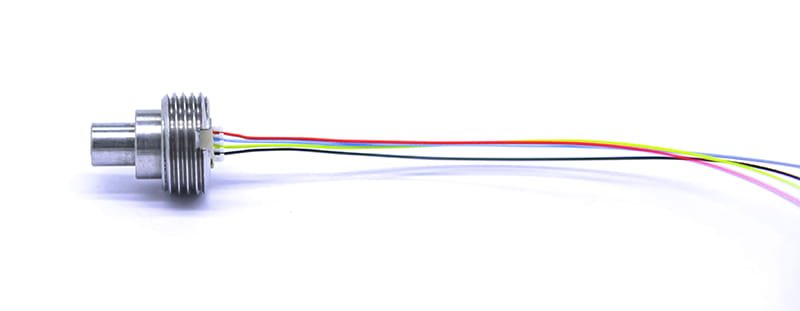
2. Isolation and force transfer: principle and common distortion sources
Metal diaphragm transmits water pressure into an oil-filled cavity that passes force to the silicon strain gauge. Proper oil selection and vacuum de-bubbling prevent bubbles and reduce nonlinearity and measurement drift.
3. Amplification, ratiometric output and digital protocols’ role in stability
Stable output needs mechanical isolation and robust electronics. Amplification or ratiometric outputs raise bridge signals; digital I2C/SPI reduces noise and keeps calibration for linearization and traceability.
4. Temperature effects, compensation methods and validation steps
Temperature causes zero drift and sensitivity change. Match materials, use internal temperature sensing, and store multi-point compensation curves. Validate with temperature cycling, thermal shock and humidity tests.
5. Installation practice, mechanical isolation and lifetime verification points
Installation must avoid torque and radial stress. Use torque limiters, flush or welded mounts, and flexible adapters to protect the sensor. Verify with pressure cycling, vibration, shock and long-term zero-drift tests.
Summary points
Material and diaphragm design determine long-term stability and corrosion resistance.
Vacuum de-bubbling and proper oil filling are essential to prevent drift.
Internal amplification, ratiometric outputs or digital I2C/SPI reduce system noise and improve integration.
Multi-point temperature calibration with onboard compensation maintains consistent readings.
Correct installation and full reliability testing prevent field-induced reading errors.
결론
For water-meter hydraulics, media-isolated pressure sensors deliver stable, repeatable outputs when engineered with the right materials, robust isolation and filling methods, careful signal conditioning, and strict temperature and installation controls. Integrating these practices with factory calibration and traceable tests improves metering accuracy and lowers maintenance needs.
위의 소개는 압력 센서 기술 적용의 표면적인 부분에 불과합니다. 우리는 다양한 제품에 사용되는 다양한 유형의 센서 요소, 작동 방식, 장점과 단점을 계속해서 탐구할 것입니다. 여기에서 논의된 내용에 대해 더 자세히 알아보려면 이 가이드 뒷부분의 관련 콘텐츠를 확인하세요. 시간이 촉박한 경우 여기를 클릭하여 이 가이드의 세부정보를 다운로드할 수도 있습니다. 공기 압력 센서 제품 PDF 데이터.
다른 센서 기술에 대한 자세한 내용은 다음을 참조하십시오. 센서 페이지를 방문하십시오.


