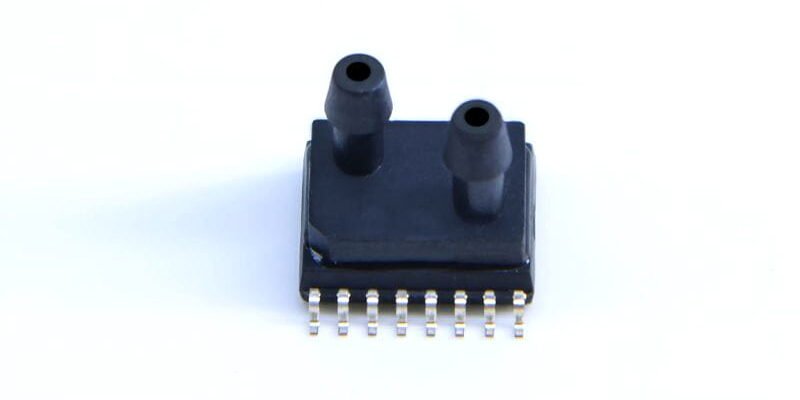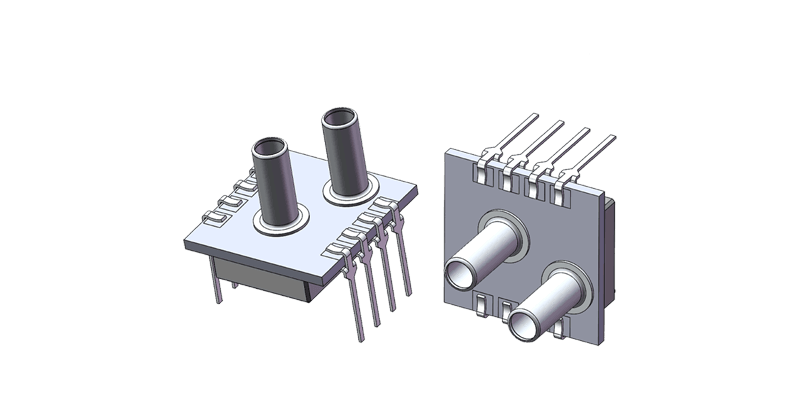
압력 센서의 공압 연결 방법
Guide to pneumatic connections for pressure sensors: tubing selection, O-ring manifold design, sealing and installation tips for reliable sensor performance.
Force sensors boost electronics testing accuracy and speed by turning force checks into hard data. Choose between strain, piezo, and piezoresistive types based on static/dynamic needs, integrate sensors into automated fixtures, ensure calibration and signal integrity, and use results to refine design and production—reducing defects and cycle time.
Piezoresistive MEMS sensors deliver steady sampling in pumped gas detectors: inlet vacuum and exhaust back-pressure monitoring, range matching, temperature compensation and robust integration to improve alarm reliability and field maintainability.
Air pump pressure sensing ensures safe, accurate tire inflation. High-resolution analog modules (small SMD, waterproof gel) offer fast response, low drift and reliable integration with pump controllers. Proper placement, signal conditioning and calibration deliver stable, repeatable tyre-pressure control for portable and vehicle pumps.
pressure gauge sensor range is set by device structure, measurement methods, calibration standards and engineering trade-offs. For MEMS parts , confirm range with static/dynamic tests, multi-point calibration, temperature checks and long-term drift analysis to ensure accuracy and safe overload margins.
Designed for high accuracy and repeatability in pressure and temperature sensing; optimised signal conditioning yields stable numeric outputs suitable for control and diagnostic algorithms.
MEMS TPMS sensor features: robust absolute-pressure MEMS die, low-power wake cycles, quick valve-cap retrofit or in-tire integration, reliable wireless link, and precise PSI↔kPa/bar/kg·cm² conversion with calibration.
Semiconductor gas sensors are MEMS devices: metal-oxide layers change conductivity when gas reacts at elevated temps, read by resistor or FET circuits. Design hinges on material choice, micro-heater control, packaging and signal conditioning to balance sensitivity, selectivity and stability for real-world monitoring.
Moisture harms sensor elements, causing drift, leakage, or failure. For PCB and SMD pressure sensors, block liquid entry with sealed housings and vent membranes, use internal desiccants and nano coatings, control PCB moisture before soldering, and add cavity humidity monitoring for alerts.
Constant-voltage drive with PCB base and thick-film compensation delivers stable temperature-compensated pressure sensing across −10°C to 60°C, suitable for medical, level and flow measurement uses.
Measure altitude with a high-sensitivity MEMS barometer: explains pressure–altitude relation, digital barometer selection, error sources and engineering strategies to improve accuracy for drones, hiking and floor detection.
Force sensors and analog pressure modules boost electronic instrument expressiveness and smart services. Ready-made micro-pressure modules offer temp compensation, stable 0.5–4.5V output, low-power modes, and remote diagnostics to ease integration.
SMD pressure sensors convert pressure signals into reliable digital data, forming a vital sensing layer for home automation and protection. Choose sensors with the right range, temperature compensation, sampling rate and digital output (I²C/SPI) and design for stable long-term operation.
Temperature affects elastic modulus, resistivity and other properties of the sensor element, producing two primary issues: zero-point (offset) drift and changes in sensitivity. Together these effects undermine measurement accuracy and linearity, accumulate over time, and limit the environments where a sensor can be trusted.
Comprehensive analysis of pressure sensor accuracy and error sources: definitions, repeatability, resolution, linearity, material and packaging effects, temperature drift, vibration and signal conditioning. Includes improvement methods (full-bridge design, MEMS laser trimming, digital compensation) and maintenance tips for industrial, medical and metrology applications.