カタログ
現代のテクノロジーにおける空気圧センサーの本質的な役割
Air pressure sensors are indispensable components in countless applications, from everyday consumer products to complex industrial systems. These devices measure the force exerted by air within a sealed environment, enabling precise control, safety, and efficiency. This article explores their functions, applications, measurement principles, and the critical role they play in maintaining optimal performance across industries.
空気圧センサーの機能を理解する
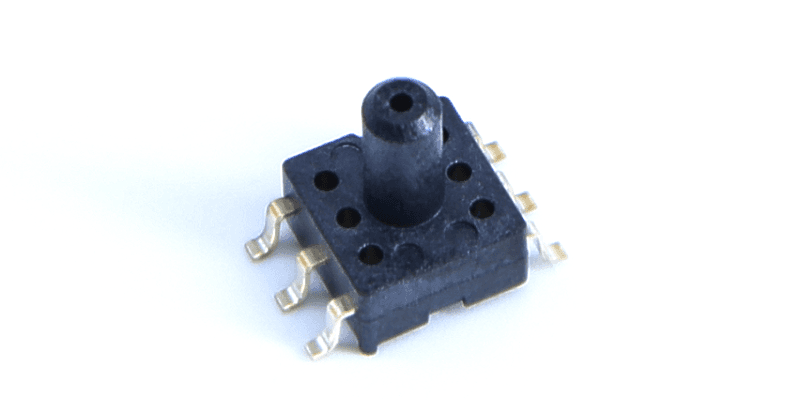
Air pressure sensor measures atmospheric pressure and temperature. This sensor is used for indoor navigation, elevator/floor-change detection, and weather monitoring. It can stabilize a drone’s altitude for precise indoor navigation, improve the accuracy of calorie calculations in wearable devices, and measure and control these important pressure levels.
空気圧センサーのしくみ
At their core, air pressure sensors rely on diaphragms or membranes that deform under pressure. This physical deformation is translated into an electrical output via technologies such as resistive strain gauges, capacitive plates, or inductive coils. For instance, in a 抵抗ひずみゲージセンサー, a diaphragm flexes under pressure, altering the resistance of attached strain gauges. This change is measured as a voltage difference, providing a precise pressure reading
安全性と効率における圧力センサーの役割
Beyond mere measurement, air pressure sensors act as guardians against catastrophic failures. In pneumatic systems, exceeding maximum pressure thresholds can lead to equipment rupture or explosions. Sensors trigger shutdown mechanisms or alarms when pressures approach dangerous levels. For example, industrial air compressors use these sensors to prevent over-pressurization, which could otherwise result in energy waste or hardware damage
空気圧センサーを必要とする製品とシステム
Air pressure sensors are ubiquitous, embedded in devices and machinery where pressure regulation is non-negotiable.
自動車アプリケーション
Modern vehicles integrate air pressure sensors for tire pressure monitoring systems (TPMS). These sensors alert drivers to under-inflated tires, which improves fuel efficiency and reduces accident risks. The normal reading for passenger car tires typically ranges between 30–35 PSI, though this varies by vehicle design
ヘルスケアおよび医療機器
Ventilators and anesthesia machines depend on air pressure sensors to deliver precise oxygen levels to patients. In ventilators, sensors ensure air pressure remains within safe limits (usually 20–30 cm H₂O) to avoid lung injury. Similarly, CPAP machines for sleep apnea use sensors to maintain consistent airflow, adapting to the user’s breathing patterns in real time
産業およびHVACシステム
Heating, ventilation, and air conditioning (HVAC) systems utilize differential pressure sensors to monitor filter cleanliness. A clogged filter creates a pressure drop, which sensors detect, signaling the need for maintenance. This not only optimizes air quality but also reduces energy consumption by up to 15% 商業ビルで

通常の読み取り値とキャリブレーション
Understanding baseline pressure values is critical for troubleshooting and system design.
大気圧ベンチマーク
At sea level, standard atmospheric pressure is 14.7 PSI または 101.3 kPa. Sensors measuring gauge pressure (relative to atmospheric pressure) will read 0 PSI under ambient conditions. Absolute pressure sensors, which reference a vacuum, will display 14.7 PSI 同じ環境で
アプリケーション固有の規範
航空機のキャビン: Maintain internal pressure equivalent to 6,000–8,000 feet altitude (~11–12 PSI) for passenger comfort.
産業空気圧: Operational pressures often range from 80–120 PSI, depending on tool requirements.
スキューバタンク: Filled to 3,000 PSI, with sensors ensuring safe decompression rates
Regular calibration against certified references (e.g., NIST-traceable instruments) is essential to maintain accuracy. Drift over time, caused by temperature fluctuations or mechanical stress, can lead to erroneous readings if unchecked.
比較した測定技術
Selecting the right sensor technology hinges on application requirements.
抵抗ひずみゲージセンサー
Widely used due to their robustness and cost-effectiveness, these sensors excel in high-vibration environments like construction equipment. However, they may suffer from temperature-induced drift, necessitating compensation algorithms
容量圧力トランスデューサー
Capacitive sensors offer superior accuracy at low pressures (<5 PSI), making them ideal for medical devices and cleanroom monitoring. Their sensitivity to humidity and particulates, however, limits use in harsh environments
誘導および圧電センサー
Inductive sensors, which measure core displacement in magnetic fields, are favored for high-pressure industrial applications. Piezoelectric variants generate charge in response to pressure changes, suitable for dynamic measurements in aerospace testing
Table 1: Technology Comparison
| テクノロジー | 圧力範囲 | 正確さ | に最適です |
|---|---|---|---|
| 抵抗性ひずみ | 0–10,000 psi | ±0.5%fs | Automotive, HVAC |
| 容量性 | 0–5 psi | ±0.1%FS | Medical, Laboratories |
| 帰納的 | 100–15,000 PSI | ±0.25%FS | Oil/Gas, Hydraulics |
適切な空気圧センサーの選択
Choosing an appropriate sensor involves evaluating multiple factors beyond technical specs.
圧力範囲と過負荷保護
Always select a sensor with a maximum rating exceeding your system’s peak pressure. For example, if normal operation is 100 PSI, a sensor rated for 150 PSI provides a safety margin. Overload protection (e.g., diaphragm stops) prevents damage during pressure spikes
環境互換性
Consider temperature extremes, chemical exposure, and moisture. Stainless steel housings and IP67-rated seals are mandatory for outdoor or corrosive environments. In food processing, sensors must withstand frequent washdowns with caustic cleaners
出力信号と統合
Analog outputs (4–20 mA, 0–10 V) are standard for industrial PLCs, while digital protocols (I²C, SPI) suit embedded systems. Ensure compatibility with existing data acquisition hardware to avoid signal conversion costs
イノベーションのトレンド
Emerging technologies are expanding sensor capabilities.
ミームと小型化
Micro-electromechanical systems (MEMS) enable smartphone-sized sensors for wearable health monitors. These devices track altitude changes for hiking apps or detect barometric shifts predicting weather patterns
ワイヤレスおよびIoT統合
Wireless pressure sensors, powered by energy harvesting or batteries, transmit data to cloud platforms for predictive maintenance. In smart cities, networks of sensors monitor water distribution pipes, detecting leaks via pressure drops
自己調節センサー
AI-driven sensors analyze historical data to predict calibration needs, reducing downtime. For instance, a sensor in a pharmaceutical plant might self-adjust based on seasonal humidity trends
結論
Air pressure sensors are the unsung heroes of modern engineering, ensuring safety, efficiency, and precision across industries. From life-saving medical devices to energy-efficient HVAC systems, their ability to translate mechanical force into actionable data is transformative. As technology advances, these sensors will become even more integral to IoT ecosystems and smart infrastructure. By understanding their principles, applications, and selection criteria, engineers and technicians can harness their full potential, driving innovation while upholding the highest standards of reliability
上記の紹介は、圧力センサー技術のアプリケーションの表面をなぞっただけです。私たちは、さまざまな製品で使用されているさまざまなタイプのセンサー素子、それらがどのように機能するか、そしてそれらの長所と短所を引き続き調査していきます。ここで説明する内容についてさらに詳しく知りたい場合は、このガイドの後半にある関連コンテンツをご覧ください。時間がない場合は、ここをクリックしてこのガイドの詳細をダウンロードすることもできます。 空気圧センサー製品PDFデータ。
他のセンサー技術の詳細については、こちらをご覧ください。 センサーページにアクセスしてください。