
圧力センサー:車両ナビゲーションの「高度ガーディアン」
MEMS 圧力センサーは、大気圧の変化を監視し、平面的な GPS ガイダンスを空間測位に変換することで 3D ナビゲーションを可能にします。これらのセンサーは気圧の変化を測定して高度を計算し、衛星信号が届かない都市部の峡谷やトンネルにおける GPS の垂直方向の死角を埋めます。

MEMS 圧力センサーは、大気圧の変化を監視し、平面的な GPS ガイダンスを空間測位に変換することで 3D ナビゲーションを可能にします。これらのセンサーは気圧の変化を測定して高度を計算し、衛星信号が届かない都市部の峡谷やトンネルにおける GPS の垂直方向の死角を埋めます。
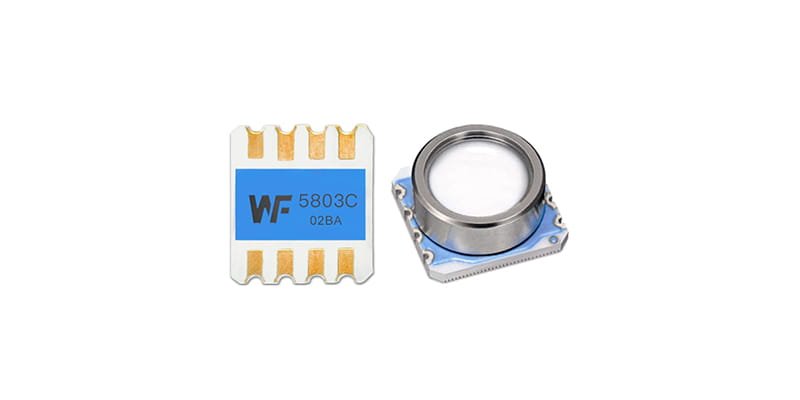
Based on practical MEMS technology experience, this article systematically explains how digital pressure sensors achieve 1cm water depth resolution through 24-bit ΔΣ ADC, simplify system integration via I2C and SPI protocols, and withstand harsh outdoor environments through waterproof structural design. These technical features make digital pressure sensors the preferred measurement component for dive computers, underwater robots, weather stations, and similar equipment.

For long runs and industrial sites, favour 4–20 mA transmitters. For remote, low-power digital nodes, favour ratio-voltage or I²C transducers. For the highest sensitivity and flexible post-processing, choose mV-output sensors and pair them with precision amplifiers and ADC.

High-precision barometric sensors for meteorological observation: an engineering guide from extreme-condition tests to selection tips, covering error sources, temperature compensation and site maintenance to help weather station ensure reliable data.

Pressure sensors — especially absolute and digital MEMS types — are the anchors for smart window cleaners. Real-time vacuum feedback adjusts pump power, spots leaks and saves energy. Fast response (<10 ms), ±0.5%FS accuracy, IP67 protection and redundant sensors improve suction stability, path coordination and safety at height.

Digital display gauges convert mV or 5V analogue signals from MEMS pressure sensors into real-time numeric readings, pairing low-level sensing with precise signal handling for stable monitoring and reliable logs.

Smart devices rely on sensors to continuously sense the environment; when sensor outputs show abnormal fluctuations, system measurement accuracy and response stability suffer.

Differential pressure measurement is used to monitor changes in filter resistance in gas pipelines.
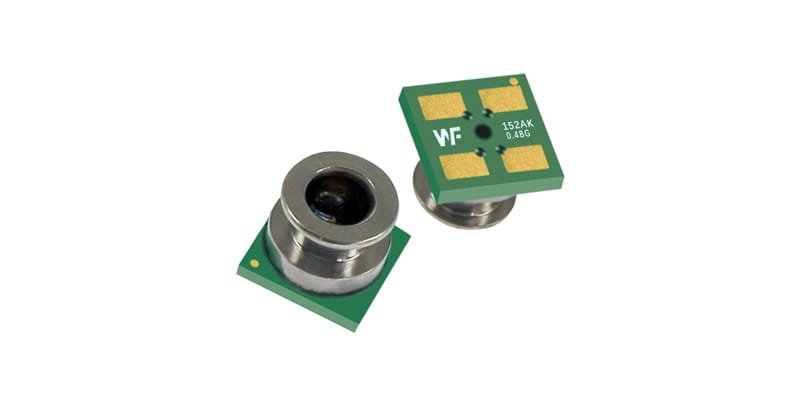
低応力 MEMS パッケージングの重要なポイント: MEMS 圧力センサー、低電力センサー、防水面圧センサーを安定させるために、材料、プロセス、構造を通じて熱機械的ミスマッチを軽減します。

Pressure sensors in smart washing machines handle precise water-level detection and overflow protection. They’re key to matching water amounts to load size and saving energy. This piece explains sensor types, performance, signal processing, calibration and temperature compensation, and why factory-calibrated and amplified calibrated units simplify integration.

Hardware compensation adjusts the sensor’s output directly at the analogue level using circuit components, providing a fast and stable response; programmatic linear (software) compensation corrects errors at the digital level using mathematical models running on an MCU, offering greater flexibility and the potential for improved accuracy.

Pressure sensors that make the perfect cup: This piece starts from the “bean-to-cup” process and explains the central role of pressure sensors in fully automatic coffee machines.

Starting from the physical mechanisms behind temperature drift, this piece examines the limits of traditional compensation, explains the SSABP fusion algorithm and how it’s implemented, and offers validation data and embedded deployment advice. It’s written to give clear, practical guidance for teams seeking high-precision, temperature-compensated, low-cost pressure sensor solutions.

Tire pressure sensors use digital or analogue signals to precisely control and protect inflators, monitoring and controlling an inflator’s start and stop in real time to prevent over- or under-inflation.

Digital air pressure sensor is captures small pressure shifts with a sensing element and a high-resolution ADC, applies built-in calibration and temperature compensation, and outputs data ready for higher-level algorithms and control logic.