
Modern observation networks demand continuous, reliable surface pressure records. Digital pressure devices have become the “sensory nerve endings” of monitoring nodes — their stability directly affects forecasts and warnings. This piece walks through measurement accuracy, temperature effects, material choices, site deployment and maintenance, with lab data and real-world checks from high-altitude and high-heat sites. The goal? To help you cut uncertainty and get reproducible, trustworthy data in the field.
Katalog
1. The Core Role of Barometric Sensors
Tiny pressure shifts often precede visible weather changes — so a solid baseline measurement matters more than you might think. Digital pressure sensors handle acquisition, digitisation and local pre-processing. A dependable sensor turns those slight pressure wiggles into stable numeric outputs for the observation network to merge and analyse. Choosing the right device cuts downstream data-cleaning effort and sharpens sensitivity to short-term weather evolution. In networks where stations are unevenly spread, the reliability of a single node can make or break regional forecast trust.
Why accuracy matters more than it looks
In meteorology, a 0.1 hPa difference can change altitude estimates and system interpretation. Practically, this means zero-point drift and temperature response need tight control. Stable digital outputs reduce the need for repeated recalibration and save on-site maintenance time. Better accuracy supports finer-resolution models and faster warning decisions. When choosing a sensor, consider both long-term drift and short-term noise — both bite you in different ways.
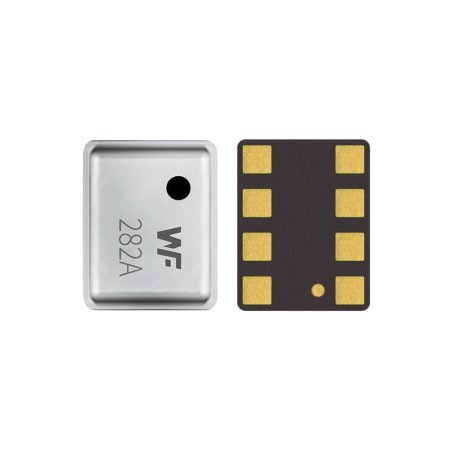
2. Performance in Extreme Conditions
Lab and field tests show clear differences in device behaviour across conditions. At −40°C, some sensors showed errors up to ±0.3 hPa — that’s well beyond acceptable limits for many uses — largely due to changes in sensor materials and electronic drift. By contrast, in extreme hot and dry conditions (say, 60°C and 5% RH), many devices stayed within about ±0.2 hPa, showing better high-temperature tolerance. Field checks in places like Lhasa (3,650 m) and Turpan Basin (extreme heat) validate where devices hold up and where they don’t. Engineers must use these real-world figures in acceptance criteria, not just room-temperature specs.
Key findings and error sources
Errors usually come from three areas: thermal-mechanical response of materials, electronic amplifier and ADC temperature drift, and mechanical mounting shifts affecting reference geometry. Field data help engineers tune compensation curves and housing design so real deployments yield useful numbers. Turning vague “small” errors into quantified engineering factors is how you make measurement systems reliable.
3. From Hardware to Algorithms: Strategies for Long-Term Stability
One measure alone rarely fixes the problem. The engineering answer is a suite of measures: pick sensing materials with low temperature coefficients and thermally stable electronics, then add real-time temperature tracking with a mathematical compensation model. Adaptive mechanical housing designs can reduce stress from thermal expansion and contraction, prolonging life. Systematising these measures cuts failure rates and improves data comparability across sites.
How materials and design shape stability
Material choice sets the baseline thermal drift of the sensor chip; packaging and mechanical interfaces set how stress transmits to the sensing element. Engineers commonly use low-TC alloys, stable ceramics and screened electronic parts, and run finite-element analysis on housings to reduce stress hotspots. The result? Less environment-driven bias and a steadier measurement baseline.
4. Site Deployment and Maintenance Essentials
When you deploy, check working temperature range, sealing rating and interface standards. A recommended baseline spec might be 500–1100 hPa range, ±0.2 hPa basic accuracy, −40°C to +60°C operating temperature, and built-in temperature compensation. For critical stations or hard conditions, choose higher-grade models that reach ±0.1 hPa and broader temperature ranges. During site commissioning, run side-by-side checks, record baseline behaviour and set automated alarm thresholds to cut down on manual intervention.
Maintenance principles for engineers
Drive maintenance with data: regularly compare remote readings with a portable calibrator and use self-check signals to spot issues early. Avoid frequent disassembly — every visit risks stressing the instrument or contaminating it. A smart operation strategy reduces total cost of ownership while keeping measurement quality steady.
5. Specs and Selection Advice
Be clear about what you’re observing. If you need to catch fast-front changes, prioritise resolution and response speed. For long-term climate records, pick devices with proven low drift and long-term stability. Waterproof pressure sensors Dan capacitive pressure sensors each have their pros in different scenarios. For open-field sites, IP67 protection is sensible; for integrated data systems, get devices with standard digital outputs and a temperature-sensing port to simplify fusion. Insist suppliers provide temperature curves, response-time info and long-term drift data in the contract.
Typical recommended parameters
A common spec set: 500–1100 hPa range, ±0.2 hPa basic accuracy, −40°C to +125°C operating range, with built-in compensation algorithm and digital interface. If your conditions are harsh, choose extended models and check the IP rating and drift test results.
Kesimpulan
Barometric sensors are the backbone of any meteorological observation network. The quality of their measurements ripples through to forecasts and warnings. Experience shows that only by combining careful component selection, smart materials, robust temperature compensation and sensible field operations can you keep data useful and consistent under tough conditions. For engineers, the pragmatic route is to understand error sources, insist on field validation, and lock critical performance metrics into procurement and acceptance tests — that’s how you reduce uncertainty and get real value from the network.
Pengenalan di atas hanya sekilas tentang penerapan teknologi sensor tekanan. Kami akan terus mengeksplorasi berbagai jenis elemen sensor yang digunakan di berbagai produk, cara kerjanya, serta kelebihan dan kekurangannya. Jika Anda ingin mengetahui detail selengkapnya tentang apa yang dibahas di sini, Anda dapat melihat konten terkait nanti di panduan ini. Jika Anda terdesak waktu, Anda juga dapat mengklik di sini untuk mengunduh rincian panduan ini Data PDF Produk Sensor Tekanan Udara.
Untuk informasi lebih lanjut tentang teknologi sensor lainnya, silakan Kunjungi Halaman Sensor Kami.


