- Po WFsenzori
Using high-precision pressure sensing elements for continuous online monitoring in vacuum pump systems lets you spot seal issues early, protect critical processes and cut unplanned downtime. The scheme centers on compact, accurate sensors paired with temperature measurement and proper signal handling, making a closed-loop protection system that plugs straight into controllers or industrial buses.
Katalog
1. System-level leak identification
Pressure in a vacuum system is more than a single number — it carries dynamic clues. A steady low reading and a sudden pressure climb tell you very different things. By sampling continuously and comparing short-term and long-term averages, the system can spot abnormal rises or intermittent rebounds, both signs of seal degradation or external leaks. For the pump controller, the trick is to correlate pressure with pump speed, valve position and temperature: if pressure climbs while pump speed stays the same, check seals and flange joints first; if pressure moves with temperature, look at material expansion and gaps. Practically, picking the right range and resolution is vital: too wide a range loses resolution; too narrow risks saturation. From hands-on experience, start with signal-shape analysis and build a multi-factor decision logic so you can tell early, middle and late-stage leak behaviour.
1: Baseline drift vs sudden change
Baseline drift usually comes from temperature swings, long-term drift or circuit offset, and shows up as a slow rise or fall; sudden changes point to process or mechanical events and happen fast. Tell them apart with filtering and windowed stats: use a short moving average to catch transients and a longer window for trend. When deploying, include a temperature reference at the sampling point and log it together — then use temp compensation in hardware or software to cut environmental noise and improve sensitivity to real sealing faults.

2. Online data capture and edge architecture
Good online measurement needs alignment across physical hookup, front-end signal handling and communications. The front end must give good common-mode rejection and low-noise gain: sensor output goes through low-pass filtering and differential amplification before ADC. For fast events, set the sampling rate to match the event bandwidth to avoid aliasing. Locally process data first — denoise, threshold, short-time Fourier or wavelet analysis — and send event summaries upstream to save bus load and speed reaction. Practically, use configurable thresholds and event-reporting rules, and support remote updates so the system fits different pump models and pipe layouts on site.
2-1: Signal integrity and field wiring
How you wire things on site directly affects signal quality. Short shielded runs and correct earthing cut interference a lot. If sensors sit far from controllers, convert to digital at the sensor and use a differential digital link to reduce transmission errors. Where you tap the pressure matters too: place the port close to the chamber and avoid local vortices or dead spots so the reading reflects system pressure rather than a local wobble.
3. Sensor selection and measurement basics layout
Picking the right part is the backbone of system trust. Miniaturised MEMS give high sensitivity and small size, while thin-film sensors can hit a good cost-stability balance in certain ranges. Whatever you choose, check range coverage, nonlinearity, zero drift and temperature coefficient. Where temperature matters, pair a temp sensor for online compensation. For outputs, digital interfaces with on-site calibration and diagnostics ease wiring and boost noise immunity, but analogue output still makes sense in constrained systems.
3-1: Thin-film deflection and MEMS measurement mechanism
The sensing core usually relies on a diaphragm that bends under pressure, changing resistance or capacitance. MEMS integrates bridge or differential structures on a tiny silicon chip and gives a high-precision output. When selecting, look at rated range, resolution and long-term drift specs, and ask the supplier for temperature curves and ageing data to support engineering-level reliability checks.
4. Dynamic response and signal processing
Whether you catch a fast leak depends on how quickly the sensor, signal chain and sampling strategy respond. Response speed is shaped by the sensor’s mechanical traits, the chain’s bandwidth and the sampling plan. Boosting bandwidth brings more noise, so balance carefully: stay at lower bandwidth for normal running to cut noise, and enable short bursts of higher-bandwidth sampling for transients. Software-wise, use multi-stage triggers: run a cheap long-term monitor, then switch to high-res capture on trigger and store the event waveform for later analysis and pinpointing.
4-1: Denoising, filtering and event retention
Filtering must remove noise but keep transients. Common approaches are tunable low-pass pre-filters and wavelet denoising. When an event hits, save a buffer of pre- and post-event samples for analysis. That means the front end needs a circular buffer and event store, and the controller needs a policy for when to upload full waveforms so bandwidth isn’t swamped.
5. Reliability, materials and long-term stability
Long-term stability drives maintenance cycles and total cost of ownership. The pumped medium’s chemistry, operating temperature range and mechanical cycling affect sensor life. To cut drift, prefer housings and materials that resist the media, and design in isolation or filters to keep particles or droplets off the diaphragm. System-level online self-checks (short/open diagnostics, zero checks) let you assess sensor health without uninstalling, enabling predictive maintenance.
5-1: Corrosion resistance and packaging engineering
A package must meet mechanical strength and chemical compatibility. Metal-polymer composite housings usually protect well in most conditions. For corrosive gases, ask suppliers for corrosion-resistant material specs and accelerated ageing test data. In the field, think about sealing-face geometry, thread and flange fit tolerances to reduce tiny leaks caused by mechanical installation.
Zaključak
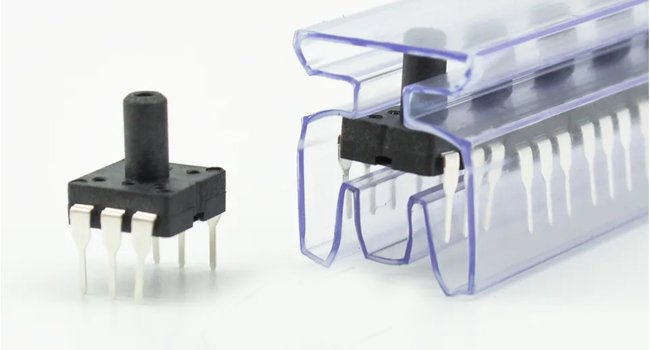
Putting high-precision sensing elements up front in a vacuum-pump protection system gives you real-time insight into seal health without changing the process. Engineering success depends on matching range, keeping the front-end signal clean, smart edge processing and robust packaging. Add temperature compensation and event-based reporting and you cut false alarms while giving the controller enough detail to act when real faults occur. The small sensors in the picture suit pump-side or pipe mounting and make retrofit and piloting straightforward. Start with a small pilot, tune sampling and trigger settings on site, then scale up when you’ve found the right settings.
Gornji uvod samo zagrebe površinu primjene tehnologije senzora tlaka. Nastavit ćemo istraživati različite vrste senzorskih elemenata koji se koriste u različitim proizvodima, kako rade te njihove prednosti i nedostatke. Ako želite više pojedinosti o tome što se ovdje raspravlja, možete provjeriti povezani sadržaj kasnije u ovom vodiču. Ako ste u stisci s vremenom, također možete kliknuti ovdje za preuzimanje pojedinosti o ovim vodičima Podaci o senzoru zračnog tlaka PDF podaci.
Za više informacija o drugim tehnologijama senzora, molimo Posjetite našu stranicu senzora.