
Blog

Wf5803f 3bar hohonu hohonu

Ke kohoʻana i nā mea kū'ē no nā mea hiki ke koho i kāu noi huahana

In specific projects, you need to balance resistive and capacitive MEMS sensors across multiple dimensions—measurement range, accuracy, temperature drift, response speed, package size, and cost. The final decision should combine application requirements, environmental conditions, and pre-production test results to ensure deep integration between the sensor and the system.

Ke kohoʻana i nā mea kū'ē no nā mea hiki ke koho i kāu noi huahana Read Post »
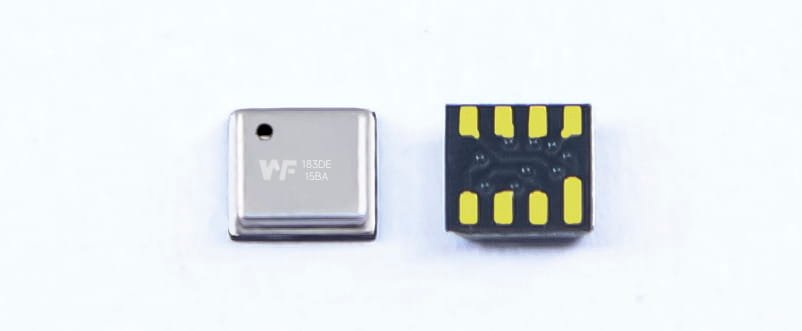
Wf183de 15bar sinor sentor sensor

ʻO ka loiloi pihaʻana o nā noi o Automotive Mems Mems Sensor

This article provides an overview of automotive sensor technology trends and classifications, focusing on the core applications and market prospects of MEMS sensors in powertrain control, body electronics, safety electronics, and advanced driver-assistance systems, to guide sensor solution selection for the intelligent, connected, and autonomous driving era.

ʻO ka loiloi pihaʻana o nā noi o Automotive Mems Mems Sensor Read Post »

Wf200d sensor 10kpa

How to Correctly Choose a Differential Pressure Sensor for Your Product

Offering professional, practical selection solutions across application requirements, pressure and temperature measurement, accuracy range, response speed, interface compatibility, protective installation, and pre–mass-production testing—empowering engineers and technical decision-makers to achieve efficient, reliable measurement solutions.

How to Correctly Choose a Differential Pressure Sensor for Your Product Read Post »

WF100DP 40kPa Pumi Pumi

Ke hoʻohana nei i nā mea hoʻopaʻapaʻa MEMS i nā ʻōnaehana NPWT no ka ho'ōla wikiwiki ʻana

Integrating the MEMS digital pressure sensor into NPWT systems ensures ±0.5 % FS accuracy, ≤1 ms response and digital I²C/SPI output. Factory temperature compensation limits drift to ±0.1 kPa over –10 °C to 60 °C. Combined with PID-controlled pumps, safety‐valve redundancy and rigorous ISO-compliant pre-production testing (FAI, Cp/Cpk ≥ 1.33), this turnkey solution supports faster granulation, efficient exudate removal and reduced infection risk for large or deep wounds.

Ke hoʻohana nei i nā mea hoʻopaʻapaʻa MEMS i nā ʻōnaehana NPWT no ka ho'ōla wikiwiki ʻana Read Post »

WF100S 100KPA 1BAR DIP6 Pressure Sensor

Key Points to Consider When Replacing Old Pressure and Temperature Sensors

When replacing old pressure and temperature sensors, engineers must consider multiple factors. This article focuses on real-world scenarios and customer concerns to highlight key points for making informed decisions. Topics include understanding legacy system requirements, comparing analog vs digital sensor options, installation and soldering considerations, pre-production testing, and maintenance strategies to ensure long-term system stability.

Key Points to Consider When Replacing Old Pressure and Temperature Sensors Read Post »

Wf100e maikaʻi ikaika o ka sensor 40kpa

ʻO nā mea kiʻekiʻe e pili ana i nā manaʻo maikaʻiʻole e pili ana i nāʻikena

High-precision MEMS negative pressure sensors convert tiny diaphragm movements into electrical signals using capacitive or strain-gauge methods. With resolutions as low as 10 Pa and nonlinearity under 0.01% FS, they ensure stable, high-speed performance across a 0–50 kPa range. This article covers their structure, performance, installation, testing, and real-world use, offering engineers a reliable solution for accurate negative-pressure data capture.

ʻO nā mea kiʻekiʻe e pili ana i nā manaʻo maikaʻiʻole e pili ana i nāʻikena Read Post »

Holo i luna

Kāhea iā mā˚ou