
MEMS Pressure Sensor Sampling Rate Key Indicators Analysis
MEMS pressure sensor sampling rate indicators encompass four core dimensions: signal fidelity, real-time performance, power control, and application adaptation.

MEMS pressure sensor sampling rate indicators encompass four core dimensions: signal fidelity, real-time performance, power control, and application adaptation.

MEMS pressure sensors achieve intelligent instrumentation monitoring through high-precision measurement, intelligent temperature compensation, and fast response technology, enhancing industrial automation and predictive maintenance capabilities.

Professional analysis of MEMS differential pressure sensor key technical parameters in room pressure monitoring: range, accuracy, resolution, temperature characteristics, helping engineers achieve efficient pressure control system design.

Learn how barometric sensors optimize portable climate logger design. In-depth analysis of MEMS technology advantages, selection strategies, and performance optimization methods, providing engineers with professional sensor integration solutions for high-precision environmental monitoring and extended battery life.

In modern industrial automation and precision measurement applications, pressure sensor range and accuracy directly impact system performance. The WF100E series achieves continuous measurement capability from negative to positive pressure through innovative wide-range technology.

Pressure sensors collect real-time pressure changes in water tanks and pump pipelines, providing analog output signals to controllers for precise monitoring and system optimization.
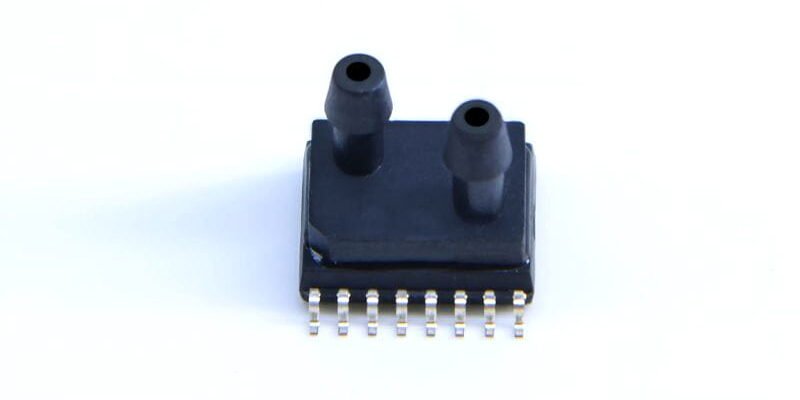
Modern medical equipment demands exceptional precision and reliability, particularly in critical care and respiratory therapy. The medicine pressure sensor utilizes advanced MEMS technology specifically designed for ventilator applications, accurately detecting minute pressure changes and converting physical signals into precise electrical signals for intelligent ventilator control systems.

Semiconductor MEMS sensors deliver high‑precision, rapid‑response real‑time water pressure and parameter monitoring for water‑quality systems. The compact WF5837F offers superior accuracy, stability, interference resistance, and easy integration, redefining standards.

WF5805F high-precision MEMS pressure sensor integrates temperature and pressure detection for next-generation gas meter designs. This compact SMD sensor features 24-bit ADC, ultra-low power consumption, and a wide 1-2bar measurement range with 0.02bar accuracy for reliable battery-powered gas meter applications.

The Electronic cigarette sensor features a MEMS air pressure sensor architecture with real-time environmental compensation, effectively eliminating false triggers and enhancing e-cigarette reliability, safety, and intelligence.

MEMS barometric pressure sensors, as core MEMS devices, achieve precise pressure measurement through two primary mechanisms: piezoelectric effects and membrane deformation. These sensors play critical roles in IoT ecosystems, from smartphone altitude tracking to industrial environmental monitoring, with their low power consumption, compact size, and high accuracy making them ideal for IoT applications.

The WF5805-2BAR air pressure sensor provides ±20cm precision hovering control for the aircraft model through 24-bit high-precision measurement and multi-sensor fusion technology, achieving stable and reliable automatic altitude flight performance.
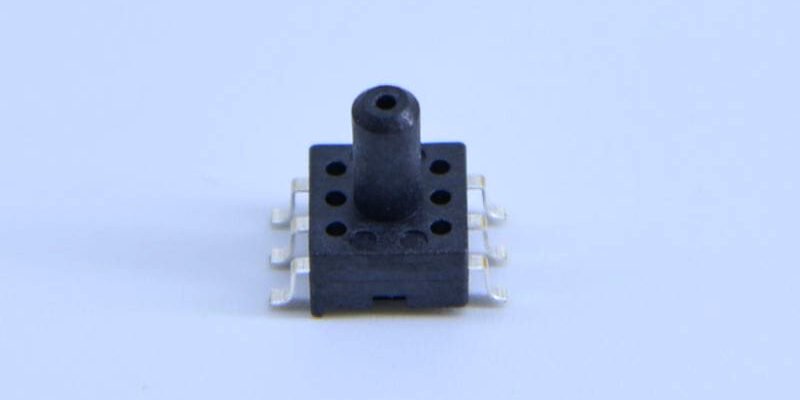
Arduino platform advancement drives intelligent sensor technology applications. This 15-700kPa I2C pressure sensor module achieves <2.5% accuracy and 1kPa resolution through integrated ASIC technology. Features epoxy resin packaging, reverse protection, 3.3V-5.5V operation for reliable digital pressure measurement solutions.

Built-in MEMS barometric sensors in smartphones measure pressure changes for meter‐level altitude and improved GPS accuracy; they enable 3D navigation and indoor floor detection, and—when fused with accelerometers and gyroscopes—provide real‐time vertical movement tracking. Applications include outdoor and building navigation, health monitoring, and weather forecasting, with temperature compensation and filtering ensuring high accuracy and stability.
Barometric pressure sensors are essential tools in meteorological forecasting, providing real-time atmospheric pressure measurements that enable accurate weather predictions and climate analysis for various applications.