Blog

Your blog category

Wf162F 11bar 11bar kūpono loa i ka sensor ikaika

Piezoresistive Sensors no Direct TPMS: Ke Ana Paʻi Paʻa Pono

A direct tyre pressure monitoring system measures the pressure inside each tyre with sensors mounted on the wheel and transmits that data wirelessly to an in-cabin receiver. Compared with indirect systems, it can show the instantaneous absolute pressure for every tyre. Sensitivity and resolution determine whether the system will alert early enough.

Piezoresistive Sensors no Direct TPMS: Ke Ana Paʻi Paʻa Pono Read Post »

WF162L 11BAR nā mea hoʻonā mana

He aha ke ʻano o ka mea ʻike kaomi i hoʻohana ʻia i loko o kahi ana kaomi kikohoʻe?

Digital gauges need sensors matched to range, accuracy, output and medium. For most gauges, diffusion-silicon sensors give the best price-performance; ceramic or isolation types suit corrosive media; sapphire suits extreme temps. Pick based on range, output (analog mV vs digital), and installation to ensure stable, accurate readings.

He aha ke ʻano o ka mea ʻike kaomi i hoʻohana ʻia i loko o kahi ana kaomi kikohoʻe? Read Post »

WF162A 15BARTH

Hiki i nā mea ʻike kaomi ke hōʻemi i nā pilikia i nā mea hoʻokiʻekiʻe kahua

Pressure sensors give stage lifts a second — sometimes first — line of defence by monitoring load and pressure in real time. This piece covers sensor selection, control integration, redundant design, reliability checks and maintenance, showing how analog absolute pressure sensors along with pressure monitoring sensors and tension sensors can work together to noticeably cut overloads, mechanical faults and false operations.

Hiki i nā mea ʻike kaomi ke hōʻemi i nā pilikia i nā mea hoʻokiʻekiʻe kahua Read Post »

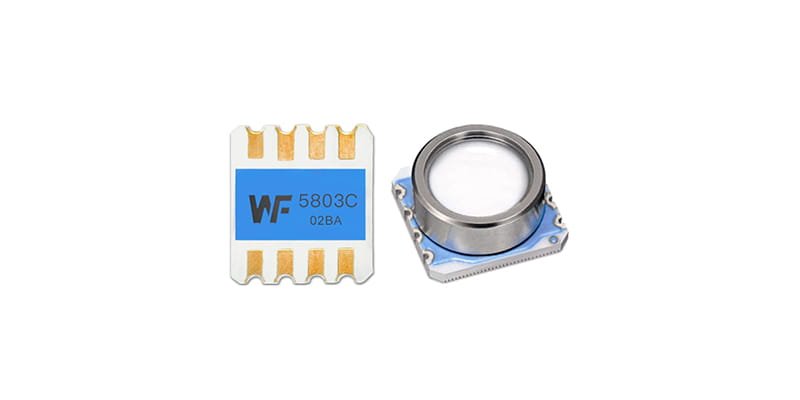
Wf5837c kaomi sensor

ʻAʻole ʻike ʻia nā mea ʻike MEMS akā aia ma nā wahi āpau

The article follows five core sections that progressively reveal the fabrication basics of MEMS, sensing principles, packaging and integration challenges, validation and quality-control essentials, and finishes with practical recommendations. The content references observations of the sensor pictured and focuses on being clear, practical and actionable.

ʻAʻole ʻike ʻia nā mea ʻike MEMS akā aia ma nā wahi āpau Read Post »

Wf3050d digital kalima sensor

Kikohoʻe ea puʻe kikohoʻe mea e pono hana no ka moe Apnea Mīkini

Sensor selection is not a single-parameter decision: it’s a trade-off among resolution, response, stability, environmental tolerance and ease of integration. Digital air pressure sensors offer clear advantages in integration and long-term stability when paired with appropriate packaging and compensation strategies. Start from the clinical needs and user comfort, then validate sensors at the system level to choose a part that meets performance, manufacturability and maintainability requirements.

Kikohoʻe ea puʻe kikohoʻe mea e pono hana no ka moe Apnea Mīkini Read Post »

Wf5808 5bar mahana a me nā hohonu hohonu

Hoʻokomo ʻia ʻo Enclosure Sensor ma luna o nā Lifejackets no ka hohonu pololei o lalo o ka wai

Depth pressure sensor is a sensor that accurately determines the depth of a liquid by measuring hydrostatic pressure (i.e., the pressure increases with water depth). It is commonly used in diving watches, underwater robots (ROVs), sonar buoys, and water level monitoring.

Hoʻokomo ʻia ʻo Enclosure Sensor ma luna o nā Lifejackets no ka hohonu pololei o lalo o ka wai Read Post »

ʻO ka hōʻailona likeʻole o WF200DP

Pehea e ʻike ʻia ai ka pae wai i loko o kahi pahu waihona me ka hoʻohana ʻana i kahi mea ʻike kaomi?

Pressure sensors read tank level by measuring hydrostatic pressure. For open tanks measure bottom gauge pressure; for pressurized tanks use a differential transmitter to cancel vapor pressure. Use piezoresistive silicon sensors with built-in temperature compensation and a 24-bit DSADC digital output for high resolution, low-noise level data and easier system integration.

Pehea e ʻike ʻia ai ka pae wai i loko o kahi pahu waihona me ka hoʻohana ʻana i kahi mea ʻike kaomi? Read Post »

Wf4525ʻokoʻa paʻakikī paʻakikī

E hoʻohana i nā ʻenekona ʻokoʻa no ka ʻike ʻana i ke kānana ʻana i ka uahi

A clogged filter reduces sample flow and introduces measurement error. Measuring pressure on both sides of the filter with a sensor and converting that into an electrical signal lets you set up early warnings and maintenance prompts, keeping sampling and detection systems running reliably.

E hoʻohana i nā ʻenekona ʻokoʻa no ka ʻike ʻana i ke kānana ʻana i ka uahi Read Post »

Holo i luna

Kāhea iā mā˚ou