
Katalog
Modern bicycle computers achieve accurate real-time wind speed measurement through integration of advanced MEMS barometric sensors. The WF152D digital pressure sensor, based on resistive MEMS technology, employs micromechanical diaphragm structures to detect atmospheric pressure changes, converting dynamic pressure differentials during cycling into precise wind speed data. This miniaturized sensor features low power consumption, low noise, and waterproof design characteristics, with built-in temperature compensation functionality and I2C/SPI digital interfaces, providing reliable environmental monitoring capabilities for cyclists. Through real-time analysis of atmospheric pressure fluctuations, cyclists obtain accurate wind resistance information to optimize riding efficiency and training strategies.

1. Working Principles of Resistive MEMS Sensors in Wind Speed Detection
Piezoresistiver Effekt und atmosphärischer Druckerkennungsmechanismus
Resistive MEMS pressure sensors achieve atmospheric pressure detection through piezoresistive effects. When external atmospheric pressure acts on silicon-based diaphragms, diaphragms undergo stress deformation, causing diffused resistor values within diaphragms to change. The WF152D sensor employs Wheatstone bridge structures, arranging four pressure-sensitive resistors at specific positions on silicon membranes. When membranes bend under pressure, resistor value changes produce unbalanced voltage outputs. This design ensures high sensitivity and excellent linearity, with pressure resolution reaching 0.01hPa, sufficient for detecting minute atmospheric pressure changes during cycling.
Dynamische Windgeschwindigkeitsberechnungsmethoden
When bicycles move, high-pressure zones form in front of sensors while relatively low-pressure zones develop on sides and rear. Sensors calculate relative wind speeds by measuring these pressure differentials combined with Bernoulli’s law. Algorithms first establish static baseline pressures, then monitor pressure changes in real-time, filtering noise and temperature drift through digital signal processing algorithms, ultimately outputting accurate wind speed values. Entire calculation processes complete within milliseconds, ensuring real-time performance.
Anwendungen der Temperaturkompensation Technologie
Built-in temperature sensors continuously monitor environmental temperatures, correcting temperature effects on piezoresistive values through preset compensation algorithms. Temperature compensation ranges cover -40°C to +125°C, ensuring stable measurement accuracy under different climate conditions. Compensation algorithms employ polynomial fitting methods, controlling temperature coefficients within ±0.02%/°C, effectively eliminating temperature change interference on measurement results.
2. Digital Interface Design and System Integration
I2C/SPI -Kommunikationsprotokollimplementierung
WF152D supports both I2C and SPI digital communication interfaces, providing flexible choices for system integration. I2C interfaces adopt standard two-wire protocols, supporting multi-device cascading with clock frequencies up to 400kHz. SPI interfaces provide higher data transmission rates up to 10MHz, suitable for applications requiring high real-time performance. Both interfaces feature complete error detection and correction mechanisms, ensuring data transmission reliability.
Interrupt -Funktionalität und Stromverwaltung unterbrechen
Sensors incorporate programmable interrupt functionality, automatically triggering interrupt signals to notify host systems when detecting preset pressure thresholds or abnormal conditions. This event-driven operating mode significantly reduces system power consumption, with normal operating current only 3µA, decreasing to 0.1µA in standby mode. Intelligent power management strategies include automatic sleep, rapid wake-up, and dynamic power adjustment, ensuring long-term battery life.
SMD -Verpackungs- und Installationsvorteile
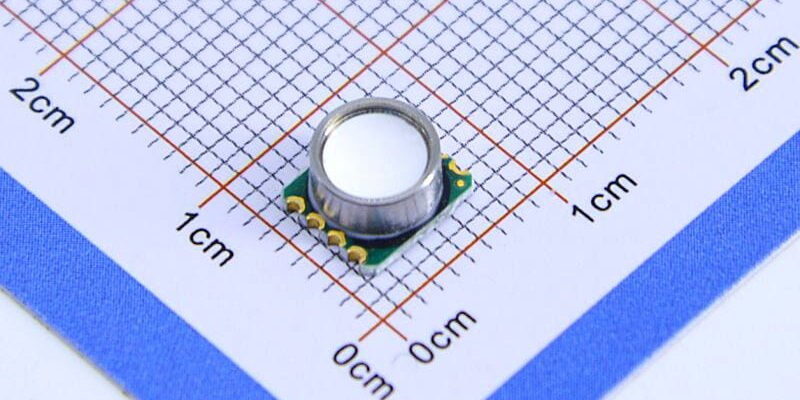
Employing compact 3.2mm×3.2mm×1.0mm SMD packaging weighing under 10 milligrams, completely suitable for bicycle computer miniaturization requirements. BGA packaging provides excellent mechanical strength and thermal stability, with good reflow soldering compatibility suitable for large-scale automated production. Carefully designed pin layouts minimize PCB routing complexity, reducing electromagnetic interference and crosstalk issues.
3. Signal Processing Algorithms and Data Fusion Technology
Rauschunterdrückung und Filtertechnologie
Sensors integrate advanced digital signal processing units, employing finite impulse response filters and adaptive filtering algorithms to effectively suppress electromagnetic interference, mechanical vibration, and temperature noise. Filter parameters adjust dynamically according to cycling environments, maximizing signal-to-noise ratios while maintaining rapid responses. 24-bit high-resolution ADCs ensure accurate detection of minute signals, with digital filtering technology controlling noise levels within 1Pa.
Multi-Sensor-Datenfusion
Modern bicycle computers typically integrate GPS, accelerometers, gyroscopes, and other sensors, implementing data fusion through Kalman filtering algorithms. Barometric sensors provide wind speed information, GPS provides ground speed references, and accelerometers detect motion state changes. Algorithms dynamically adjust weights according to sensor reliability, automatically increasing barometric sensor data proportions when GPS signals become unstable, ensuring measurement continuity in complex environments.
Echtzeitkalibrierung und adaptive Algorithmen
Sensors support online calibration functionality, automatically adjusting zero-point and gain parameters through long-term data trend analysis. Adaptive algorithms identify different cycling modes including climbing, flat road, and downhill states, employing corresponding wind speed calculation strategies for each mode. Machine learning algorithms continuously optimize measurement accuracy, constantly improving wind speed calculation models through user feedback and environmental data.
4. Performance Advantages and Environmental Adaptability
Messgenauigkeit und Reaktionsmerkmale
WF152D sensors demonstrate exceptional performance in wind speed measurements, achieving absolute accuracy of ±0.5hPa and relative accuracy of ±0.1hPa, capable of detecting 0.1m/s wind speed changes. Sensor response times remain below 5ms, enabling real-time tracking of rapidly changing wind speed signals. Long-term stability testing shows sensors maintain over 98% of initial accuracy after continuous operation for 5000 hours, with zero-point drift controlled within ±0.02hPa/year.
Umwelttoleranzdesign
Sensor operating temperature ranges cover -40°C to +125°C, humidity tolerance spans 0% to 100%RH, with protection ratings reaching IP67 standards. Special sealing designs ensure atmospheric pressure conduction while preventing liquid intrusion, adapting to various harsh weather conditions. Anti-vibration designs enable sensors to withstand 20g random vibrations and 1500g impact accelerations without damage, ensuring reliable operation on bumpy road surfaces.
Überlastschutz und Haltbarkeit
Sensor designs feature 2x maximum pressure overload protection capabilities, preventing permanent damage when subjected to accidental pressure impacts. Silicon membranes employ single-crystal silicon materials with excellent elastic properties and fatigue life, with theoretical operating lifetimes exceeding 10 years. Circuit designs include overvoltage protection, reverse connection protection, and electrostatic protection functions, comprehensively safeguarding sensors under various abnormal conditions.
5. Measurement Tools and Quality Verification Methods
Präzisionskalibrierungsgeräteanforderungen
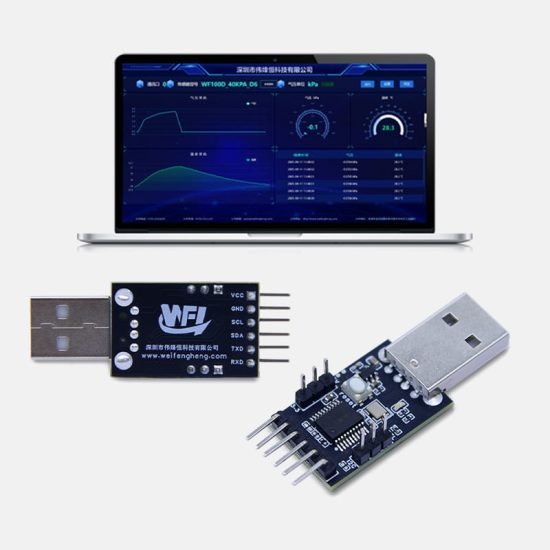
Ensuring sensor quality requires high-precision calibration equipment for verification. Primary equipment includes digital pressure calibrators providing 0.01% reference accuracy for verifying sensor absolute accuracy and linearity. Temperature characteristic testing employs temperature calibrators with ±0.02°C temperature control accuracy. These devices possess international standard traceability certificates, ensuring calibration result authority and reliability.
Dynamische Leistungstestmethoden
Dynamic testing employs Validyne DP15 differential pressure sensors as reference standards, with 1kHz response frequency and ±0.25% accuracy. Test signals include step responses, sine sweeps, and white noise excitation, comprehensively evaluating sensor frequency responses and phase characteristics. Data acquisition uses National Instruments PXI-4461 dynamic signal analyzers with 204.8kS/s sampling rates and dynamic ranges exceeding 100dB, ensuring test data accuracy.
Langzeitüberprüfung der Stabilität
Stability testing employs ESPEC SH-641 constant temperature and humidity chambers for precise environmental control. Test cycles span 6 hours or 1 day, including room temperature aging, high-temperature aging, humid heat aging, and temperature cycling tests.
Abschluss
MEMS barometric sensor technology provides reliable wind speed measurement solutions for bicycle computers. Resistive sensors like WF152D achieve high-precision detection through piezoresistive effects. Sensor miniaturization designs, excellent environmental adaptability, and intelligent functionality completely meet strict outdoor cycling requirements. Advanced digital signal processing and multi-sensor fusion technology further enhance system performance and reliability. Rigorous quality verification processes ensure stable product performance during long-term usage. As MEMS technology develops, barometric sensors will continue improving in precision, integration, and functionality, providing more comprehensive environmental sensing capabilities for intelligent cycling devices.
Die obige Einführung kratzt nur an der Oberfläche der Anwendungen der Drucksensortechnologie. Wir werden weiterhin die verschiedenen Arten von Sensorelementen untersuchen, die in verschiedenen Produkten verwendet werden, wie sie funktionieren und welche Vor- und Nachteile sie haben. Wenn Sie detailliertere Informationen zu den hier besprochenen Themen wünschen, können Sie sich die entsprechenden Inhalte weiter unten in diesem Handbuch ansehen. Wenn Sie unter Zeitdruck stehen, können Sie auch hier klicken, um die Details dieser Leitfäden herunterzuladen PDF -Daten des Luftdrucksensorprodukts.
Weitere Informationen zu anderen Sensortechnologien finden Sie hier Besuchen Sie unsere Sensors -Seite.

-e1747998312687.jpg)