Blog

Your blog category

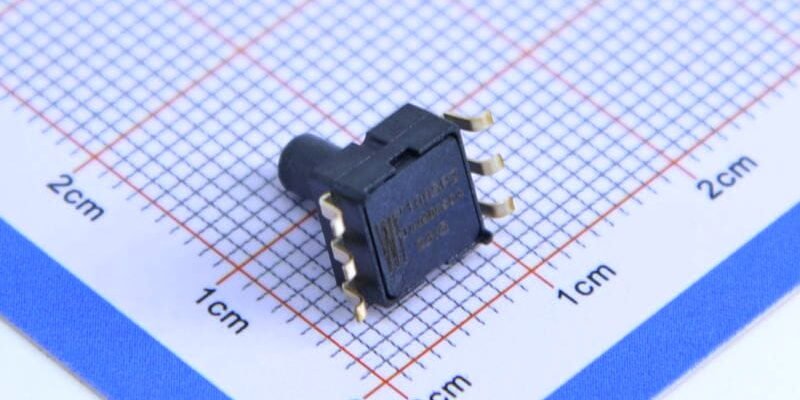
WF100E 20kpa 0.2~4.7V Wide Pressure Positive and Negative Pressure Sensor Pin SOP6

Positive and Negative pressure sensor in breast pump-Best Application

Positive and negative pressure sensors are used to monitor the air pressure changes inside the breast pump to ensure that the suction force during breast pumping meets the expectations and is adjusted in a timely manner to avoid too much or too little suction force, thus effectively improving the efficiency of breast pumping and ensuring comfort.

Positive and Negative pressure sensor in breast pump-Best Application Læs indlæg »

WF100E vakuumtryksensor

Biological Safety Cabinet Pressure SensorVacuum Pressure Monitoring

biosafety cabinet core functions of one is to protect the laboratory environment from the spread of hazardous substances through vacuum. Vacuum monitoring is the key to ensure that the internal pressure of the cabinet is lower than the external pressure. Only through a stable vacuum system can we effectively prevent the leakage of germs, viruses, bacteria or chemicals.

Biological Safety Cabinet Pressure SensorVacuum Pressure Monitoring Læs indlæg »

WF100S 2BG -tryksensor SOP6

Home oxygen concentrator needs to monitor several pressure values

There are several key pressure parameters involved in home oxygen concentrators, including operating pressure, oxygen outlet pressure, and other pressure-related factors. The working pressure of a home oxygen concentrator is usually between 0.04 and 0.07 MPa, while the oxygen outlet pressure is in the range of 40 to 100 KPa. The compressor power of the device is closely related to the oxygen pressure and flow rate, and the adsorption time of the molecular sieve also affects the performance of the oxygen concentrator. Finally, the article briefly discusses the core components of the oxygen concentrator, such as the MCU, pressure sensors, etc. The article also discusses the oxygen concentrator’s performance.

Home oxygen concentrator needs to monitor several pressure values Læs indlæg »

WF5805C Tryksensor

Graphene in Sensor Industry Application

Graphene sensors have the characteristics of small size, large surface area, high sensitivity, fast response time, easy fixation of proteins and maintaining their activity, fast electron transfer speed, and can effectively reduce the impact of surface contamination, making graphene sensors show excellent performance in the fields of electrochemical sensing, photoelectric sensing, gas sensing and flexible sensing.

Graphene in Sensor Industry Application Læs indlæg »

Tryksensorfejl påvisning og forebyggende foranstaltninger

Pressure sensors play an important role as key components in monitoring and controlling pressure changes in modern industrial, automotive, medical and consumer electronics applications. However, due to the complexity and variability of the operating environment, pressure sensors may encounter various failures during use, which may affect their performance and reliability.

Tryksensorfejl påvisning og forebyggende foranstaltninger Læs indlæg »

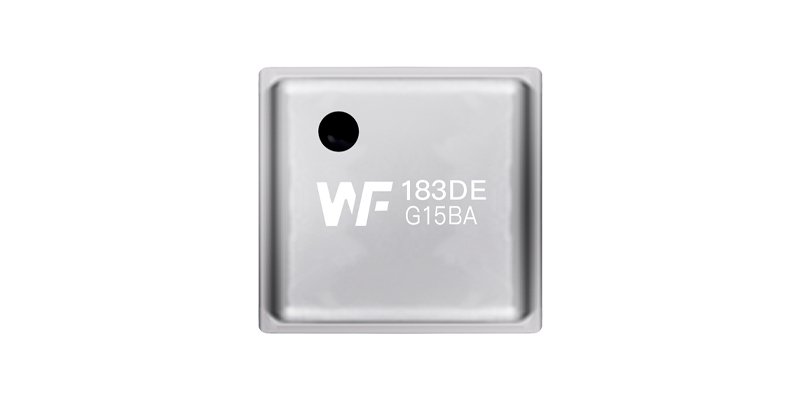
WF183DE 15bar trykføler

Tire Pressure Gauge Sensor and TPMS System Synergy Analysis

Tire Pressure Monitoring System (TPMS) is an electronic system for real-time monitoring of tire pressure and temperature in vehicles to improve driving safety and fuel economy. Tire pressure gauge sensors are the core components of the TPMS system and are directly responsible for capturing the physical condition data of the tires and transmitting it wirelessly to the vehicle control system. The TPMS system processes the data provided by the sensor and sends timely alarms or alerts to the driver to avoid safety accidents caused by abnormal tire pressure.

Tire Pressure Gauge Sensor and TPMS System Synergy Analysis Læs indlæg »

WF pressure sensor in blood pressure watch of Application

Pressure sensors are the most important technical component of blood pressure watches. Their application not only realizes convenient blood pressure measurement, but also provides intelligent solutions for health management. With high precision sensors and advanced algorithms, blood pressure watches can provide accurate real-time data and health trend analysis to help users better manage their personal health.

WF pressure sensor in blood pressure watch of Application Læs indlæg »

WF100DP 40 kpa tryksensor

Tryksensornøjagtighedsniveauer – Bedste viden!

The accuracy level of a pressure sensor is usually classified according to its margin of error. The different accuracy levels represent the amount of error in the measurement process of the sensor. Common accuracy classes include C3, C2, C1, G1, G2, G3 and G5. Among them, C3 has the highest accuracy, with an error range within ±0.020%, i.e., 2 parts per million accuracy; while G5 has the lowest accuracy, with an error range within ±0.5%, i.e., 5 parts per thousand accuracy.

Tryksensornøjagtighedsniveauer – Bedste viden! Læs indlæg »

Analoge sensorer digitale sensorer

Forskelle i målingsnøjagtighed af forskellige typer lufttrykssensorer

Different types of air pressure sensors have significant differences in accuracy. Gauge pressure sensors are suitable for general applications, absolute pressure sensors provide high accuracy, and differential pressure sensors are used for flow and filtration monitoring. Choosing the right sensor requires considering accuracy requirements, application scenarios, environmental factors, and cost.

Forskelle i målingsnøjagtighed af forskellige typer lufttrykssensorer Læs indlæg »

WF100DP 40 kpa tryksensor

Forskelle mellem manometertryksensorer, differenstryksensorer og absoluttryksensorer

Gauge pressure sensor is a sensor that measures the relative pressure, i.e. the pressure value relative to atmospheric pressure. A differential pressure sensor is a sensor that measures the pressure difference between two measurement chambers. An absolute pressure transducer is a transducer that measures pressure relative to vacuum or absolute zero.

Forskelle mellem manometertryksensorer, differenstryksensorer og absoluttryksensorer Læs indlæg »

Nedsænkbare pumpetryksensorer til forskellige vanddybder

Submersible pump pressure sensors operate on the principle of electrical signal changes due to pressure changes. Typically, the pressure sensor contains a pressure sensitive element, when the external water pressure acts on the element, it will cause its deformation, which in turn changes the internal resistance or capacitance. This change is converted into an electrical signal, which is processed by a circuit that outputs a signal proportional to the water pressure. The submersible pump reads this signal to adjust its operating status, such as starting, stopping, or regulating the pump speed to adapt to different water depth conditions.

Nedsænkbare pumpetryksensorer til forskellige vanddybder Læs indlæg »

WF5803C -tryksensor

Pressure Sensors in Water Pump Controllers of Application and Importance

Pressure sensors, as an important component in pump controllers, are responsible for real-time monitoring of pressure changes in the pump system and providing accurate feedback signals to the control system. The application of pressure sensors has been transformed from traditional mechanical monitoring to digitalization and intelligence. It not only plays an important role in real-time monitoring of pumps, energy efficiency optimization, fault warning and so on.

Pressure Sensors in Water Pump Controllers of Application and Importance Læs indlæg »

Rul til toppen

Kontakt os