
Hydraulisk trykføler sikrer sikker og nøjagtig drift af medicinsk udstyr
Hydraulic pressure sensors turn fluid pressure into electrical signals, using MEMS microstructures like diaphragms and piezoresistive bridges for precise readings.

Hydraulic pressure sensors turn fluid pressure into electrical signals, using MEMS microstructures like diaphragms and piezoresistive bridges for precise readings.

This article takes an engineering view, focusing on hardware traits, operating principles, sealing and packaging, data processing, and the way depth sensors directly improve control in underwater engineering. The aim is to explain in clear technical language how sensors underpin accurate underwater operations.
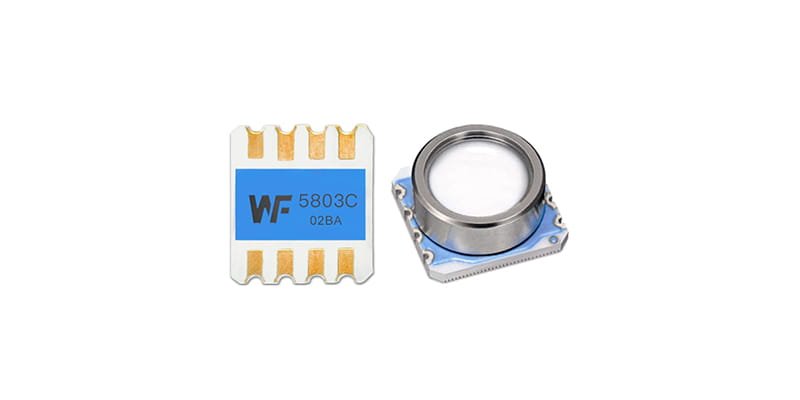
This article explains the key technical parameters you should understand when selecting a pressure sensor for a project. It walks through medium compatibility, rated/withstand/burst pressures, compensated temperature range, zero-point drift and linearity — showing how each affects reliability, accuracy and suitability for specific applications.

This content breaks down the sensor’s role in five areas: safety monitoring, flow measurement with temperature–pressure correction, differential flow calculation, system diagnostics, and intelligent data use.

This text focuses on how GPS barometric pressure sensors support continuous indoor and outdoor dead-reckoning navigation. It covers principles, data fusion, indoor-outdoor transitions, hardware integration, and algorithm requirements.

Altitude pressure sensors (MEMS barometers) give drones steady, low-power height data and are a key input for flight control and navigation.
-e1747998312687.jpg)
Pressure sensors — whether for gas or liquid — are at the heart of safety and fine control in smart appliances. From device safety and energy management to fault diagnosis, user experience and system integration, this piece explains the sensor’s role across smart air conditioners, fridges, cooker hoods, water heaters, kettles and smart sanitary ware.

The top-ported WF100 positive pressure sensor improves pipe measurements when matched to the range, ensuring a tight connection, and calibrated for zero, span, and temperature. Reliable pipe pressure measurements can be achieved by using short hoses, proper filtering, and verifying against the reference sensor datasheet.

Ordinary barometers—piezoresistive, capacitive or MEMS silicon resonant—can’t reliably detect 10 cm (≈0.012 Pa) in real life: the pressure change is tiny vs draughts, switching, people and sensor noise/drift.

In breast pump systems, multi-stage suction adjustment based on MEMS pressure/flow/force sensors can simultaneously improve comfort and milk expression efficiency.

Negative Pressure Wound Therapy (NPWT) as a vital modern medical technology relies directly on precise pressure control for treatment effectiveness. Differential pressure sensors serve as core monitoring components, ensuring treatment safety and efficacy through real-time negative pressure monitoring. This article analyzes the critical role of MEMS differential pressure sensors in NPWT devices, explaining technical principles, application advantages, and significant improvements to patient treatment experience.

This article takes the standpoint of device ease of system integration and outputs usable directly for ADC sampling or downstream amplifiers, focusing on small-size SOP packaging with integrated multi-stage compensation pressure sensors. It emphasizes how packaging affects PCB layout and reliability, how compensation maintains stability across the full temperature range, and how production-to-shipment testing controls accuracy and consistency — enabling engineers and technical decision-makers to make informed selections early in design.
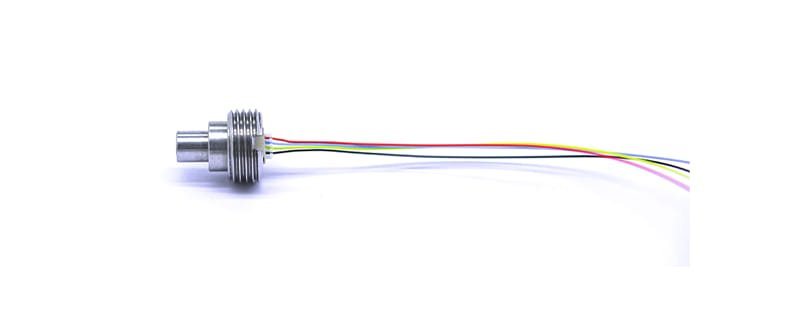
Environmental pressure sensors, with integrated metal construction and wide-range capability, provide stable, corrosion-resistant, and highly compatible pressure measurement solutions for industrial automation. This article explains how these sensors maintain high reliability and accuracy under harsh conditions from five perspectives: materials and structure, range adaptability, interface options, thermal stability, and engineering deployment. It aims to help decision-makers reduce integration costs and improve system stability.
Media-isolated pressure sensors use a metal diaphragm and oil-filled cavity to separate the silicon strain gauge from the measured fluid. By combining proper materials, diaphragm geometry, signal conditioning (amplified ratiometric or digital I2C/SPI outputs), and temperature compensation, these sensors achieve long-term, linear, and repeatable pressure output in water-meter hydraulic environments.
Contents: 1. Core components and working principles; 2. Key technical specifications and implementation methods; 3. Cooperative design of laser measurement and pressure sensors; 4. Engineering application scenarios and implementation considerations; 5. Reliability, calibration, and production testing; summary points.