
- Podle WFsensors
A digital depth sensor converts pressure into accurate depth and environmental parameters and sits at the heart of many modern sensing systems. Contemporary modules aim for low power, high resolution and a digital output — often including temperature compensation, on-chip calibration data and a simple digital bus such as I²C. Whether deployed at sea or in freshwater, these sensors feed both short-term climate alert systems and longer-term fish behaviour monitoring.
Katalog
1. How digital depth sensors work
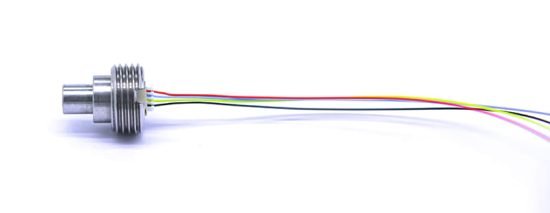
A digital depth sensor uses a highly sensitive pressure element to measure hydrostatic pressure and, together with temperature measurements and internal algorithms, converts that pressure into depth values. Typical modules come in compact, robust housings designed for buoys, fishfinders or handheld depth meters. Inside, you’ll usually find a temperature sensor for real-time compensation and factory calibration coefficients stored in on-chip non-volatile memory so the host MCU has less to do. The image shows a threaded metal waterproof module with coloured wires for straightforward wiring — a stainless-steel protective cap and sealed structure suited to field deployment. In practice, pay attention to sealing faces, cable strain relief and corrosion resistance to keep the unit stable and trustworthy over time. Power regulation and decoupling are equally critical — stable supplies matter when you’re pushing a high-resolution ADC.
I²C interface and system-level comms
I²C is the go-to bus for these modules — it makes it easy to read pressure and temperature registers, and to write configuration back into the device. In multi-node buoy arrays or shipboard gateways, watch the pull-up resistor choices, bus loading and timing to avoid corrupting low-level measurements. For long cable runs or noisy environments, designers often add buffering or differential isolation so the I²C traffic stays solid and the high-resolution data remains meaningful.
Waterproof enclosures and material reliability
Near-shore and offshore use demands watertight, anti-corrosion construction. Common design features include stainless-steel caps, threaded fittings and O-ring seals. Choose materials that stand up to salt spray and mechanical wear; internally, potting compounds such as epoxy or polyurethane protect electronics. Don’t forget dynamic sealing fatigue and thermal expansion; both can shift a pressure baseline over long deployments. Environmental ageing tests and factory leak checks are essential to ensure the unit stays reliable in the field.
2. Accuracy fundamentals: 24-bit ADC and sampling strategy
The meaningfulness of depth readings depends on how well the tiny pressure signal is digitised. A 24-bit ADC paired with suitable OSR (oversampling ratio) and digital filtering can push pressure resolution to fractions of a Pascal, enabling sub-metre depth precision. Oversampling improves resolution, but it lengthens conversion time and raises instantaneous power draw — a key consideration for battery-powered buoys and hand-held fishfinders. Engineers must balance resolution, responsiveness and energy budget: in climate monitoring you’ll favour stability and higher resolution; in active fishfinding you’ll often prioritise lower latency and energy-efficient polling.
OSR trade-offs for resolution vs power
Oversampling averages more raw samples to reduce noise and boost effective resolution. Each OSR increment multiplies conversion time and energy consumption. A practical approach: use high OSR with low sampling frequency for long-term climate logging, and moderate OSR with higher update rates for fishfinding windows. On-board filtering and compensated outputs reduce host CPU load by delivering stable values ready for use.
Filtering and digital compensation strategies
Filtering ranges from passive anti-aliasing components to low-noise front-end amplifiers and digital FIR or moving average filters. Combine temperature compensation readings to correct pressure-related baseline drift in software or on the sensor itself. Factory calibration curves written into on-chip memory are crucial; they let the module report compensated figures straight away. But beware over-smoothing — you don’t want to mask fast events like surge pulses or short pressure spikes.
3. Deployment for climate alerts
Placing digital depth sensors in buoy grids or observation networks provides continuous, traceable inputs for nearshore meteorology and oceanography. Pressure and temperature time series, when combined with salinity and optical readings, give you sea-surface heat content, evaporation proxies and local pressure gradients — the very stuff used for early warnings. For an operational network, availability is king: resilient power, redundant sampling and remote diagnostics are what make a sensor array reliable for extreme events such as storm surges and rapid pressure drops.
Multi-sensor coordination on buoys
A typical buoy packages pressure, temperature, humidity, wind and optical sensors to cover the air–sea interface. The depth sensor provides the precise pressure (or near-surface water pressure) that anchors other observations; temperature reads are used for compensation and boundary-layer analysis. Given limited bandwidth from offshore assets, pre-processing at the buoy — denoising and thresholding — lets you prioritise and transmit critical alerts without wasting comms or energy.
Long-term observation stability
Biofouling, salt creep and material fatigue threaten long-term data quality. Implement remote self-checks for baseline drift, adaptive sampling logic, and scheduled physical maintenance. Modular hardware design simplifies replacements; because calibration coefficients live in on-chip NVM, you can swap units or controllers and quickly restore baseline performance without re-calibrating in the field.
4. Smart fishfinding: signal decoding and behaviour modelling
For smart fishfinding, depth, temperature, pressure and heading form the primary signals used to infer fish presence and activity. Temperature gradients and depth often govern vertical fish distributions; even modest shifts in atmospheric pressure influence prey and plankton behaviour, which in turn affects fish feeding. Fuse depth sensor output with underwater video or sonar and you can apply statistical models or lightweight machine learning to estimate school density and activity windows, giving anglers or commercial gear actionable cues.
Environmental cues linked to fish activity
Empirical observation shows many fish species get livelier when atmospheric pressure sits in the ~1000–1015 hPa band and edges up slowly. Thermoclines and depth layers also dictate where fish hold. From an engineering side, ensure your sensor precision, sampling cadence and time synchronisation line up with camera or sonar frame rates so you can correlate environmental blips with biological responses.
Compass/heading data for positioning and motion correction
A built-in compass offers heading references for mobile platforms or towed devices, letting you align depth and temperature readings to a geographical frame. Heading data helps distinguish platform motion artefacts from real environmental changes. Mind magnetic interference — shield sources and include routine in situ compass calibration so directional data remains trustworthy over long deployments.
5. Calibration, register control and engineering integration
High-reliability digital depth sensors typically receive per-unit calibration for temperature and pressure sensitivity and offset; those coefficients are stored in on-chip NVM. Users command OSR, channel selection and trigger modes via standard registers, which keeps host firmware simpler. On the system side, define measurement rates, local buffering and error handling so that when comms fail or nodes drop out, key time-series data are preserved.
Factory calibration and NVM storage
Factory calibration reduces field tuning. When calibration curves and offsets live in NVM, the module boots up and outputs compensated readings immediately. From an engineering quality point of view, track calibration batch numbers and firmware versions for traceability, and validate NVM integrity so that reads are reliable for many years.
Register-level control and OSR settings
Writing ADC_CVT-like commands into registers lets you set OSR and which channels to convert, adjusting measurement accuracy and power draw. Lock common configurations into host firmware and plan safe fallbacks for bus conflicts or failed writes. Test for boundary cases — register write failures, bus contention and repeated reads — so field behaviour is predictable and recoverable.
Závěr
Digital depth sensors, with their compact waterproof designs and high resolution, are essential hardware for both climate alerting and smart fishfinding. Engineering success depends on balancing resolution, power and responsiveness; choosing durable materials and a sealed design; relying on factory calibration and on-chip compensation to lighten host workload; and configuring registers and sampling schemes to match the intended application. Teams that grasp the whole sampling-to-compensation chain and design for graceful recovery at the system level will get reliable alerts and useful fishfinding intelligence from their deployments.
Výše uvedený úvod pouze poškrábe povrch aplikací technologie tlakových senzorů. Budeme pokračovat ve zkoumání různých typů senzorových prvků používaných v různých produktech, jejich fungování a jejich výhod a nevýhod. Pokud byste chtěli více podrobností o tom, o čem se zde diskutuje, můžete se podívat na související obsah později v této příručce. Pokud vás tlačí čas, můžete také kliknout sem a stáhnout si podrobnosti o těchto příručkách Data produktu PDF na tlak vzduchu.
Pro více informací o dalších senzorových technologiích prosím Navštivte naši stránku Sensors.


