- By WFsensors
When inflating car tyres, timely and accurate pressure feedback directly affects safety and ride comfort. This piece looks at monitoring tyre pressure changes while using an air pump from the viewpoint of the sensor: how sensor characteristics and pump mechanics tie together to deliver stable, repeatable control. We run through sensitivity, response time, temperature stability and packaging protection, and give selection and installation advice so engineers can make better choices when designing pump systems or portable inflators.
Catalog
1. The pressure sensor’s central role in the pump control loop
When an air pump runs, valve states and airflow switch quickly between suction and inflation. The system therefore needs timely, stable pressure feedback to avoid over- or under-inflation. The pressure sensing module determines valve logic and motor on/off timing. Integrating a high-resolution sensor into the pump control loop lets you detect tiny pressure changes and furnish a low-noise analogue signal that helps the controller decide when to stop inflating, when to hold pressure, or when to bleed off. For digital portable pumps, display accuracy and controller decisions rely on the sensor’s linearity and temperature drift. A suitable module must meet mechanical packaging needs and be electrically compatible with the main control unit to give a consistent user experience and reliable safety margins.
1.1 Detection points during inflation/deflation switching
During the whole inflation action, where you pick up pressure determines measurement delay and noise level. Ideally the pressure port should be close to the tyre valve and away from hose kinks or leaking joints that will corrupt the reading. The pick-up location and the line volume together affect transient response: large intermediate volumes create lag during inflation and can make the controller think the target pressure has been reached when it hasn’t. In practice, engineers place a high-accuracy sensor on a short feed near the outlet and combine that with appropriate filtering and sampling strategies to keep the reading stable. This is about practical layout and pressure-tap design, not internal sensor construction.

2. How sensor performance affects inflation accuracy
Inflation accuracy depends on resolution, sensitivity, drift and response speed. Resolution sets the smallest detectable pressure change; sensitivity governs the relationship between pressure and output; drift and non-linearity affect long-term and cross-unit consistency. In pulsed or short-burst inflation, dynamic response is critical: the sensor must provide a stable analogue output within milliseconds to tens of milliseconds so the controller does not react to transient noise. High linearity and low temperature drift ensure consistent readings across environmental conditions, which matters for outdoor and seasonal use. Pick a device rated for the tyre pressure range (typically several tens to a few hundred kPa) and pair it with the right amplification and filtering — that’s the foundation of high-accuracy inflation.
2.1 Sensitivity and resolution during transient inflation
In rapid fill, pressure climbs fast; a sensor with low sensitivity will show coarse, grainy readings and miss the approach to target; a very sensitive sensor without adequate resolution can produce quantisation noise. In real designs you must balance sensitivity and resolution and match them to your ADC bits and amplifier gain. Filtering and sampling rate choices are also critical: too low a sample rate misses important changes; too high a rate emphasises noise and raises the likelihood of false actions. A practical approach mixes hardware bandwidth limits with software digital filtering.
3. Environmental and long-term stability considerations
Tyre inflators are often kept in car boots, left outdoors or used in damp conditions, so sensors face temperature swings, humidity and vibration. Quality pressure elements need low drift, a wide operating temperature range and moisture-resistant packaging. Waterproof gels or epoxy encapsulation isolate the sensor from moisture, reducing electrical distortion and drift while preserving linearity and long-term stability. Good mechanical mounting and anti-vibration measures cut short-term fluctuations that could falsely trigger the controller. For devices that must work reliably over time, choose modules validated by thermal cycling and vibration tests to reduce after-sales issues.
3.1 Improving reliability with moisture and vibration protection
Moisture changes internal package materials and causes output drift or insulation problems; vibration affects membranes or sensing elements and introduces spurious noise. Using moisture-blocking gels, sealed joints and vibration-damping mounts substantially improves long-term reliability. Material and package thermal expansion matching is important too — mismatches cause stress and drift through temperature cycles. Engineers commonly combine hardware measures with temperature compensation algorithms to cancel residual drift and meet automotive-class uptime.
4. Integration with pump controller and display systems
Viewed system-wise, the sensor is a signal source; the key is turning that analogue signal into trustworthy data for controller decisions. Typical practice places a low-noise amplifier, anti-alias filter and a high-precision ADC between the sensor and the MCU. Interface choices reflect product positioning: portable pumps usually have a microcontroller with a local display, while industrial or networked systems forward data to central controllers or remote displays. During integration pay attention to EMC and grounding — motor start currents can swamp the measurement signal. To be safe, include soft/hard redundancy and error detection so the system moves to a safe mode on suspect readings.
4.1 Calibration and fault diagnosis procedures
Calibration is essential for consistent measurement. Factory calibration usually covers zero and full-scale adjustment plus temperature checkpoints. Field calibration should be simple and traceable — an easy calibration workflow cuts support costs. Fault diagnosis uses continuous data and statistical checks to spot drift, step changes or open/short conditions; combine self-test routines with historical curve comparison to flag emerging problems early and avoid safety incidents caused by bad readings.
5. Engineering selection guide and practical tips
When choosing a pressure module for an inflator, focus on range, sensitivity, linearity, temperature drift, package form and interface. For vehicle or portable pumps favour compact SMD analogue modules with moisture protection; they fit PCB layouts easily and mate directly with amplifiers and ADCs. In prototyping, compare several candidates under real-world inflation conditions to evaluate dynamic response, steady-state error and environmental drift. When weighing cost versus performance, include long-term reliability and maintenance in the total cost of ownership rather than fixating on one-time sensor price.
5.1 How mounting position and pressure port design affect measurement
In practice make the pressure port short, straight, and low in dead volume and keep it close to the tyre valve to reduce sensing lag. Avoid mounting the sensor at hose bends, fittings or crush-prone spots. If long runs are unavoidable, use shielded lines and place the sensor nearer the controller to reduce interference. Another tactic is to add a small stabilising chamber in the line combined with soft realtime filtering in software to smooth readings and give smoother, more controllable inflation behaviour.
Conclusion
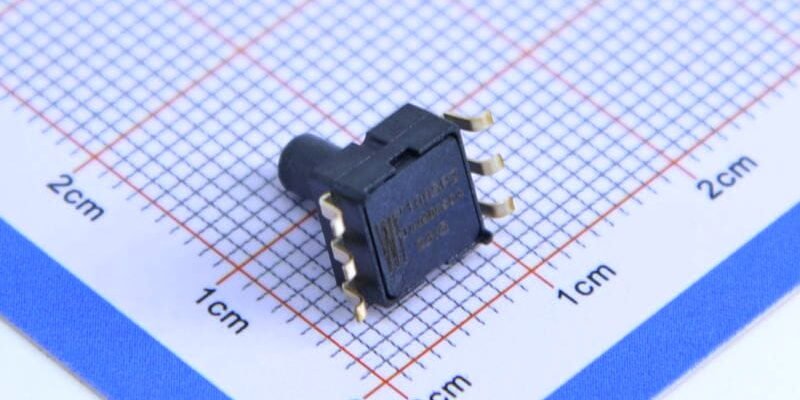
For monitoring tyre pressure while inflating with an air pump, the sensor is both the real-time safety valve and the basis for system accuracy and user experience. Engineers should consider pick-up location, sensor element performance, packaging protection, signal processing and system integration together. Using a high-resolution, low-drift analogue SMD module with moisture protection and pairing it with sensible hardware filtering and software compensation will provide steady, accurate tyre-pressure feedback across conditions, improving the pump’s safety and reliability. The small analogue module shown in the picture (WF162L type) is a typical choice for this use: it offers good linearity, a wide temperature range and moisture-gel encapsulation, making it suitable for portable and vehicle inflators.
The above introduction only scratches the surface of the applications of pressure sensor technology. We will continue to explore the different types of sensor elements used in various products, how they work, and their advantages and disadvantages. If you’d like more detail on what’s discussed here, you can check out the related content later in this guide. If you are pressed for time, you can also click here to download the details of this guides air pressure sensor product PDF data.
For more information on other sensor technologies, please visit our sensors page.