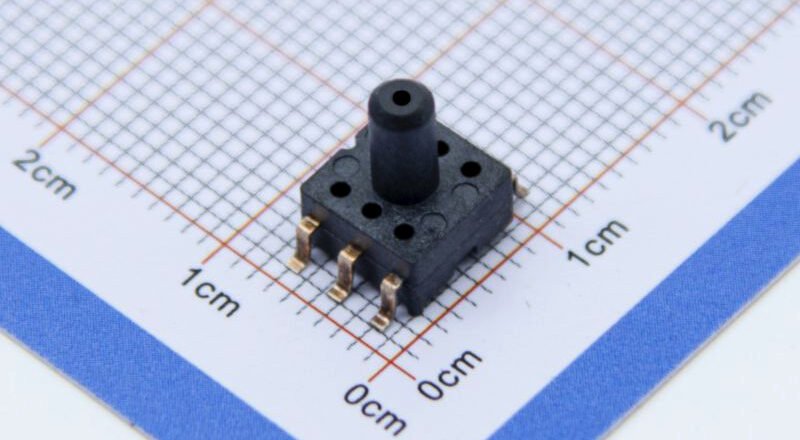
Sensor fluctuations come from many sources: hardware aging, power and connector issues, environmental interference, improper sampling and filtering, software algorithm and calibration errors, and poor installation or external device interference.
Catalog
1. Sensor hardware failures
How aging, power, and interface faults create unstable outputs
Long-term operation causes internal component drift; in high-precision pressure sensors, changes in capacitance, resistance, or package sealing can shift zero point or cause gain variation. Unstable power or power noise injects directly into the measurement chain and makes analog sensors jump briefly. Loose connectors, worn cables, or weak solder joints show up as intermittent, large spikes. In practice, engineers should first check power quality, grounding, and the physical connections between sensor and mainboard, then decide whether to replace the part or improve supply filtering.

2. Environmental influences
The real destructive power of temperature, humidity, and electromagnetic
emperature swings change the electrical properties of sensor materials; high-precision pressure sensors and environmental pressure sensors are particularly sensitive to thermal drift. Humidity ingress can create conductive paths or corrosion inside the sensor, causing long-term drift or momentary noise. Nearby strong magnetic fields or RF sources will interfere with sensors based on electromagnetic or Hall principles and affect the whole acquisition chain. Troubleshooting should include environmental logging (temperature and humidity curves), electromagnetic scans, and reproducing the abnormal signal inside a controlled temperature/humidity chamber to confirm cause-effect.
3. Signal processing and sampling issues
How sampling rate, noise, and filtering choices can amplify problems
Mismatch or too-low sampling rate causes aliasing and misses fast signal changes; sampling-rate pressure sensors are especially sensitive in fast-changing scenarios. Thermal, electromagnetic, and ground-loop noise in the signal chain will make raw data jitter; poorly chosen filters (too narrow bandwidth or wrong parameters) introduce phase delay or residual ripple. Engineering checks include verifying ADC sampling rate, resolution, and anti-alias filtering design, and using spectral analysis to pinpoint noise bandwidth and sources.
4. Software algorithms and calibration errors
How software and calibration mistakes can turn good signals into “bad” data
Incorrect filter or integrator implementation, poor boundary handling, or misaligned sampling can distort true measurements into unstable outputs. If calibration is based on wrong references or doesn’t account for environmental offsets, the sensor will show time-dependent drift. For high-precision pressure sensors, temperature compensation models and zero-point calibration are critical. Troubleshooting focuses on the software pipeline: compare logs, replay raw samples, and validate calibration tables and compensation algorithms across different environments.
5. Installation and external device interference
How physical mounting, location, and nearby equipment change measurement
Sensor orientation and placement alter the forces or fluid paths the sensor sees, creating systematic bias; mounting an accelerometer at the wrong angle produces measurement error and unstable output. Placing sensors near vibration sources or heat sources couples environmental disturbance into the signal. External motors, wireless transmitters, or high-power switching devices produce transient EMI that affects analog sensors and ADCs.
Conclusion
Sensor fluctuations rarely have a single cause. For high-precision pressure sensors and smart device pressure sensors, prioritize checking power and grounding, reproduce the anomaly under controlled environmental conditions, verify sampling rate and filter settings, confirm calibration data and compensation models, and validate mounting and placement. A methodical, engineering-driven checklist focused on hardware, environment, signal chain, software, and installation will quickly narrow down faults and restore stable acquisition.
The above introduction only scratches the surface of the applications of pressure sensor technology. We will continue to explore the different types of sensor elements used in various products, how they work, and their advantages and disadvantages. If you’d like more detail on what’s discussed here, you can check out the related content later in this guide. If you are pressed for time, you can also click here to download the details of this guides air pressure sensor product PDF data.
For more information on other sensor technologies, please visit our sensors page.