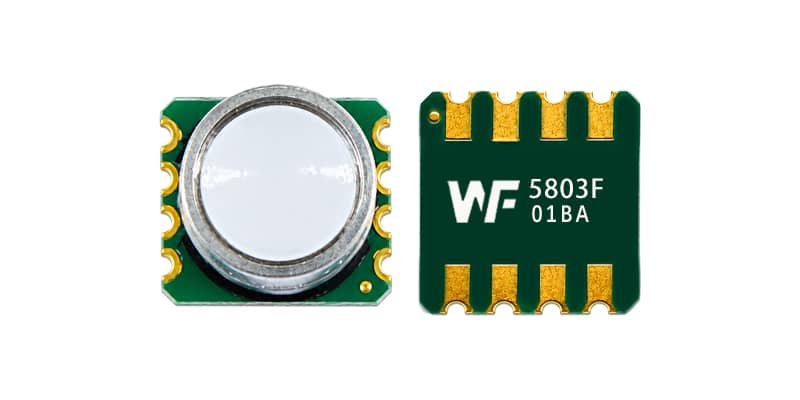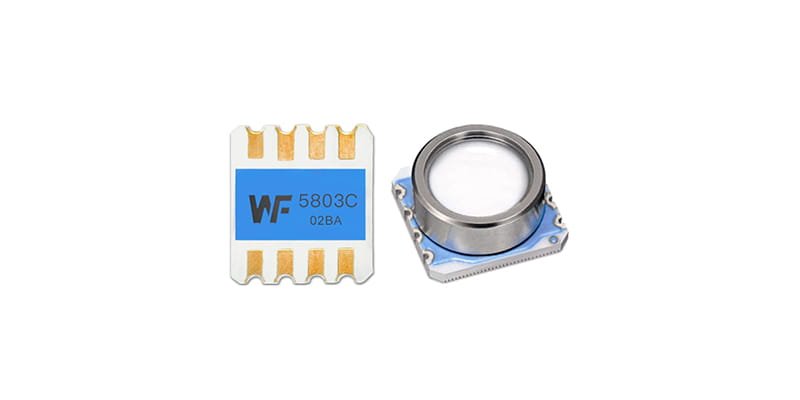
The rapid advancement of sensor technology has revolutionized underwater monitoring systems, with compact water-resistant pressure sensors emerging as critical components for deep-water applications. These sensors combine robust engineering with precision measurement capabilities, enabling reliable data collection in environments where traditional sensors fail. From industrial marine operations to consumer-grade underwater drones, their ability to withstand extreme pressures—up to 500 psi—while maintaining accuracy has made them indispensable. This report explores the structural innovations, operational principles, and diverse applications of these sensors, supported by case studies and technical data. By analyzing failure modes, cost-effective solutions, and emerging technologies like MEMS, this review provides actionable insights for selecting, deploying, and maintaining waterproof pressure sensors in challenging aquatic environments
Каталог
Структура і прынцып працы датчыкаў ціску ўстойлівага да воданепранікальнасці
Кампаненты і матэрыяльныя новаўвядзенні
Modern waterproof pressure sensors rely on advanced materials and sealing designs to prevent water ingress. The sensing element, typically a MEMS (Micro-Electro-Mechanical Systems) diaphragm, converts pressure variations into electrical signals. This diaphragm is often fabricated from silicon or stainless steel, materials chosen for their corrosion resistance and mechanical stability. Surrounding the diaphragm, a gel-filled cavity or hermetic sealant (e.g., epoxy resins rated for underwater use) protects the internal circuitry from moisture. For deep-water applications exceeding 100 meters, manufacturers employ titanium housings with IP68 or IP69K ratings, ensuring long-term durability against hydrostatic pressure and saltwater corrosion
Аперацыйныя механізмы ў глыбокай вадзе
The core functionality hinges on piezoresistive or capacitive sensing principles. In piezoresistive models, strain gauges bonded to the diaphragm change resistance proportionally to applied pressure. Capacitive designs measure the displacement between two plates, with water pressure altering the gap. High-resolution analog-to-digital converters (24-bit ADCs, as seen in the WF5808F 5Bar module) transform these analog signals into digital outputs, achieving resolutions finer than 1 cm of water depth. For example, a sensor rated for 100 meters can detect depth changes as subtle as 0.01% of its full scale, This is crucial for underwater pipeline monitoring and other applications
Кампенсацыя сігналу і каліброўка
Temperature fluctuations pose a significant challenge, as water density and sensor material properties vary with thermal conditions. Advanced units integrate temperature sensors and compensation algorithms to nullify these effects. The reference article highlights a WF5808F sensor that processes temperature-depth data in real time, reducing absolute errors to ±1–2°C. Calibration protocols often involve multi-point testing across pressure and temperature ranges, ensuring accuracy over the sensor’s operational lifespan. Field-recalibration techniques, such as using atmospheric pressure as a baseline, further enhance reliability in remote deployments

Неабходнасць воданепранікальных датчыкаў ціску ў сучасных прыкладаннях
Прамысловыя марскія аперацыі
In offshore oil drilling, waterproof pressure sensors monitor wellhead pressures and detect leaks in blowout preventers. A rupture at 500 meters depth exerts over 725 psi, necessitating sensors with burst pressures exceeding 1,000 psi. Submersible pumps equipped with these sensors adjust flow rates dynamically, preventing cavitation and equipment failure. The integration of M12 connectors ensures secure electrical connections even in high-vibration environments, a standard adopted by leading other manufacturers
Спажывецкая электроніка і знос
Waterproof barometric pressure sensors have become ubiquitous in sports watches, enabling altitude tracking during dives and swims. For instance, the WF280 series uses a MEMS-based sensor to measure depth up to 10 meters, syncing data via Bluetooth to mobile apps. These devices leverage low-power designs, with current draws below 5.4 µA, to extend battery life during extended underwater activities. Consumer demand has driven miniaturization, with sensors now occupying less than 5 mm³ in cutting-edge wearables
Сістэмы маніторынгу навакольнага асяроддзя
Aquaculture farms deploy networked sensors to track water column stratification, dissolved oxygen levels, and cage net integrity. A single malfunctioning sensor in a salmon farm can lead to over $1 million in losses due to unchecked algal blooms or equipment failures. By combining pressure sensors with temperature and salinity probes, modern systems provide multidimensional data for predictive analytics. The reference article notes that such integrations reduce monitoring errors by 40% compared to single-parameter systems
Can Water Damage Pressure Sensors? Understanding Risks and Solutions
Агульныя рэжымы адмовы ў пагружаных умовах
Despite waterproof ratings, sensors fail due to seal degradation, chemical corrosion, or mechanical fatigue. Polyurethane seals, while cost-effective, degrade when exposed to UV light or hydrocarbons, leading to capillary water ingress. In a 2024 study of failed IP67 sensors, 68% of failures stemmed from sealant breakdown after 18 months of saltwater exposure. Galvanic corrosion between dissimilar metals (e.g., aluminum housings and stainless steel screws) accelerates failure in brackish environments
Case Study: Sensor Failure in Offshore Wind Turbines
A North Sea wind farm reported a 22% failure rate among pressure sensors monitoring turbine foundation integrity. Post-mortem analysis revealed that biofilm accumulation on sensor ports caused pressure measurement drift. Implementing monthly biofouling removal protocols and switching to copper-nickel housings reduced failures to 3% within a year. This underscores the importance of material selection and maintenance schedules in harsh environments
Стратэгіі змякчэння наступстваў і лепшыя практыкі
To extend sensor lifespan:
Сумяшчальнасць матэрыялу: Use titanium or Hastelloy housings in chlorinated water.
Прафілактычнае абслугоўванне: Clean sensor ports quarterly using non-abrasive, pH-neutral solutions.
Абарона празмернага ціску: Install snubbers or pulsation dampeners in systems with pressure spikes.
Канфермічныя пакрыцці: Apply silicone-based coatings to PCBAs in humid environments.
Manufacturers like other offer lifetime warranties on sensors that undergo annual recalibration, providing cost predictability for industrial users
Ацэнка эканамічна эфектыўных рашэнняў для падводнага ціску
Камерцыйныя мадэлі, зручныя для бюджэту
The market offers viable options under $200 for non-critical applications:
| Мадэль | Range (psi) | Дакладнасць | Рэйтынг глыбіні | Цана |
|---|---|---|---|---|
| TE падключэнне MS5525 | 0–30 | ± 1,5% | 100m | $85 |
| Honeywell MPR серыі | 0–100 | ± 2% | 50m | $120 |
| DFROBOT SEN0257 | 0–145 | ± 1% | 200m | $180 |
While these lack the ±0.1% accuracy of $500+ industrial sensors, they suffice for educational projects or prototype testing. The DFRobot model stands out with its I2C interface and Arduino compatibility, making it popular in maker communities
Пашыраныя тэхналогіі, якія фармуюць будучыню воданепранікальнага зандзіравання
Інавацыі MEMS для жорсткіх умоў
Next-gen MEMS sensors incorporate diamond-like carbon (DLC) coatings to resist abrasion from suspended sediments. Researchers at the University of Tokyo recently demonstrated a graphene-based MEMS diaphragm capable of 0.01% accuracy at 1,000 meters depth. These advancements enable smaller form factors—a 2.5mm² sensor developed by STMicroelectronics consumes just 3 µW while sampling at 100 Hz
Стандартызацыя і нарматыўныя тэндэнцыі
The IEC 60529:2024 update introduces IPX9K+ ratings, combining high-pressure water jet resistance (14 MPa at 80°C) with prolonged submersion capabilities. Compliance with these standards will become mandatory for offshore equipment in EU waters by 2026, driving adoption of sensors with dual IP69K/IEC 60529 certifications
Заключэнне
Compact water-resistant pressure sensors represent a convergence of materials science, microfabrication, and data analytics, enabling unprecedented monitoring capabilities in aquatic environments. While challenges like biofouling and seal degradation persist, advancements in MEMS technology and smart diagnostics are extending operational lifetimes and accuracy. For engineers and researchers, prioritizing sensors with verified IP ratings, temperature compensation, and industry certifications ensures reliable performance. As IoT networks expand beneath the waves, these sensors will play a pivotal role in sustainable ocean exploration, aquaculture, and climate monitoring. Future developments should focus on self-healing materials and energy-harvesting designs to further reduce maintenance needs in remote deployments
Прыведзенае вышэй увядзенне толькі драпае паверхню прымянення тэхналогіі датчыка ціску. Мы працягнем вывучаць розныя тыпы сэнсарных элементаў, якія выкарыстоўваюцца ў розных прадуктах, як яны працуюць, а таксама іх перавагі і недахопы. Калі вы жадаеце атрымаць больш падрабязную інфармацыю аб тым, што тут абмяркоўваецца, вы можаце праверыць адпаведнае змесціва далей у гэтым кіраўніцтве. Калі ў вас няма часу, вы таксама можаце націснуць тут, каб загрузіць падрабязную інфармацыю аб гэтым даведніку Датчыкі датчыка ціску паветра PDF дадзеныя.
Для атрымання дадатковай інфармацыі аб іншых сэнсарных тэхналогіях, калі ласка Наведайце старонку датчыкаў.